









Executive Overview
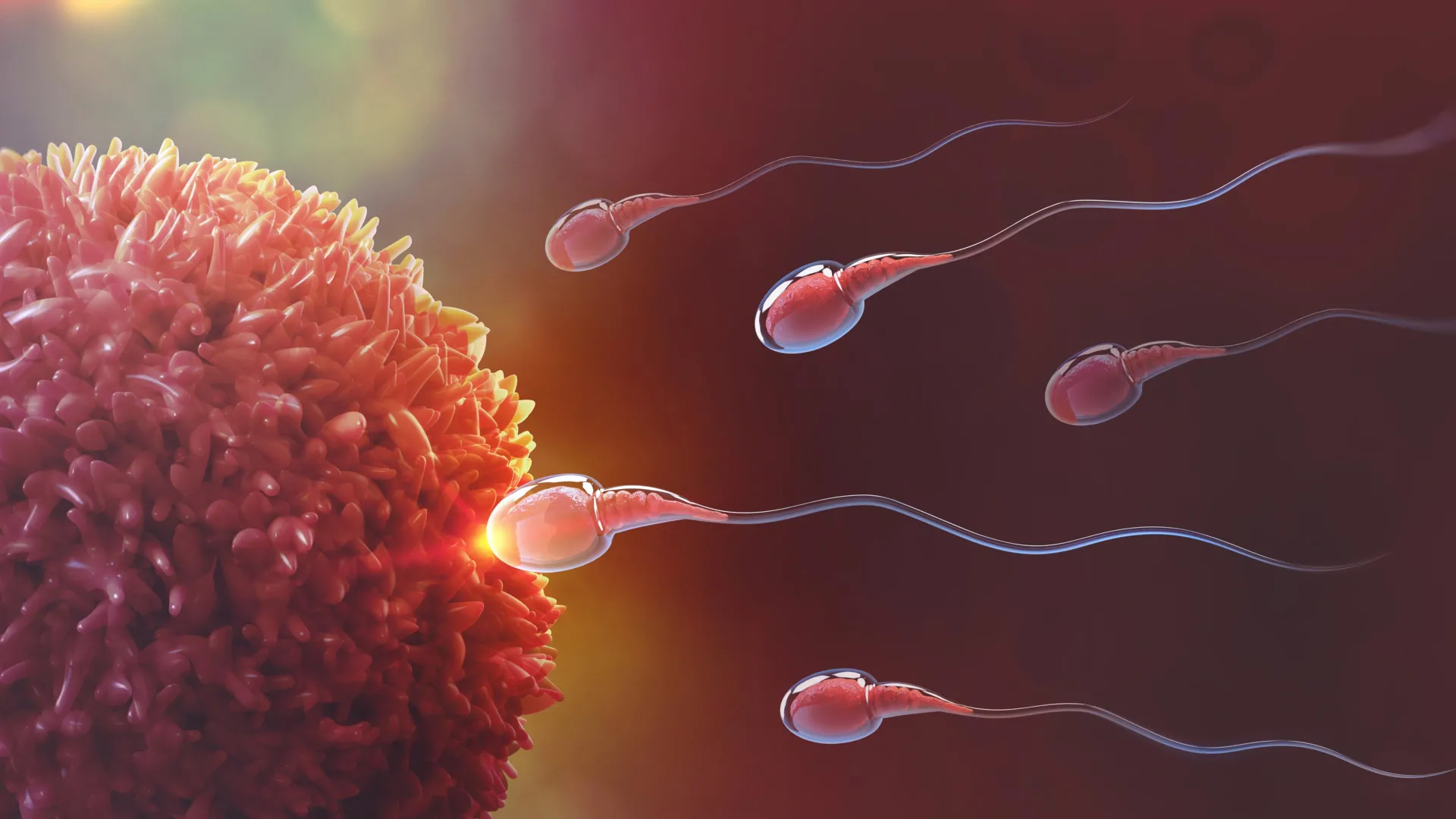
For generations, the popular imagination—and textbook biology—has portrayed fertilization as a high-stakes, ruthless sprint. Millions of individual, highly competitive sperm race headlong toward a single, waiting egg, locked in a microscopic gladiatorial contest where only the absolute fastest and strongest survives.
However, a groundbreaking study published in Nature Communications is systematically dismantling this foundational dogma. Spearheaded by an international team of evolutionary biologists from Syracuse University, the University of Siena in Italy, and the University of Szeged in Hungary, new research reveals a radically more complex picture of reproduction. In a vast array of species, reproductive success is driven not merely by cutthroat competition, but by sophisticated, coordinated teamwork.
The researchers focused their lens on arthropods—the hyper-diverse phylum encompassing insects, spiders, crabs, and centipedes—to investigate a phenomenon known as sperm conjugation. In these species, sperm cells physically join forces, swimming and organizing into structured, cooperative groups to navigate the hostile and complex terrain of the female reproductive tract.
This coordinated behavior is far from an evolutionary oddity. By mapping sperm characteristics across hundreds of species onto a massive evolutionary tree spanning 600 million years, the research team discovered that sperm cooperation has evolved independently across numerous lineages, appearing, disappearing, and re-emerging in a recurring historical pattern.
The implications of this study extend far beyond the sub-fields of entomology and evolutionary history. By challenging the long-held assumption that fertilization is exclusively a game of isolated individual cells, these findings could fundamentally reshape our understanding of vertebrate and human fertility. Furthermore, by identifying unique mechanisms of sperm organization—such as the specialized coatings found in agricultural pests like the spotted lanternfly—the research opens up transformative, highly targeted avenues for biosecurity and pest management.
Detailed Chronology of the Discovery
To understand how sperm conjugation reshapes evolutionary biology, one must trace the timeline of both the biological phenomenon itself and the rigorous scientific investigation that brought it to light.
The Overlooked Phenomenon (19th to 20th Century)
The existence of cooperative sperm is not entirely new to science; the phenomenon of sperm conjugation was first documented by pioneering microscopists more than a century ago. However, early biologists largely dismissed these observations as isolated anomalies or evolutionary dead ends. Mainstream reproductive biology remained entrenched in the paradigm of intense sperm competition, popularized by evolutionary theorists in the mid-to-late 20th century, which viewed reproductive cells as atomized competitors vying exclusively for personal genetic propagation. For decades, the cooperative grouping of sperm was treated as a biological footnote rather than a central engine of evolutionary adaptation.
The Modern Synthesis and Data Aggregation
The recent breakthrough began years prior to publication as Syracuse University biologists Steve Dorus, Scott Pitnick, and postdoctoral scholar R. Antonio Gomez—alongside their European colleagues—began compiling a massive comparative dataset. The team embarked on an exhaustive review of decades of previously published scientific literature, cataloging the ultrastructural and behavioral traits of sperm from hundreds of arthropod species.
By integrating these disparate observations into a comprehensive phylogenetic framework—an evolutionary family tree spanning over half a billion years—the researchers were able to run ancestral state reconstructions. This computational approach allowed them to peer backward through time, tracking the precise evolutionary trajectories of sperm architecture and behavior across major animal lineages.
The 600-Million-Year Evolutionary Timeline
The resulting historical timeline is one of the study’s most striking contributions. The analysis revealed that the common ancestor of all modern insects likely possessed conjugated sperm, pushing the origin of this cooperative strategy back hundreds of millions of years.
More importantly, the timeline exposed a dynamic pattern of repeated gains and losses. Sperm conjugation did not merely evolve once and persist uniformly; rather, lineages repeatedly abandoned and reinvented cooperative sperm strategies in response to shifting ecological and physiological pressures. This constant flux provides evolutionary biologists with a rare, natural laboratory to study how complex physiological traits are shaped, lost, and re-engineered over vast spans of geological time.
Supporting Context & Metrics: Unlocking the Mechanics of Cooperation
To grasp the magnitude of these findings, it is essential to examine the biological mechanisms that make sperm cooperation possible, as well as the quantitative breadth of the study.
The Role of Sperm-Associated Material (SAM)
At the heart of many cooperative reproductive systems is a substance known as sperm-associated material (SAM). SAM is a membrane-enclosed biological substance that acts as an intercellular adhesive or structural matrix. It can physically bind individual sperm cells to one another or construct intricate architectural scaffolds that organize cells into synchronized swimming units.
The research team hypothesizes that SAM may have served as the evolutionary catalyst for sperm conjugation. Originally emerging perhaps as a simple mechanism for packaging, protecting, or nourishing sperm within the male body, SAM was co-opted and elaborated over evolutionary time to facilitate collective mobility.
[Male Reproductive Tract]
       │
       ▼ (Secretion of SAM)
[Sperm Cells + Sperm-Associated Material]
       │
       ▼ (Self-Assembly / Conjugation)
[Synchronized Swimming Units / Rowing Teams]
       │
       ▼ (Navigating the Female Reproductive Tract Obstacle Course)
[Enhanced Fertilization Success]
Overcoming the Female Reproductive Obstacle Course
Why would cells evolve to cooperate when their ultimate goal is to fuse with the egg? The answer lies in the harsh realities of the female reproductive tract. Far from being a passive slide toward the egg, the female tract functions as a complex, highly selective biological obstacle course filled with immunological barriers, viscous fluids, and tortuous anatomical pathways.
A single, isolated sperm cell faces immense hydrodynamic and physiological challenges. By functioning as a coordinated group—akin to a competitive rowing team moving in unison—conjugated sperm can gain radical advantages in:
- Mobility: Generating greater propulsive force to navigate high-viscosity environments.
- Protection: Shielding vulnerable cellular membranes from hostile female immune responses.
- Targeted Delivery: Ensuring that vital signaling or transport molecules reach specific anatomical waypoints within the reproductive tract.
A Macro-Scale Analytical Scope
To arrive at these conclusions, the research team operated on a massive analytical scale:
- Taxonomic Breadth: Spanned the subphylum Arthropoda, encompassing insects, spiders, centipedes, and crustaceans—a group representing roughly 80% of all described animal species.
- Temporal Depth: Traced evolutionary histories across a 600-million-year timeline.
- Comparative Dataset: Analyzed structural sperm data harvested from hundreds of distinct species, mapping complex morphological traits onto rigorous phylogenetic trees.
Official Statements & Expert Insights
The lead researchers behind the Syracuse-led study emphasize that these findings fundamentally alter our philosophical and empirical approach to evolutionary biology and reproductive science.
"Fertilization is often viewed as a competition among individual sperm, but in many species we see cells working together in ways that can influence reproductive success," explains Steve Dorus, professor of biology at Syracuse University’s College of Arts and Sciences (A&S) and co-author of the study.
Dorus underscores that these discoveries bridge a longstanding gap in our understanding of how complex reproductive phenotypes emerge. The fact that evolution has repeatedly converged on cooperative solutions suggests that group dynamics are just as vital to biological success as competition.
"Evolution has effectively run the same experiment over and over again across different groups of arthropods," notes R. Antonio Gomez, postdoctoral scholar in the A&S Department of Biology and lead author of the paper. "That allows us to see not only when sperm cooperation emerges, but also when it disappears and reappears under different evolutionary conditions."
Gomez highlights the experimental nature of evolutionary biology, where shifting environmental and physiological pressures drive species to toggle between cooperative and competitive strategies across geological epochs.
"Sperm are the most rapidly evolving cell type," adds Scott Pitnick, Weeden Professor of Biology in A&S and senior author of the study. "They are shaped by the unique challenge of operating outside the body in the complex environment of the female reproductive tract."
Pitnick’s framing reframes fertilization not as a simple sprint, but as a treacherous obstacle course where intercellular cooperation provides a decisive evolutionary edge.
Future Outlook: Fertility Research and Novel Pest Control
While the current study is firmly rooted in evolutionary biology and arthropod phylogenetics, its downstream applications are poised to make waves in two critical, applied fields: mammalian and human reproductive medicine, and targeted agricultural pest management.
Implications for Human and Animal Fertility
For decades, clinical evaluations of male fertility have relied heavily on basic metrics of individual sperm count, motility, and morphology. However, if intercellular cooperation plays a critical role in navigating the female reproductive tract across a wide swath of the animal kingdom, reproductive scientists may be missing half the picture.
Understanding how sperm cells cooperate, share biological resources, or rely on extracellular structural matrices like SAM could eventually pave the way for novel diagnostic approaches in human reproductive medicine. Clinicians may one day look beyond the swimming capacity of isolated cells to evaluate how sperm interact, aggregate, and support one another during the fertilization process—potentially shedding light on unexplained cases of male infertility.
A New Frontier in Pest Control: The Spotted Lanternfly Paradox
Perhaps the most immediate and economically impactful application of this research lies in agriculture and biosecurity. The research team is actively investigating whether sperm conjugation pathways or SAM structures can be chemically or biologically disrupted to control destructive invasive species.
Consider the case of the spotted lanternfly (Lycorma delicatula), an invasive insect native to Asia that has wreaked havoc on vineyards, orchards, and hardwood forests across the northeastern United States. Interestingly, spotted lanternfly sperm do not form cooperative conjugated groups. Instead, every single sperm cell is entirely encased in a thick, enigmatic layer of SAM.
┌────────────────────────────────────────────────────────┐
│               The Spotted Lanternfly Paradox           │
├────────────────────────────────────────────────────────┤
│ • No Sperm Conjugation (cells do not join together)    │
│ • 100% SAM Encapsulation (each sperm encased in matrix)│
│ • Unknown Locomotion Mechanism (how they move is a     │
│   scientific mystery)                                  │
│ ➔ Opportunity: Disrupting SAM offers a ultra-specific  │
│   target for targeted agricultural pest control.       │
└────────────────────────────────────────────────────────┘
"Their sperm are highly unusual," Pitnick points out. "They do not have conjugation, but each individual sperm is completely embedded in this material, and we do not even know how they are motile."
This profound biological mystery represents a golden opportunity. Because scientists still do not fully understand how these encapsulated sperm move and function, identifying the precise physiological role of SAM in lanternfly reproduction could yield a revolutionary tool for pest management. If SAM is an absolute prerequisite for successful fertilization in the species, developing targeted interventions that degrade or block this material could provide an environmentally benign, highly specific method to halt the spread of an aggressive agricultural menace, bypassing the need for broad-spectrum chemical pesticides.
Conclusion: Bridging Cooperation and Competition
Ultimately, the Syracuse-led study serves as a profound reminder of nature’s complexity. By demonstrating that cooperation and competition are not mutually exclusive—and that even microscopic, single-celled gametes can rely on complex social strategies to achieve reproductive success—the research bridges a major gap in modern biology. As scientists push forward to observe live sperm groups within intact reproductive tracts and untangle the mysteries of sperm-associated materials, they are rewriting the rules of how life propagates, evolves, and adapts across the ages.