









Executive Overview
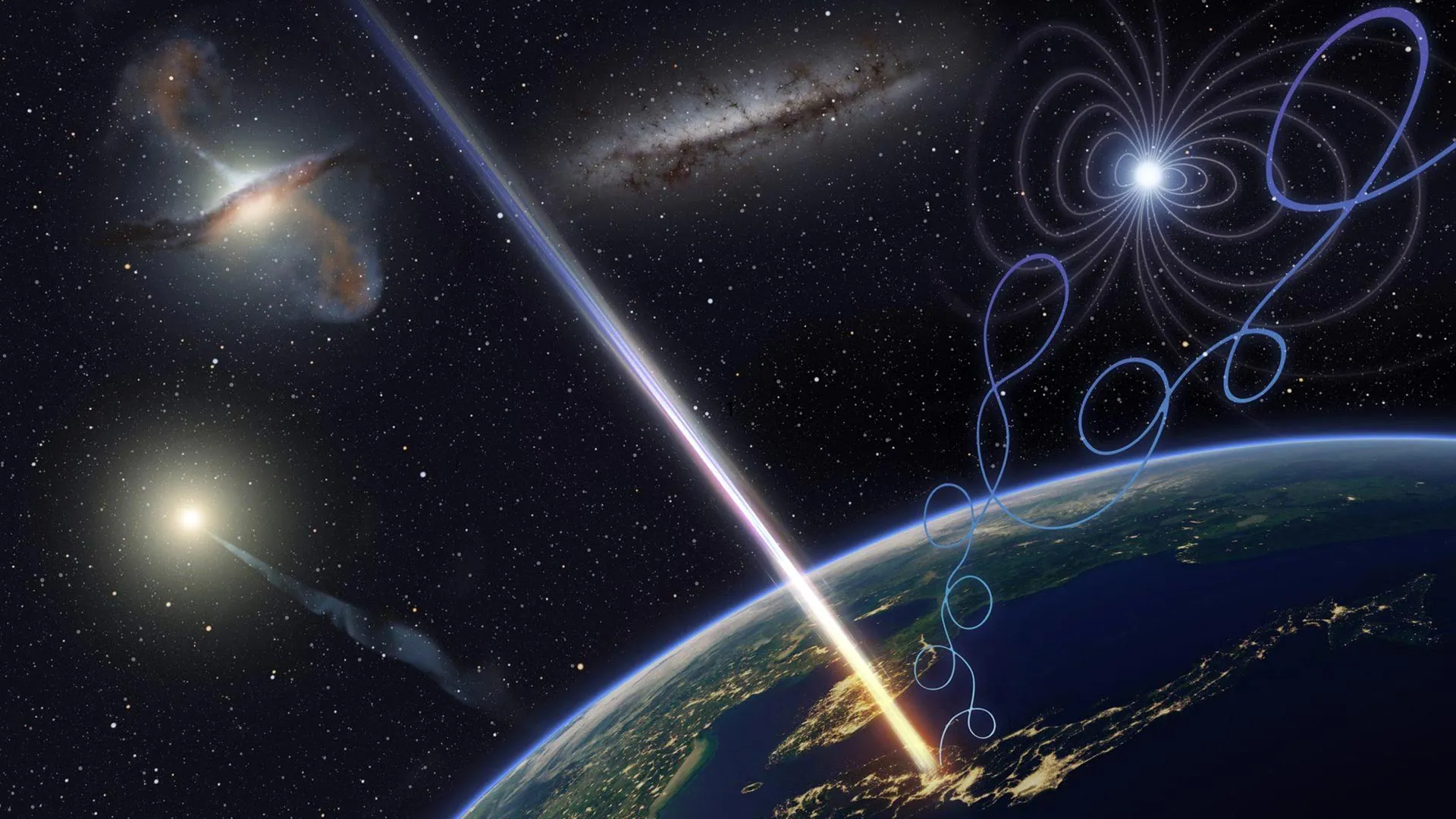
For over half a century, astrophysicists have grappled with one of the most persistent and tantalizing enigmas in modern science: the origin of ultrahigh-energy cosmic rays (UHECRs). These elusive messengers from deep space slam into Earth’s upper atmosphere with kinetic energies that dwarf anything human ingenuity can manufacture. Among them, the legendary "Amaterasu particle"—detected in 2021 by the Telescope Array in the desert of Utah—joined the pantheon of cosmic anomalies, rivaling the historic "Oh-My-God particle" recorded in 1991.
Yet, for all their staggering power, these particles have stubbornly withheld their secrets. Their arrival directions often point toward cosmic voids—vast, empty regions of space completely devoid of any known astronomical objects capable of acting as particle accelerators.
Now, groundbreaking research led by a collaborative team of scientists at Penn State, alongside colleagues at the Yukawa Institute for Theoretical Physics in Japan, Virginia Tech, and other elite institutions, offers a compelling paradigm shift. Published in Physical Review Letters, the new study proposes a radical yet elegant solution: some of the universe’s most extreme cosmic rays may be atomic nuclei heavier than iron.
According to the team’s advanced computational models, these ultraheavy nuclei possess unique physical properties that allow them to endure the punishing journey across intergalactic space far better than protons or lighter atomic nuclei. By shedding light on how these massive clusters of protons and neutrons navigate the cosmos, the research not only solves a critical puzzle regarding energy loss over cosmic distances but also points a glowing finger toward the most violent, cataclysmic events in the universe as the true engines of creation.
Detailed Chronology: The Quest to Understand UHECRs
To appreciate the magnitude of the recent Penn State discovery, one must look back at the historical timeline of ultrahigh-energy cosmic ray research, a journey marked by accidental discoveries, technological leaps, and theoretical dead ends.
1960s–1990: The Dawn of Extreme Cosmic Ray Detection
The study of cosmic rays began humbly in the early 20th century, but it wasn’t until the 1960s that astrophysicists realized particles were arriving from outside our solar system with macroscopic amounts of energy concentrated into subatomic scales. As detectors grew in size—evolving from localized Geiger counters to sprawling array networks spread across thousands of square kilometers—scientists began recording events that defied conventional physical models.
October 1991: The Birth of the "Oh-My-God" Particle
On the night of October 15, 1991, the Fly’s Eye cosmic ray detector in Dugway, Proving Ground, Utah, captured an event that would baffle generations of physicists. Dubbed the "Oh-My-God particle," this single proton or atomic nucleus struck Earth with an estimated energy of 320 exa-electron volts (EeV). To put that in perspective, it was millions of times more energetic than the beam particles circulating inside the world’s most powerful man-made collider. At the time, standard astrophysical theories struggled to explain how any single particle could be accelerated to such a velocity within the known boundaries of the Milky Way or even neighboring galaxies.
2008–2021: Expanding Arrays and Persistent Mysteries
In the decades following the Oh-My-God particle, observatories like the Pierre Auger Observatory in Argentina and the Telescope Array in Utah were built on an unprecedented scale to capture more of these rare events. Scientists hoped that accumulating a larger dataset would reveal clear clusters pointing toward active galactic nuclei, quasars, or starburst galaxies.
Instead, they found a confounding paradox. While lower-energy cosmic rays are deflected by galactic and intergalactic magnetic fields—scrambling their directional data—ultra-high-energy particles should, in theory, point relatively straight back toward their sources. Yet, when scientists traced the trajectories of events like the Amaterasu particle backward, they found themselves staring into "cosmic voids"—regions containing no luminous matter, magnetic traps, or energetic sources capable of launching such projectiles.
Recent Breakthroughs: The Penn State Simulations
Enter the modern era of computational astrophysics. Recognizing that existing models treating UHECRs primarily as protons or iron nuclei were failing to resolve the directional anomalies, the Penn State-led team decided to model the propagation of ultraheavy nuclei. By running sophisticated Monte Carlo simulations tracking how atomic nuclei of various masses interact with the cosmic microwave background (CMB) and extragalactic background light (EBL) over millions of light-years, the researchers unlocked the missing piece of the puzzle. Their findings demonstrate that ultraheavy nuclei can retain their extreme kinetic loads over distances that would disintegrate or severely degrade lighter particles.
Supporting Context & Metrics: The Physics of Extremes
To understand why this discovery is so revolutionary, one must delve into the physics of ultra-high-energy particles, the composition of atomic nuclei, and the catastrophic cosmic environments required to forge them.
Defining Ultrahigh-Energy Cosmic Rays
Cosmic rays are not actually "rays" in the traditional electromagnetic sense (like X-rays or gamma rays); rather, they are physical matter—subatomic particles and atomic nuclei traveling through space at near-light speed.
The threshold for an "ultrahigh-energy" cosmic ray is generally set at 1 EeV ($10^18$ electron volts). To put this energy scale into context:
- Large Hadron Collider (LHC): The pinnacle of human particle acceleration achieves collision energies of roughly 13 to 14 tera-electron volts (TeV), or $0.000014$ EeV.
- The Amaterasu Particle: Detected in 2021, this solitary particle carried an estimated energy of 240 EeV—roughly equivalent to the kinetic energy of a standard tennis ball traveling at high speed, packed entirely into a space billions of times smaller than a single grain of sand.
The Problem of Intergalactic Travel
As cosmic rays travel across the universe, they do not have a free ride. They are constantly bombarded by photons from the Cosmic Microwave Background (the leftover thermal radiation from the Big Bang) and the Extragalactic Background Light.
For protons and light atomic nuclei (like helium or carbon), this interaction triggers processes such as photopion production and photodisintegration. Essentially, the particle collides with ambient photons, loses energy rapidly, and breaks apart. This limitation, known as the Greisen-Zatsepin-Kuzmin (GZK) limit, dictates that protons traveling distances greater than roughly 160 million light-years should suffer catastrophic energy losses. Consequently, ultrahigh-energy protons detected on Earth must originate from relatively nearby cosmic "neighborhoods"—making the empty voids found at the origin points of particles like Amaterasu all the more inexplicable.
Why Ultraheavy Nuclei Change the Game
Atomic nuclei heavier than iron possess vastly different interaction cross-sections and decay pathways. The new research demonstrates that at energies exceeding 100 EeV, ultraheavy nuclei experience a different regime of energy loss mechanisms during intergalactic transit. Because of their higher mass-to-charge ratios and specific binding energies, they can traverse vast cosmic expanses more efficiently than previously modeled, arriving at Earth with their extreme energy intact.
Furthermore, because these ultraheavy particles are more massive, they are deflected less by intergalactic magnetic fields than lighter nuclei of the same total energy, preserving more accurate directional information—or conversely, explaining how apparent misalignments with source regions can occur due to cumulative magnetic interactions over immense distances.
Official Statements and Expert Insights
The study, spearheaded by prominent figures in theoretical astrophysics, has drawn praise and attention from the global scientific community.
"Ultrahigh-energy cosmic rays can only be accelerated by some of the most powerful sources in the universe," noted Dr. Kohta Murase, professor of physics and of astronomy and astrophysics in the Penn State Eberly College of Science, who led the research team. "When we detect individual cosmic-ray particles such as the Amaterasu particle here on Earth, we can often use their energies, arrival directions and expected magnetic deflections to infer their possible cosmic sources."
Dr. Murase emphasized that while the team’s calculations do not claim that all UHECRs are ultraheavy nuclei, proving that even a fraction of them are fundamentally changes the investigative framework for astrophysicists.
"The origins and acceleration mechanisms of ultrahigh-energy cosmic rays have been among the biggest mysteries in the field for more than 60 years, since the first example was reported," Murase added. "Our research showed that at energies comparable to that of the Amaterasu particle, ultraheavy nuclei lose energy more slower than protons or intermediate-mass nuclei, making them better able to survive cosmic distances and reach Earth at extreme energies."
Reflecting on the astrophysical engines capable of creating such massive elements at relativistic speeds, the researchers point toward events where matter is compressed and heated to unimaginable extremes.
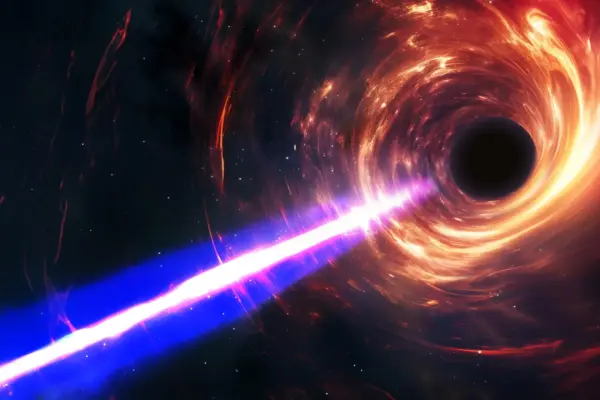
"The most promising sites for producing and accelerating such ultraheavy nuclei are massive star deaths involving explosive collapse into black holes or strongly magnetized neutron stars, as well as binary neutron-star mergers known to be powerful gravitational-wave emitters," Murase explained.
These cataclysms frequently spawn gamma-ray bursts (GRBs)—the most luminous electromagnetic events observed since the Big Bang. The injection of ultraheavy nuclei from these violent stellar graveyards could also account for subtle asymmetries observed in the cosmic ray spectrum between the northern and southern skies, a lingering observational puzzle that has divided observational astronomers for years.
Future Outlook: The Next Generation of Cosmic Observatories
Solving the mystery of ultrahigh-energy cosmic rays will require moving beyond theoretical models and gathering empirical data with unprecedented precision. Fortunately, a new generation of astrophysical observatories is currently under development or scaling up operations, designed specifically to test hypotheses like the ultraheavy nucleus model.
AugerPrime and Ground-Based Arrays
Upgrades to existing infrastructure, such as the ongoing AugerPrime project at the Pierre Auger Observatory in Argentina, are incorporating advanced surface detectors, underground muon detectors, and upgraded electronics. By improving the ability to distinguish between showers caused by heavy nuclei versus light protons in the atmosphere, these detectors will soon provide definitive statistical evidence regarding the mass composition of UHECRs at the highest energy tiers.
The Global Cosmic Ray Observatory
Looking further into the future, proposals for a unified Global Cosmic Ray Observatory aim to pool international resources, computing power, and sensor coverage. By blanketing larger areas of the globe with sensitive particle-detection grids, astrophysicists hope to capture significantly more events in the 100+ EeV range.
Multi-Messenger Astronomy Integration
Perhaps the most exciting frontier is the marriage of cosmic-ray astrophysics with multi-messenger astronomy. By combining data from:
- Gravitational-wave detectors (such as LIGO, Virgo, and KAGRA) recording the ripples in spacetime produced by colliding neutron stars;
- Gamma-ray telescopes capturing high-energy light flashes from stellar explosions; and
- Surface particle arrays intercepting ultraheavy cosmic ray nuclei;
scientists will soon be able to triangulate cosmic phenomena in real-time.
If future data confirms that ultraheavy nuclei dominate the ultrahigh-energy spectrum, humanity will have unlocked a vital master key to the universe. We will no longer just be passive observers of random cosmic shrapnel; we will possess a forensic toolkit capable of tracing the most violent deaths of stars across billions of light-years, turning the most confounding anomalies of the cosmos into a clear, legible history of dynamic galactic evolution.