







Executive Overview
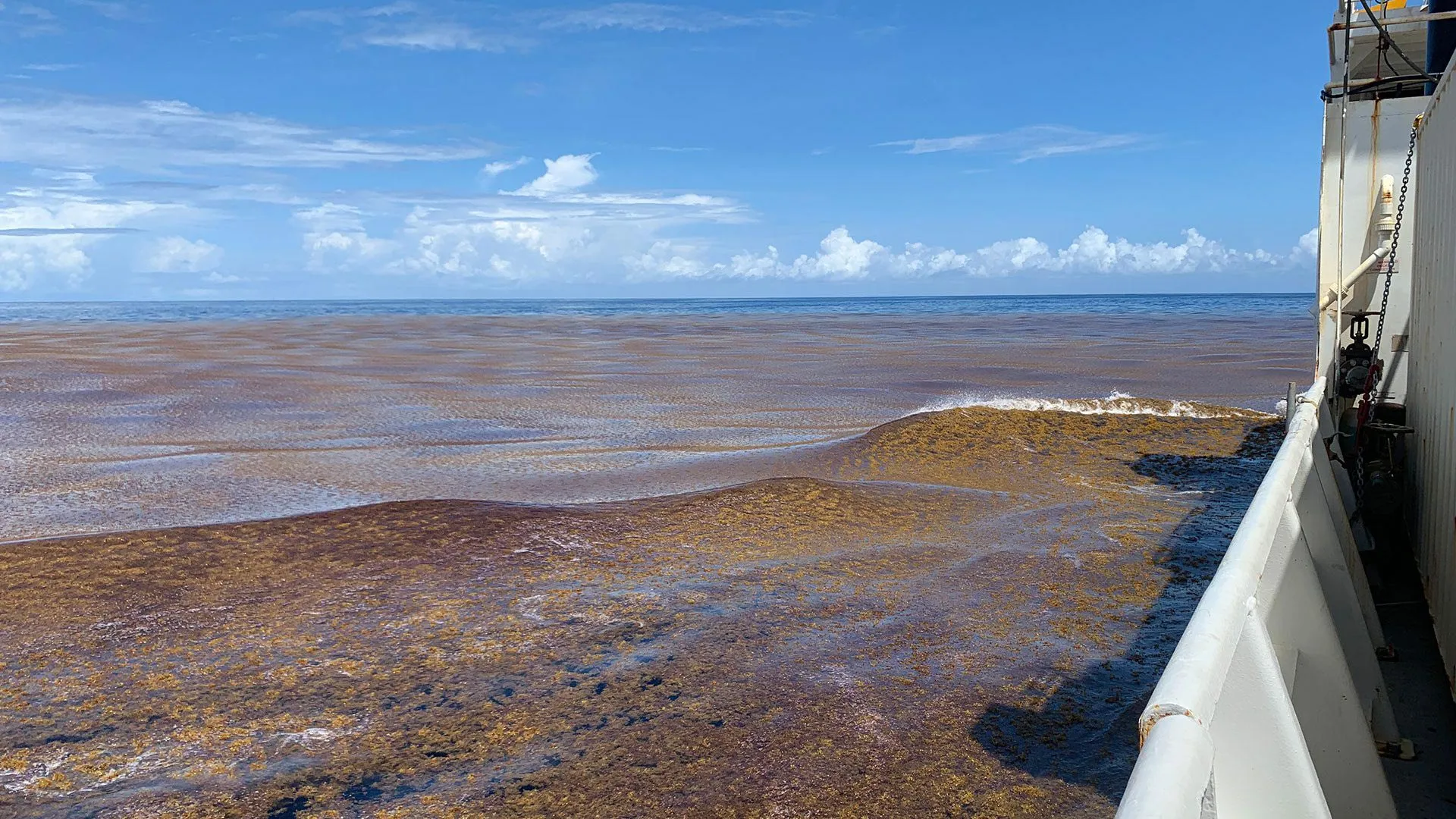
In a monumental leap forward for earth science and marine biology, researchers have completed the first-ever comprehensive global assessment of floating algae. By harnessing the computational power of artificial intelligence and deep learning, a collaborative team of scientists from the University of South Florida (USF) and the National Oceanic and Atmospheric Administration (NOAA) analyzed more than two decades of satellite data. The findings, recently published in the prestigious journal Nature Communications, paint a startling picture: massive mats of macroalgae and vast expanses of microalgal scum are aggressively spreading across the world’s oceans, fundamentally altering marine ecosystems, threatening coastal economies, and rewriting the baseline of our planet’s aquatic ecology.
This unprecedented ecological shift is driven by a potent cocktail of warming ocean temperatures, shifting ocean currents, and an influx of human-induced nutrient runoff. While floating algae in the open ocean can act as vital nurseries and habitats for marine life, their exponential proliferation near coastlines is already wreaking havoc. As immense quantities of decaying biomass wash ashore, they suffocate local marine environments, pose severe public health risks, choke multi-billion-dollar tourism industries, and impose crippling financial burdens on coastal municipalities.
Historically, tracking this phenomenon on a global scale was an insurmountable challenge. The sheer volume of data required to monitor the earth’s vast marine expanses rendered manual analysis impossible. However, by deploying a sophisticated deep-learning model trained on 1.2 million satellite images, the USF and NOAA research team has successfully bridged the gap between big data and environmental science. Their work not only provides a definitive global census of floating algae from 2003 to 2022 but also signals an urgent warning: we are witnessing a planetary transition from a macroalgae-poor ocean to a macroalgae-rich ocean.
Detailed Chronology: The Making of a Global Shift
To understand the trajectory of this marine transformation, researchers had to look backward across a twenty-year timeline, utilizing historical satellite archives to piece together how localized algal blooms snowballed into a planetary phenomenon. The timeline revealed by the study highlights a distinct turning point around 2008, after which the frequency, scale, and density of floating algae accelerated dramatically.
The Era Before 2008: Baseline Conditions
Prior to the late 2000s, massive floating macroalgae blooms were largely considered regional anomalies or isolated oddities. Aside from the historic sargassum aggregations native to the localized Sargasso Sea in the North Atlantic, widespread, hyper-dense mats of seaweed were rarely documented crossing international waters or plaguing unrelated coastlines. Marine ecosystems functioned within historical parameters, where nutrient balances and baseline temperatures kept runaway vegetative growth in check. However, hidden beneath the surface of routine monitoring, the foundational elements of global climate change and oceanic nutrient loading were quietly setting the stage for a dramatic ecological pivot.
The Tipping Point (2008–2012): A Cascade of Mega-Blooms
The fragile equilibrium shattered between 2008 and 2012, marking a watershed moment in oceanography. In 2008, the Yellow Sea in East Asia witnessed the emergence of the world’s first colossal, unprecedented bloom of the green seaweed Ulva. Stretching across thousands of square kilometers, this sudden explosion of biomass shocked researchers and coastal managers alike, requiring massive emergency clean-up operations ahead of the Beijing Olympic sailing events.
Just three years later, in 2011, the tropical Atlantic became the epicenter of an even more alarming phenomenon: the birth of the Great Atlantic Sargassum Belt. Stretching from the coast of West Africa all the way into the Gulf of Mexico, this massive expanse of brown macroalgae quickly established itself as a recurring, year-round fixture, eventually growing to span thousands of miles.
Before the scientific community could fully process these developments, the East China Sea spawned its own massive macroalgal invasion in 2012. These successive, mega-scale events were not isolated incidents. In hindsight, they represented the vanguard of a systemic, global regime shift. The ocean’s chemical and thermal properties had crossed a threshold, creating an environment explicitly favorable to the aggressive, unchecked proliferation of floating marine vegetation.
Supporting Context & Metrics: Decoding the Data
The scale of the study matching this ecological crisis is as staggering as the findings themselves. To map the transformation of the world’s oceans, the research team—led by senior author Chuanmin Hu and first author Lin Qi—had to overcome immense technical hurdles. The sheer volume of remote-sensing data required a technological intervention that only modern artificial intelligence could provide.
Mining 1.2 Million Satellite Images
At the core of the study is a monumental data-crunching operation. The research team examined a staggering 1.2 million satellite images collected over a 20-year span from 2003 to 2022. This vast dataset encompassed 13 distinct geographic zones across the globe and tracked five separate categories of algae, differentiating between floating macroalgal mats (such as Sargassum and Ulva) and microalgal scum.
Analyzing this data manually would have taken decades of continuous human labor. Furthermore, detecting floating algae from space is notoriously difficult. Algae features often stretch across expansive spatial areas, yet they typically account for less than one percent of an individual satellite pixel’s total surface reflection. Traditional automated algorithms frequently missed these subtle, low-signal anomalies, confusing them with clouds, sun glint, or oceanic foam.
To solve this, Lin Qi—an oceanographer at the NOAA Center for Satellite Applications and Research—modified and enhanced an existing computer model previously developed by the USF research group. They trained a deep learning neural network to recognize the faint, complex visual signatures of surface-dwelling algae. Training this model was a formidable task, requiring months of iterative fine-tuning using millions of specific image features.
High-Performance Computing: The Engine of Discovery
Even with an advanced AI model, processing 1.2 million high-resolution satellite images required computational infrastructure far beyond the capability of standard desktop computers. The project was made possible by the University of South Florida’s state-of-the-art Research Computing facility.
Equipped with high-performance computing (HPC) systems, the facility allowed the research team to run multiple large-scale image processing pipelines in parallel. Even with this immense processing power harnessed to its limits, the full analysis still required several months to complete. Without the synergy between advanced NOAA-USF scientific collaboration and heavy-duty academic computing, this planetary-scale assessment would have remained impossible.
Quantifying the Expansion: The Numbers Behind the Growth
The statistical results extracted by the AI model confirmed what field researchers had long suspected: floating algae is growing on a global scale, though the rates vary significantly between micro and macro varieties.
- Microalgal Scum: Surface-dwelling microalgae demonstrated a steady, statistically significant global growth rate of 1 percent per year between 2003 and 2022. The cumulative area blanketed by these microscopic blooms eventually reached a staggering 43.8 million square kilometers (16.9 million square miles), marking a definitive break from historical baseline coverages.
- Macroalgal Mats: While microalgae grew steadily, macroalgae experienced explosive, exponential growth in specific oceanic zones. In the tropical Atlantic and the western Pacific, macroalgal blooms expanded at an average rate of 13.4 percent annually. The sharpest, most aggressive spikes in biomass production occurred systematically in the years immediately following 2008.
Official Statements: Perspectives from the Frontlines
The implications of this study extend far beyond academic circles, offering critical insights for environmental policy, coastal governance, and marine conservation. The lead researchers have emphasized both the scientific breakthrough of the methodology and the sobering reality of what the data reveals.
Reflecting on the overarching implications of the study, Dr. Chuanmin Hu, professor of oceanography at the USF College of Marine Science and senior author of the paper, emphasized the paradigm shift under way in our marine environments:
"While regional studies have been published, our paper gives the first global picture of floating algae, including macroalgal mats and microalgal scum," Hu stated. "Our results show that the global ocean now favors the growth of floating macroalgae. On a global scale, we appear to be witnessing a regime shift from a macroalgae-poor ocean to a macroalgae-rich ocean."
Hu also pointed out the dual-nature of these organisms. In the open, pelagic ocean, floating algae play a surprisingly constructive ecological role. They function as critical habitats, breeding grounds, and nurseries for a wide array of marine species, potentially supporting and bolstering open-ocean fisheries. However, this ecological benefit curdles into an environmental crisis once the algae are pushed toward the coasts.
"Problems arise when large quantities reach the coast," Hu explained. "As the algae decay, they can damage marine environments, threaten human and animal health, discourage tourism, and create financial losses for coastal communities."
Detailing the technical achievement and the necessity of cross-institutional partnerships, Lin Qi, first author of the study and oceanographer at NOAA, underscored the indispensable role of modern technology in executing the research:
"This work is impossible without the high-performance computing facility or the long-term collaborations between NOAA and USF," Qi noted.
Addressing the root causes of the expansion, the study points to a complex interplay between anthropogenic (human-caused) activities and natural climatic cycles. Nutrient runoff—originating from agricultural fertilizers, industrial waste, and untreated sewage washing down major river systems—acts as a high-octane fertilizer for coastal and near-shore algae. Simultaneously, rising ocean temperatures and altered current dynamics driven by global climate change are expanding the thermal envelopes where these species can thrive.
However, the researchers stress that the drivers are not uniform across the planet. The causes of algal proliferation vary drastically from one geographic zone to another, demanding localized responses tailored to regional environmental conditions.
Future Outlook: Navigating an Algae-Rich World
As the scientific community digests the sobering conclusions of this comprehensive assessment, the horizon of oceanographic research is shifting rapidly. The successful deployment of artificial intelligence to process petabytes of satellite imagery has opened a new frontier in real-time environmental monitoring.
The transition to a "macroalgae-rich ocean" presents profound challenges for governments, tourism boards, fisheries, and public health officials worldwide. In regions heavily dependent on coastal tourism—such as the Caribbean, parts of West Africa, and Southeast Asia—the annual inundation of rotting sargassum and green seaweed has already transformed from an environmental nuisance into a recurring socio-economic crisis. Piles of decaying seaweed release toxic hydrogen sulfide gas, killing marine life, fouling pristine beaches, and driving away visitors. Managing these massive influxes requires millions of dollars in mechanical removal, yet municipalities often find themselves overwhelmed by the sheer volume of incoming biomass.
Armed with the predictive power and analytical depth of AI-driven satellite tracking, scientists are now better equipped to provide early warnings to vulnerable coastal communities. By continuously monitoring the genesis and trajectory of offshore blooms, authorities can anticipate landfall events weeks in advance, allowing for targeted mitigation strategies rather than reactive cleanup efforts.
Looking to the future, the research team at USF and NOAA has no intention of slowing down. Building upon the success of their current model, they are already planning the next steps in their investigative journey.
"We are going to explore more satellite data and look for better understanding of the expansions," Qi said.
Future research will likely focus on refining the AI models to predict precise bloom trajectories, identifying the exact chemical thresholds triggering regional spikes, and decoupling the specific contributions of climate change versus agricultural runoff.
Ultimately, this landmark study serves as both a technological triumph and an urgent environmental wake-up call. By weaponizing artificial intelligence in the service of planetary health, scientists have illuminated an invisible tide sweeping across the globe. How humanity responds to the dawn of the macroalgae-rich ocean will define the health, resilience, and economic viability of our coastal world for generations to come.