






Executive Overview
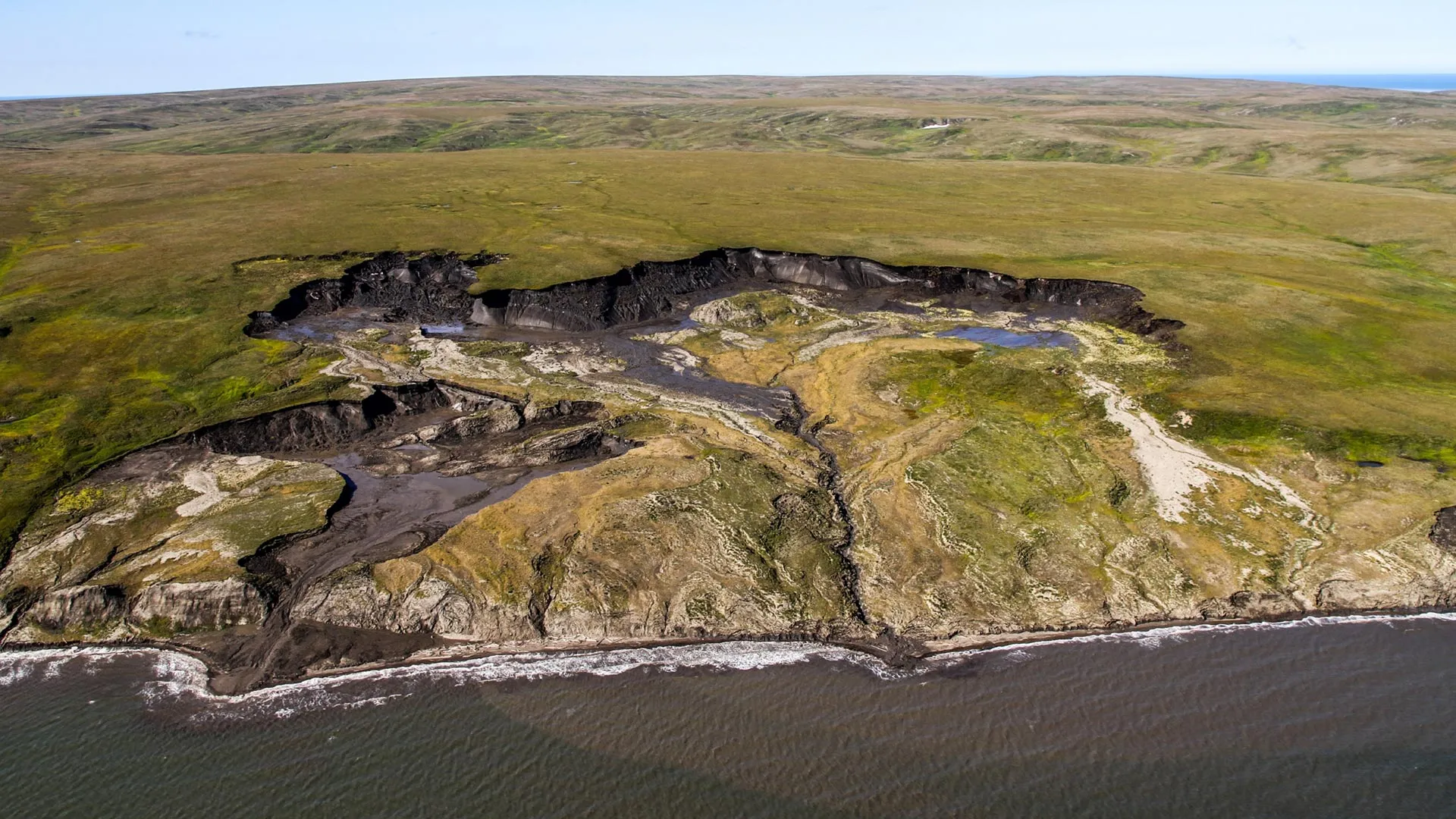
High in the Canadian Arctic, where the frigid winds of the Beaufort Sea batter the shores of Qikiqtaruk—better known as Herschel Island—a silent transformation is reshaping the earth. Here, the permafrost, a massive subterranean fortress of frozen soil and ancient organic matter, is beginning to fracture and melt. As temperatures across the Arctic rise at nearly four times the rate of the global average, this ancient frozen ground is slumping into the ocean, unleashing massive plumes of land-locked carbon into marine waters.
For decades, climate scientists have operated under a cloud of deep uncertainty regarding this subterranean release. When ancient organic carbon—locked away for thousands of years—spills into the sea, what is its ultimate fate? Does it fuel a feedback loop of runaway greenhouse gas emissions by being consumed by marine microbes and exhaled into the atmosphere as carbon dioxide and methane? Or does it sink quietly into the abyss, locked away in the muddy vaults of the seabed?
A groundbreaking study published in the prestigious journal Nature Geoscience has finally begun to lift that veil. Conducted by an international team of researchers from the Alfred Wegener Institute (AWI) and MARUM – Centre for Marine Environmental Sciences at the University of Bremen, the investigation reveals a surprising and reassuring twist in the Arctic carbon cycle. It turns out that marine microorganisms acting as the gatekeepers of the seafloor are unexpectedly selective. Panning past the ancient, terrestrial carbon pouring in from the eroding coastlines, these microscopic "gourmet" eaters exhibit a strong preference for fresh, modern marine organic matter—such as the remains of algae.
Consequently, only a small fraction—roughly ten percent—of the massive influx of permafrost carbon is broken down into greenhouse gases. The vast majority of the terrestrial carbon remains safely sequestered, buried beneath layers of sediment on the ocean floor. While this discovery provides a welcome nuance to climate forecasting, it also underscores the delicate and complex interactions governing the Arctic ecosystem. With coastal erosion projected to surge dramatically by the turn of the century, understanding these micro-scale behaviors is critical for refining the global climate models that dictate our collective future.
Detailed Chronology: Unraveling the Permafrost Mystery
The Accumulation of Ages
To understand the significance of the recent findings, one must first look at the sheer scale of the Arctic’s carbon reservoir. Over millennia, tundra ecosystems have accumulated approximately 1,300 gigatonnes of organic carbon within their frozen soils, largely composed of preserved plant roots, ancient mosses, and animal remains. An additional 400 gigatonnes are locked away within adjacent ocean sediments and complex river deltas. Together, these zones represent one of the most concentrated carbon stores on the planet.
However, the geographical stability of this reservoir is collapsing. Anthropogenic climate change has triggered an unprecedented thermal shock across the Arctic circle. As air and ocean temperatures climb, the permafrost loses its structural integrity. The ice binding the soil together melts, leading to massive land slumps, thermal erosion, and catastrophic coastal degradation.
Rivers and collapsing shorelines currently flush an estimated 0.02 gigatonnes of organic carbon into the Arctic Ocean every year. Climate forecasts project an aggressive trajectory, estimating that this annual outflow could surge by 70 to 150 percent by the year 2100. Until recently, however, science lacked empirical data on what happens during this aquatic transition. What proportion of this mobilized carbon volatilely escapes back into the atmosphere, and what proportion is safely buried out of reach? Bridging this knowledge gap became the primary objective for the researchers at AWI and MARUM.
The Herschel Island Expedition
To map the journey of this displaced carbon, researchers zeroed in on the dynamic coastline of Qikiqtaruk (Herschel Island) in the Canadian Yukon. The island serves as a natural laboratory for coastal permafrost erosion, heavily impacted by changing sea-ice conditions and rising water temperatures.
During specialized field campaigns, the scientific team deployed heavy coring equipment to extract sediment cores from several strategic locations just off the coast. These vertical cylinders of mud and rock functioned as natural archives, capturing layers of material deposited sequentially over the past fifty years. By analyzing these layered samples, the team could reconstruct a historical timeline of how terrestrial carbon interacted with the marine environment over half a century.
Laboratory analyses yielded immediate surprises. Rather than fueling a massive spike in biological activity and subsequent gas production, the massive influx of land-based carbon appeared to pass through the active geochemical cycle with minimal disruption.
"Although the sea here carries away huge quantities of organic carbon from the coast, surprisingly little of it ends up in the ocean’s active carbon cycle," stated Dr. Manuel Ruben, lead author of the study from the Alfred Wegener Institute, Helmholtz Centre for Polar and Marine Research (AWI). "Microorganisms convert around ten percent of the organic carbon from the sediments into gases, which rise into the water and can then enter our atmosphere."
The remaining ninety percent, the researchers discovered, remains permanently buried, pinned down beneath layers of continuous sedimentation.
Supporting Context & Metrics: Decoding the Chemical Signatures
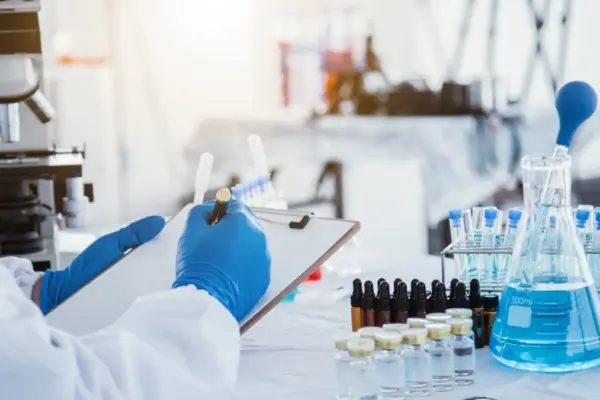
To move beyond mere observation and prove why the terrestrial carbon was bypassed, the research team employed advanced geochemical tracing techniques. This required examining not just the solid sediment layers, but also the liquid environment trapped within the microscopic pore spaces between sediment particles, known as pore water.
Isotopic Sleuthing
Pore water acts as a chemical diary of microbial respiration. As single-celled organisms in the sediment consume organic material, they respire dissolved inorganic carbon (DIC) into the pore water, altering its chemical composition. By measuring the concentration and isotopic signatures of this DIC, the scientists could precisely track how much carbon was being metabolized and pinpoint its origin.
The team relied heavily on atomic isotope analysis—specifically carbon-13 ($^13textC$) and carbon-14 ($^14textC$)—to differentiate between various carbon pools.
- The $^13textC / ^12textC$ Ratio: This stable isotope ratio serves as a chemical fingerprint, allowing scientists to distinguish whether the microorganisms consumed carbon originating from terrestrial land plants or marine primary producers like phytoplankton and algae.
- The Radiocarbon ($^14textC$) Clock: Because radioactive carbon decays at a known, constant rate, $^14textC$ acts as an atomic clock. It enabled the researchers to determine the precise age of the organic material being consumed—distinguishing between "fresh" modern carbon produced by recent algal blooms and "old" carbon derived from millennia-old permafrost deposits.
The Microbial "Gourmet" Paradox
The results of the isotopic analyses painted a fascinating portrait of microbial behavior on the seafloor. Conventional ecological assumptions might suggest that hungry microorganisms would consume whatever organic matter is most abundant. In the near-shore Arctic, where permafrost erosion dumps millions of tons of terrestrial carbon directly onto the seabed, microbes should theoretically gorge on this readily available supply.
Instead, the microbes displayed unexpected selectivity.
"The sediment is home to ‘gourmet’ bacteria that apparently prefer fresh carbon stemming from, for example, more recent algal remains over the ‘old’ carbon from permafrost deposits," explained Prof. Gesine Mollenhauer, a geochemist at AWI and co-spokesperson for the ‘The Ocean Floor – Earth’s Unexplored Interface’ Cluster of Excellence.
This dietary preference explains why the ancient permafrost carbon is so effectively preserved. By catering preferentially to fresh marine detritus falling from the upper water column, the sediment-dwelling microbes largely ignore the vast quantities of land-based carbon. Consequently, the atmospheric threat posed by thawing permafrost carbon reaching the ocean may be lower than previously modeled—though the authors emphasize that this is only part of the puzzle.
Official Statements and Expert Insights
The publication in Nature Geoscience has sent ripples through the polar research community, offering both a reassuring data point and a call for continued caution.
Dr. Manuel Ruben emphasizes that while the findings shed light on seabed dynamics, the journey of carbon from land to sea is long and multifaceted. "We do need further research here," Ruben notes. "This is because some of the organic carbon from the permafrost may already have been broken down before it reaches the seabed—either during overland transport via rivers or during the initial stages of coastal erosion."
Prof. Gesine Mollenhauer highlights the methodological breakthrough achieved by combining physical sediment core sampling with high-precision isotope tracking. "Carbon isotopes represent our atomic indicators that can identify the food source of the microorganisms," Mollenhauer explains. "By way of the $^14textC$ isotope, we were able to determine whether the single-celled organisms preferred old organic carbon from permafrost or fresh organic carbon from algae remains."
Furthermore, the researchers point out that the ecological impacts of coastal carbon transport extend far beyond greenhouse gas accounting. The massive plumes of sediment and dissolved organic matter entering the Arctic Ocean fundamentally alter water clarity. Fine mineral particles churned up by eroding coastlines drastically reduce the penetration of sunlight, while dissolved organic carbon darkens the water column.
This optical shift has immediate consequences for primary producers like microalgae, which rely on sunlight to generate biomass and oxygen through photosynthesis. Because these single-celled organisms sit at the absolute base of the marine food web, any disruption to their productivity ripples upward—potentially impacting fish, crustaceans, marine mammals, and the indigenous communities that rely on these coastal ecosystems for subsistence.
Future Outlook: The Road to 2027 and Beyond
As climate change accelerates, the Arctic environment continues to defy historical baselines, demanding increasingly sophisticated tools and coordinated international research. The insights gained from the Herschel Island sediment cores mark a major step forward, but they also highlight the urgent need for pan-Arctic observations.
The ‘Arctic Pulse’ Campaign
To build upon these findings, scientists are already looking ahead to major collaborative initiatives. Chief among them is the international ‘Arctic Pulse’ campaign, scheduled for deployment in 2027.
This multi-faceted research effort will leverage unprecedented coordination across air, sea, and land domains:
- The Polarstern Research Icebreaker: Operating as the central marine hub, Germany’s premier polar research vessel will deploy advanced oceanographic equipment to sample water columns, map seafloor topographies, and collect deep sediment cores across multiple Arctic shelves.
- AWI Research Aircraft: Specialized aircraft equipped with remote sensing technology will survey coastal erosion rates, riverine discharge plumes, and surface albedo changes from the air, providing high-resolution spatial context to the in-situ measurements.
- Terrestrial Field Stations: Land-based teams will monitor permafrost thaw progression, soil hydrology, and greenhouse gas flux directly at the source, tracking carbon from the moment it leaves the tundra soil until it reaches the marine interface.
The ultimate objective of the Arctic Pulse campaign is to construct a holistic, end-to-end understanding of how rapid environmental change is structurally transforming Arctic ecosystems from the permafrost interior to the deep ocean basin.
Revolutionizing Global Climate Models
For climate modelers, integrating these new empirical findings is nothing short of vital. Historically, global climate projections often treated the transport of terrestrial carbon into the ocean as a direct, one-to-one conversion into atmospheric greenhouse gases.
By demonstrating that marine microbes selectively bypass old permafrost carbon in favor of fresh marine material—leaving the majority of terrestrial carbon permanently buried in the seabed—the AWI and MARUM study provides the quantitative precision needed to upgrade these models.
"Our study shows, more precisely than ever before, how much carbon is safely stored in the seabed—and just how much of the decomposed material actually originates from the old permafrost," Dr. Manuel Ruben concludes. "This provides an important foundation for climate models that can predict the consequences of permafrost thawing for the global climate."
As researchers prepare for the monumental challenges of the coming decades, studies like this prove that even the smallest actors on the ocean floor—gourmet microbes dining on the microscopic remains of algae—play an outsized role in determining the climatic destiny of our planet.