











Executive Overview
Prostate cancer has long stood as one of modern oncology’s most stubborn fortresses against immunotherapy. While revolutionary immune-based treatments have rewritten survival odds for patients dealing with melanoma, lung cancer, and certain blood-borne malignancies, the prostate has largely remained impervious.
The root cause of this therapeutic resistance lies in the anatomy of the disease itself. Most prostate tumors are categorized as "immune cold," meaning they actively repel or fail to attract T cells—the infantry of the human immune system. Without these crucial immune cells infiltrating the tumor microenvironment, checkpoint inhibitors and other immunotherapies simply fire blanks.
Now, a team of pioneering researchers has engineered a paradigm-shifting solution. Utilizing an advanced, non-cutting CRISPR technology designed to manipulate messenger RNA (mRNA) inside cancer cells, scientists have successfully coaxed dormant prostate tumors into dropping their molecular camouflage. Published in the prestigious journal Nature Biomedical Engineering, the preclinical study demonstrates that by forcing specific tumor mRNAs back to their normal, full-length state, researchers can effectively restore the cancer-identifying "beacons" that tumors work so hard to hide.
Led by a collaborative team including scientists from the University of Rochester Medicine and the Duke University School of Medicine, this groundbreaking work opens an entirely new therapeutic frontier. By transforming immune-cold prostate tumors into "hot" targets, the experimental RNA-targeting technology successfully sensitized treatment-resistant cancers to immune checkpoint therapy in preclinical mouse models.
Experts believe this strategy—repairing the corrupted instructions of cancer cells rather than simply bombing them with systemic chemotherapy—could soon be expanded beyond prostate cancer, offering new hope for patients battling other notoriously refractory, immune-cold malignancies such as pancreatic cancer.
Detailed Chronology: Unraveling the mRNA Shortening Mystery
To understand the magnitude of this new CRISPR application, one must trace a scientific detective story that began over a decade ago.
The 12-Year Genesis: Discovering mRNA Shortening
The foundational discovery underpinning this breakthrough occurred 12 years ago in the laboratory of Eric J. Wagner, PhD, a co-author of the current study and professor of Biochemistry and Biophysics at the University of Rochester. At the time, Wagner and his research team were studying glioblastoma, an aggressive and deadly form of brain cancer.
During their molecular analyses, the researchers noticed an anomalous pattern: many of the messenger RNAs (mRNAs) inside the glioblastoma cells were significantly shorter than their counterparts in healthy cells. mRNA acts as the biological courier, copying genetic instructions out of the cell’s DNA nucleus and delivering them to the protein-making machinery in the cytoplasm.
Initially, the observation of shortened mRNA was viewed as a biological oddity. However, subsequent studies conducted by Wagner’s lab and independent research groups worldwide revealed a broader, more ominous pattern. This mRNA truncation is not an isolated glitch; it is a widespread survival mechanism utilized by diverse cancer types. By truncating their mRNAs, tumors adapt, evade detection, and build resistance to conventional therapies.
The Survival Strategy of Compact Molecules
Why would shorter mRNAs benefit cancer cells? The answer lies in biophysics and cellular regulation.
In nature, animals often adopt a compact form—think of a hedgehog curling into a tight ball or a pangolin locking its scales—to minimize exposed surface area and protect themselves from predators. Cancer cells apply a strikingly similar evolutionary tactic to their genetic transcripts.
- Increased Stability: Compact, shortened mRNAs have less exposed surface area. This structural change makes them far less vulnerable to being degraded or "eaten" by protective enzymes patrolling the cell’s interior.
- Prolonged Activity: Because these truncated transcripts resist degradation, they remain active inside the cell for much longer periods.
- Hyper-Production: Unchecked by normal cellular controls, long-lasting mRNAs continuously direct the mass production of specific proteins, allowing the tumor to accelerate its malignant behavior, proliferate, and spread unchecked.
Disarming the Immune Signal: The SPSB1 and MHC-1 Connection
In the context of prostate cancer, this mRNA shortening mechanism targets a critical molecular pathway, ultimately blinding the immune system.
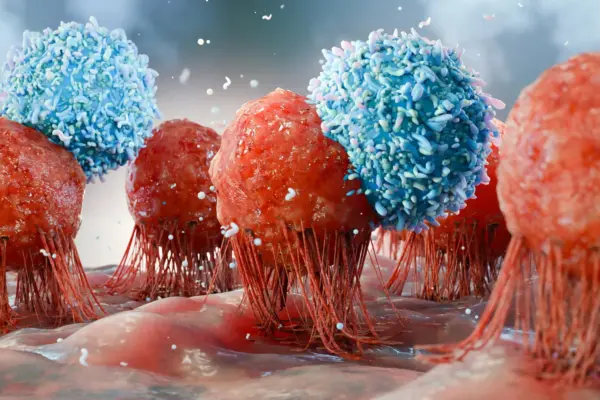
Normally, healthy cells display a molecular complex known as MHC-1 (Major Histocompatibility Complex class 1) on their surfaces. The MHC-1 complex acts like an identity badge or a molecular flag, signaling to patrolling T cells that the cell is healthy, or, if mutations are present, marking it as malignant and targeted for destruction.
In many prostate cancers, however, this vital warning signal vanishes. The tumor effectively cloaks itself, rendering it invisible to the immune system. Wagner’s team traced this blinding effect to an overabundance of a specific protein called SPSB1, which is directly upregulated by corrupted, shortened mRNAs. When SPSB1 is overexpressed, it initiates a molecular chain of events that dismantles the MHC-1 complex, stripping the tumor of its immune magnets.
Deploying the CRISPR-Cas13 RNA Tool
Faced with this complex biological sabotage, the research team—spearheaded by investigators at the Duke University School of Medicine—engineered a first-of-its-kind countermeasure.
Traditional CRISPR technologies, such as Cas9, are famous for acting as molecular scissors, cutting and editing DNA sequences. However, cutting RNA or altering the DNA genome permanent runs the risk of unintended off-target mutations.
To circumvent this risk, the researchers utilized an RNA-targeting CRISPR Cas13 system, ingeniously modified for a non-destructive purpose. Instead of slicing the rogue mRNA, the engineered CRISPR tool was programmed to home in on a precise zip code on the SPSB1 messenger RNA and physically attach to it.
By binding securely to that specific location, the Cas13 complex acted as a physical roadblock. It prevented cellular machinery from reaching the end of the molecule, effectively stopping the cell from lopping off the tail of the mRNA.
The results were immediate and profound:
- Restored Length: The SPSB1 mRNA was forced back to its normal, longer length.
- Protein Normalization: With the mRNA properly regulated, the hyper-production of the SPSB1 protein plummeted.
- Immune Beacon Re-emergence: The reduction of SPSB1 allowed the MHC-1 complex to reassemble on the surface of the prostate cancer cells.
- Immune Infiltration: Once the MHC-1 "magnets" were restored, T cells could finally recognize the tumor. In preclinical mouse models, subsequent immune checkpoint therapy successfully drove immune cells into the previously cold tumor microenvironment, where they systematically attacked and destroyed the cancer cells.
Supporting Context & Metrics
To appreciate the gravity of this discovery, it is essential to examine the clinical landscape of prostate cancer and the limitations of current immunotherapy paradigms.
The Prostate Cancer Burden
Prostate cancer remains one of the most diagnosed malignancies among men worldwide. While localized cases often boast high long-term survival rates, advanced, metastatic, and castration-resistant prostate cancers present grim prognoses.
- Immunotherapy Drought: While checkpoint inhibitors—drugs that release the biological "brakes" on T cells so they can attack tumors—have transformed outcomes in approximately 15% to 30% of cancer patients (predominantly those with "hot" tumors rich in mutations and immune cells), prostate cancer patients have historically seen response rates in the single digits.
- The "Cold" Tumor Barrier: An estimated 70% to 80% of prostate tumors are classified as immune-cold. Without an influx of tumor-infiltrating lymphocytes (TILs), blockbuster immunotherapies like pembrolizumab (Keytruda) or nivolumab (Opdivo) have little to no biological substrate upon which to act.
Precision Engineering Without Collateral Damage
One of the most remarkable metrics highlighted in the Nature Biomedical Engineering report involves the safety profile of the experimental Cas13 therapy.
- Zero Off-Target Effects: In rigorous genomic and transcriptomic analyses, the research team found no detectable off-target effects across the treated cellular models. By avoiding DNA cleavage and utilizing precise RNA-binding mechanics, the therapy circumvented the accidental silencing or activation of bystander genes.
- Synergistic Potential: Because the CRISPR tool successfully warms up the tumor microenvironment, it unlocks a synergistic window for combination therapies. When paired with standard immune checkpoint blockade, the treatment achieved tumor regression that neither therapy could accomplish alone.
Official Statements
The implications of turning cold tumors hot have sent ripples of excitement through the oncology community. Industry leaders and study authors emphasize that this approach could fundamentally alter how physicians treat refractory cancers.
Dr. Eric J. Wagner, co-author of the study, professor of Biochemistry and Biophysics, and co-director of the Center for RNA Biology at the University of Rochester, underscored the revolutionary nature of utilizing the body’s immune system rather than relying exclusively on toxic chemical agents:
"Immune therapy is a monumentally different way to treat cancer, and a great way because you don’t have to give patients terrible drugs that kill the cancer but harm healthy cells in the process," Wagner stated.
Addressing the historical limitations of immunotherapy, he added: "The problem is that some cancers respond well to immune therapy, but others develop resistance or don’t respond at all. Our tool strengthens the immune system’s ability to make the cancer go away and could be used in conjunction with existing immunotherapies in prostate and potentially other immune-cold tumor types."
Commenting on the evolutionary adaptability of cancer—and how this new technology aims to outsmart it—Wagner offered an authoritative perspective on the future of oncology drug development:
"No one has ever done this before. It’s an excellent preclinical model showing that mRNAs can be forced to re-lengthen and when they do, there’s therapeutic benefit. Cancer is super smart at evolving, but it’s not a magician. If we can hit it with immunotherapy and another synergistic drug that pumps up the immune response, we could potentially cure it. It won’t be able to evolve fast enough."
Future Outlook and Next Steps
With the preclinical validation successfully established in peer-reviewed literature, the research enterprise is already shifting its gaze toward clinical translation and expansion into other challenging cancer indications.
Tackling Other "Cold" Tumors
Prostate cancer is not the only malignancy that successfully evades immunotherapy by maintaining an immune-cold microenvironment. Pancreatic ductal adenocarcinoma (PDAC), glioblastoma, and ovarian cancer share similar traits of immune exclusion and therapeutic resistance.
Capitalizing on their recent success, Dr. Wagner’s team has secured vital pilot funding from the Wilmot Cancer Institute and the Roswell Park Comprehensive Cancer Center. These grants will allow the researchers to test whether the CRISPR-Cas13 mRNA-lengthening technology can successfully convert pancreatic tumors into immune-hot targets.
If proven effective in pancreatic cancer, the therapeutic pipeline could expand rapidly to encompass a vast array of solid tumors that currently defy immunotherapy.
Toward Clinical Trials
While the transition from murine models to human clinical trials requires rigorous safety testing, manufacturing optimization, and regulatory approval from agencies like the U.S. Food and Drug Administration (FDA), the roadmap is clear.
The ability to reprogram mRNA isoforms without permanently altering the host’s DNA genome represents a vastly safer therapeutic window than traditional gene therapy vectors. As funding from institutions like the National Cancer Institute (NCI) at the National Institutes of Health (NIH) continues to fuel these investigations, clinical researchers are drawing closer to a day when "immune-cold" is no longer a permanent sentence for cancer patients.
By robbing tumors of their molecular invisibility cloak and forcing them to face an activated, vigilant immune system, this breakthrough CRISPR technology stands poised to redefine the boundaries of precision oncology.