







Executive Overview
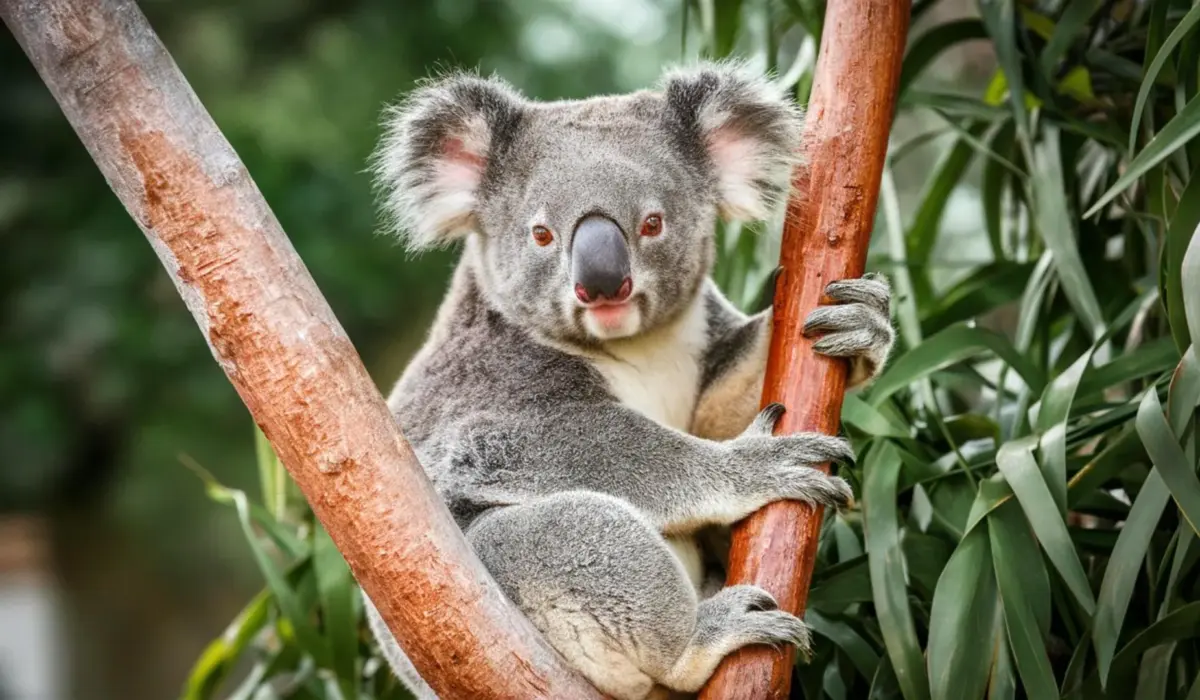
In a discovery that fundamentally reshapes our understanding of Australian megafauna and marsupial evolution, a major new genomic study reveals that koalas (Phascolarctos cinereus) suffered a catastrophic population collapse roughly 100,000 years ago—long before human footsteps ever touched the Australian continent.
For decades, the prevailing scientific consensus maintained that koala numbers plummeted primarily due to the arrival of modern humans around 65,000 years ago, compounded by historical hunting, rapid land clearing, and anthropogenic habitat fragmentation. However, an international research team led by scientists from the University of Sydney and Texas A&M University has shattered that timeline. By calculating the first-ever direct mutation rate for a marsupial belonging to the order Diprotodontia—which includes wombats, kangaroos, and possums—the researchers have mapped a genetic history stretching back hundreds of millennia.
Published in the prestigious journal Molecular Biology and Evolution (Oxford University Press), the study demonstrates that every koala alive today descends from a resilient ancestral population that weathered extreme environmental shifts and intense glacial periods during the late Pleistocene. Yet, while history shows that ancient koalas could bounce back from prehistoric climate crises, today’s populations face a perilous, human-driven convergence of threats—including systemic land clearing, raging bushfires, historical and ongoing disease outbreaks, and aggressive habitat encroachment.
By unlocking the secrets encoded within 457 koala genomes, scientists are not only rewriting evolutionary history but also providing conservationists with an unprecedented genetic roadmap to protect the species from contemporary extinction.
Detailed Chronology: Unraveling the Koala’s Deep-Time History
To understand how modern koalas arrived at their current genetic crossroads, researchers had to look far beyond the limited fossil record, which is too sparse to capture the nuances of ancient population dynamics. Instead, the team turned to genomics, treating the DNA of living koalas as a biological archive of prehistoric climate change and demographic shifts.
The Paleogene and Miocene Eras: A Lush, Forested Continent
The evolutionary stage for the koala’s ancestors was set millions of years earlier during the Paleogene period (66 to 23 million years ago), when the landmass that would eventually become Australia was predominantly blanketed by wet, dense forests. These optimal climatic conditions favored the proliferation of arboreal, leaf-eating marsupials.
However, as the Australian tectonic plate drifted northward over millions of years, the continent’s climate began to dry significantly. During the Miocene epoch (23 to 5 million years ago), the lush forests fragmented, giving way to more open, seasonal environments and forcing ancient marsupials to adapt to shifting ecological landscapes.
The Pleistocene Epoch and the 100,000-Year Collapse
The most dramatic chapter in koala evolutionary history unfolded during the Pleistocene epoch (extending from 2.5 million to 11,700 years ago). This geological epoch was characterized by repeated, punishing cycles of glacial periods—typified by cold, arid conditions—and interglacial periods, marked by warmer, wetter weather.
As the ice ages intensified, Australia’s interior dried out drastically, paving the way for sweeping landscape transformations. Approximately 70,000 years ago, the catastrophic expansion of the Nullarbor Plain created an immense barrier of semi-arid shrubland across southern Australia. This vast geographic wedge severely restricted the amount of suitable eucalyptus-rich habitat available to koalas, effectively splitting the species into isolated eastern and western subpopulations.
The western koala population ultimately succumbed to the unrelenting aridification and perished. Meanwhile, a small, highly resilient population in eastern Australia endured the most punishing phases of the glacial maximum. By approximately 60,000 years ago, koalas reached a critical genetic bottleneck—a severe contraction in population numbers that drained much of their genetic diversity. This timeline confirms beyond doubt that the species’ most profound historical crisis was driven entirely by tectonic and climatic upheaval, occurring entirely independently of human activity.
Post-Glacial Recovery and the Emergence of Modern Lineages
As global temperatures gradually warmed during the current interglacial period, conditions improved across eastern Australia, allowing the surviving koala population to expand outward from their refugia.
Between 16,500 and 6,000 years ago, this recovering population fractured and radiated into five distinct genetic lineages. These regional groups ultimately gave rise to the diverse koala populations found thriving—and struggling—along Australia’s modern eastern seaboard today.
Supporting Context & Metrics: Decoding the Marsupial Genome
The breakthrough in reconstructing this 100,000-year timeline hinged on solving a fundamental methodological hurdle in evolutionary biology: determining an accurate mutation rate for marsupials.
The Flaw in Previous Estimates
Until this study, evolutionary biologists attempting to calculate the historical demographics of koalas were forced to rely on mutation rates borrowed from distantly related placental mammals, such as humans and laboratory mice. Because genetic changes accumulate at different speeds across different branches of the animal kingdom, these proxy rates were inherently flawed. Previous models based on these external metrics mistakenly pointed toward a human-induced population crash occurring roughly 65,000 years ago, neatly aligning with the arrival of Indigenous Australians.
The new research corrects this error by measuring the koala’s genomic clock directly from the source.
Sequencing Parent-Offspring Trios
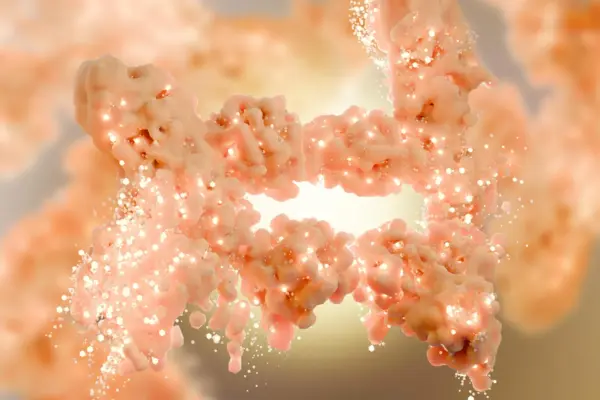
To establish a precise mutation rate, lead researcher Toby Kovacs and his team sequenced the complete genomes of four parent-offspring trios. By comparing the genetic sequences of parents against their offspring, the researchers were able to count the exact number of new, spontaneous genetic mutations that emerged in a single generation.
The findings revealed that the koala mutation rate is approximately half that of humans.
This slower baseline accumulation of genetic changes means that previous models had severely miscalculated the passage of genetic time in marsupials. Armed with this newly calibrated genomic ruler, the team applied it to 457 individual koala genomes, achieving an unprecedented level of resolution regarding how populations expanded, contracted, and fragmented over millennia.
A First for Order Diprotodontia
This study marks a major milestone in Australian zoology: it is the very first direct estimate of a mutation rate for any member of the mammalian order Diprotodontia. Representing a massive branch of the marsupial family tree—which includes wombats, gliders, kangaroos, and possums—this newly established genomic framework will likely enable researchers to re-examine the evolutionary histories of other iconic Australian species, including the elusive relatives of extinct Pleistocene megafauna.
Official Statements and Expert Perspectives
The implications of the study extend far beyond theoretical evolutionary biology, offering direct tools for contemporary wildlife management.
"The study rewrites the timeline for the koala’s genetic history in Australia," says PhD student Toby Kovacs, who spearheaded the research at the University of Sydney.
Emphasizing the mechanics of genomic data over incomplete fossil records, Mr. Kovacs notes:
"Fossil evidence is simply too limited to show precisely how many koalas lived in Australia 100,000 years ago. Genomic data can help fill those gaps by preserving clues about earlier population sizes and changes in genetic diversity."
While prehistoric climate shifts naturally tested the limits of the species, Mr. Kovacs draws a sharp contrast between past evolutionary pressures and the modern extinction crisis:
"Genomic analyses show that koalas have experienced major population declines in the past due to climate change and habitat loss. When environmental conditions improved, their populations recovered and expanded across much of eastern Australia. However, it’s important to make clear that many of the threats facing modern koala populations are caused by humans, including habitat loss and hunting."
Reflecting on the practical applications of the research for modern conservation biology, Mr. Kovacs adds:
"Understanding whether koala populations are shrinking helps conservationists act early, before populations lose genetic diversity and face increased risks from inbreeding. Koalas experienced large population retractions in the past, as the climate changed and suitable habitat disappeared. The surviving koalas are again experiencing a similar retraction, but this time due to human-driven land clearing, bushfires, hunting, and disease."
Future Outlook: Genomic Tools for Modern Conservation
As the scientific community digests the revelations of this 100,000-year genomic timeline, conservationists are moving quickly to integrate these insights into practical wildlife management frameworks.
Modern Vulnerabilities and Regional Disparities
Despite their prehistoric resilience, today’s koalas face an unprecedented compounding matrix of anthropogenic stressors. Modern threats include systemic agricultural and urban land clearing, high-intensity bushfires supercharged by modern climate change, historical fur-trade hunting legacies, and devastating endemic illnesses such as koala retrovirus (KoRV) and chlamydia.
The geographic distribution of these pressures has created stark demographic divides across Australia:
- Queensland, New South Wales, and the Australian Capital Territory: Populations have experienced catastrophic, sustained declines over recent decades. Recognizing the severity of these losses, the Australian government officially listed koalas in these regions as endangered in 2022.
- Victoria: In contrast to their northern counterparts, some southern populations in Victoria have stabilized or even shown signs of localized recovery, highlighting the deep regional fragmentation of the species’ gene pool.
Informing Future Conservation Strategies
By understanding how ancestral koalas survived historical population bottlenecks, conservation geneticists can better evaluate the evolutionary resilience and adaptive capacity of modern herds.
Researchers are currently generating massive genomic resource banks for koalas. However, as Mr. Kovacs points out, interpreting these vast datasets requires a precise understanding of generational mutation rates:
"Our team is generating enormous genomic resources for koalas, but to fully understand what these datasets can tell us, we also need to know how quickly new genetic changes arise in the species. Estimating the mutation rate improves our ability to reconstruct koala population history, understand their capacity to adapt, and make more informed conservation decisions for the future."
Ultimately, this paradigm-shifting research demonstrates that while koalas possess an ancient, hard-earned genetic fortitude forged through thousands of years of environmental change, they cannot outpace the accelerated, human-driven destruction of their remaining habitats without immediate, science-backed conservation intervention.