
Executive Overview
For over half a century, the architectural bedrock of modern computing has been the silicon chip—a microscopic labyrinth of transistors designed to process binary information, execute algorithms, and drive the digital revolution. Yet, as the boundaries between digital systems and biological engineering increasingly blur, scientists are finding entirely novel applications for this venerable technology. Silicon is no longer confined to calculating bits; it is now stepping into the realm of the living, recording electrical impulses from complex neuronal networks, reading the intricate scripts of genomes, and, most remarkably, writing DNA from scratch.
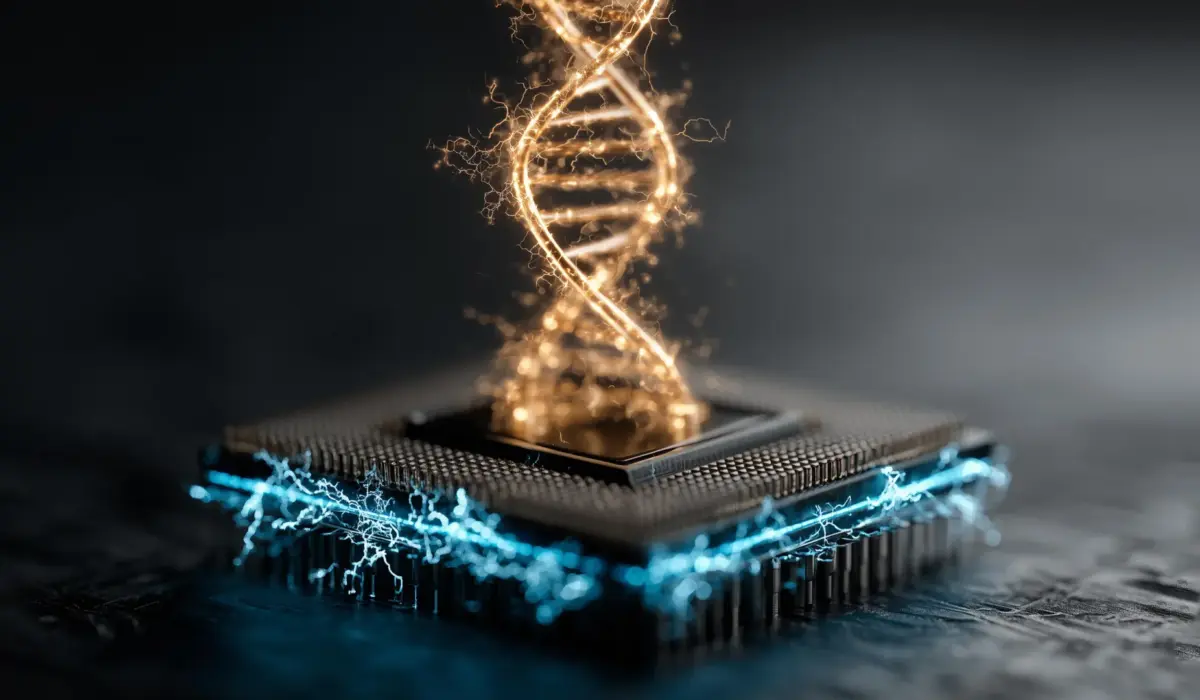
In a landmark study published in the journal Nature Electronics, a multidisciplinary research team led by Harvard University unveiled a breakthrough technology that bridges semiconductor electronics and molecular biology. The team has successfully developed a silicon chip capable of synthesizing 64 distinct DNA sequences simultaneously. Unlike conventional industrial manufacturing methods that rely heavily on hazardous organic solvents and centralized, resource-intensive factory floors, this pioneering device employs a water-based enzymatic approach. By leveraging carefully calibrated, microscopic electrical currents, the chip triggers precise biochemical reactions at designated spatial coordinates across its surface, constructing custom genetic material with unprecedented spatial and chemical control.
This innovation arrives at a critical juncture for biotechnology, medicine, and data science. Synthetic DNA is a foundational commodity for a vast array of cutting-edge fields, ranging from rapid diagnostic assays and advanced genome engineering to targeted cancer therapies. However, the legacy chemical processes used to mass-produce custom oligonucleotides—chiefly phosphoramidite chemistry—pose environmental hazards and rely on volatile organic solvents. While scientists have long recognized enzymatic synthesis as a cleaner, greener alternative that mimics nature by utilizing water as a solvent, the technology has historically suffered from severe scalability bottlenecks. Previous academic and industrial demonstrations of enzymatic writing struggled to produce more than a dozen unique sequences in parallel.
By scaling this capacity to 64 sequences—each up to 39 nucleotides long—the Harvard-led team has established a new performance benchmark. More profoundly, the project’s evolution reveals an unexpected cross-pollination of scientific disciplines: the core semiconductor architecture was originally designed not to build genes, but to eavesdrop on the firing of brain cells. This comprehensive report explores the genesis, mechanics, challenges, and expansive future horizons of this semiconductor-powered genetic printer.
Detailed Chronology: From Neural Probes to Genetic Engineering
To understand how a silicon chip evolved from a neurological monitoring device into a DNA synthesizer, it is necessary to trace the trajectory of the research through its conceptual and experimental phases. The narrative of this breakthrough is not one of a straight-line design, but rather of scientific serendipity meeting rigorous engineering execution.
Phase I: Mapping the Mind
The foundational technology for the DNA-synthesizing chip was conceived years prior in the laboratory of Donhee Ham, the John A. and Elizabeth S. Armstrong Professor of Engineering and Applied Sciences at the Harvard John A. Paulson School of Engineering and Applied Sciences (SEAS). At the outset, Jeffrey Abbott, then a doctoral student in Ham’s lab, was tasked with a formidable challenge in neuroengineering: developing advanced silicon electronics capable of recording the intracellular electrical activity of large, densely packed populations of neurons.
To achieve this, Abbott and his colleagues engineered a semiconductor surface outfitted with precision current injection capabilities. These specialized electrodes were designed to deliver micro-currents capable of gently permeabilizing neuronal membranes, granting the silicon direct, non-destructive access to the inner electrical currents of living brain cells. The hallmark of the design was its exceptional spatial resolution and its ability to administer localized electrical stimuli without damaging the surrounding biological milieu.
Phase II: The Epiphany of Dual-Use Electronics
As the neuroscience research progressed, the team reached a conceptual crossroads. The mechanisms required to interact electrically with cellular membranes—specifically, the precise generation and confinement of electrochemical gradients using localized current injection—bore striking functional similarities to the requirements of molecular synthesis.
During the assembly of DNA, specific chemical reactions must be confined to precise microscopic coordinates on a substrate. The researchers realized that the very same precision current injection used to interface with cellular ions could be redirected to manipulate molecules. By replacing the neuron-facing electrodes with specialized ring-electrode pairs, the team hypothesized they could control local pH levels with microscale accuracy. If successful, this pH manipulation could drive the deprotection steps required during enzymatic DNA synthesis.
Phase III: Engineering the Genetic Printer
Transitioning the hardware from a neural probe to a genetic synthesis platform required a complete redesign of the chip’s surface architecture, though the underlying semiconductor principles remained intact. The team fabricated a new iteration of the silicon chip featuring 64 distinct synthesis sites on its active surface.
Each of these sites was engineered with a sophisticated dual-electrode configuration: two concentric ring electrodes surrounding a central anchor point where DNA molecules are chemically tethered. When a specific site is digitally addressed, the inner electrode generates protons, locally lowering the pH of the aqueous environment. This precise acidification removes temporary blocking groups from the growing DNA strands, permitting the next nucleotide to bind. Simultaneously, the outer electrode acts as an electrochemical sink, scavenging escaping protons and preventing them from drifting into adjacent reaction zones.
Phase IV: Validation and Publication
Through iterative prototyping and rigorous testing, the team successfully demonstrated that the chip could independently and simultaneously synthesize 64 unique DNA sequences, each reaching lengths of up to 39 nucleotides. The successful execution of this platform—achieved through a broad collaboration involving Harvard University, the Broad Institute, DNA Script, and the Pohang University of Science and Technology (POSTECH)—culminated in their landmark publication in Nature Electronics. Recognizing the commercial and scientific value of the platform, Harvard’s Office of Technology Development promptly filed intellectual property claims to protect the underlying semiconductor-enzyme interface.
Supporting Context & Metrics: Chemistry, Scale, and Environment
To contextualize the significance of the Harvard team’s achievement, one must examine the chemical realities of DNA manufacturing, the limitations of legacy methodologies, and the specific performance metrics defining the new semiconductor platform.
The Chemical Bottleneck: Phosphoramidite vs. Enzymatic Synthesis
For decades, the commercial production of synthetic oligonucleotides has been dominated by phosphoramidite chemistry. Developed in the late 20th century, this chemical route is extraordinarily powerful, capable of producing millions of distinct DNA sequences in massive parallel arrays. It is the engine behind modern gene synthesis, PCR primers, and high-throughput genomic screening.
However, phosphoramidite chemistry carries a heavy environmental and infrastructural toll. The process requires anhydrous conditions and depends heavily on hazardous organic solvents—such as acetonitrile, dichloromethane, and pyridine—alongside sensitive chemical activators. Consequently, DNA manufacturing has largely been centralized in specialized facilities equipped to handle toxic chemical waste streams and maintain rigorous safety protocols.
In contrast, enzymatic DNA synthesis mirrors the natural processes found within living organisms. By utilizing enzymes (such as terminal deoxynucleotidyl transferase, or TdT) operating within aqueous, water-based buffers, this emerging methodology bypasses the need for toxic organic solvents.
[Legacy Method: Phosphoramidite Chemistry]
  ├── Relies on hazardous organic solvents (acetonitrile, etc.)
  ├── Requires specialized, centralized manufacturing facilities
  └── High environmental impact / heavy chemical waste streams

[Emerging Method: Semiconductor-Enabled Enzymatic Synthesis]
  ├── Utilizes water-based enzymatic buffers (mimics living cells)
  ├── Digitally controlled via localized electrical currents on silicon
  └── Scalable, decentralized potential with drastically reduced toxicity
Quantitative Metrics of the Harvard Platform
While enzymatic synthesis offers profound environmental and safety advantages, it has historically lagged behind chemical synthesis in terms of multiplexing capacity. Prior to the Harvard study, state-of-the-art enzymatic demonstrations were largely restricted to producing roughly a dozen unique sequences in parallel.
The new semiconductor chip shatters these previous ceilings, establishing critical performance parameters:
- Parallel Synthesis Capacity: 64 unique DNA sequences synthesized simultaneously on a single chip.
- Sequence Length: Up to 39 nucleotides per synthesized strand, demonstrating structural fidelity across extended elongation cycles.
- Spatial Confinement: Sub-millimeter localization of acidic reaction zones driven by concentric ring-electrode pairs.
- Data Encoding Demonstration: Successful translation and storage of a 169-byte text file encoded directly into the 64 synthesized DNA sequences.
Official Statements & Expert Insights
The implications of merging semiconductor microelectronics with enzymatic biochemistry extend far beyond academic curiosity, prompting reflection from the primary architects of the study regarding both their achievements and the hurdles that remain.
Donhee Ham, the John A. and Elizabeth S. Armstrong Professor of Engineering and Applied Sciences at SEAS and principal investigator of the research, emphasized the unexpected evolutionary path of the technology:
"A defining feature of the chip was precision current injection, which we used to permeabilize neuronal membranes for intracellular access. At a certain point, we wondered whether that same current control could be redirected from cells to molecules, replacing the neuron-facing electrodes with ring-electrode pairs that could localize pH for DNA synthesis. It worked."
Addressing the grand challenge of scaling DNA synthesis for future data storage applications, Woo-Bin Jung—co-first author of the study and now an assistant professor of chemical engineering at POSTECH—highlighted the unique role that water-based enzymatic systems must play:
"DNA data storage asks DNA synthesis to operate at a scale far beyond today’s needs. That is why enzymatic synthesis in water can matter. If far more than 64 sequences can be synthesized in parallel, it could offer an environmentally friendly route toward writing DNA at very large scale."
Addressing the physical and chemical barriers encountered when attempting to push the chip’s density further, Han Sae Jung, co-first author and postdoctoral researcher at Harvard, pointed out that the limitations no longer lie within semiconductor engineering, but rather within molecular chemistry:
"The chip did what we asked it to do: it localized low pH at selected sites. The limitation came from the deprotection chemistry, not from the silicon. That leaves a clear next step for the field—develop a more direct acid-driven deprotection chemistry that can keep pace with the chip."
Future Outlook: Challenges and Horizons
As biotechnology enters an era where digital electronics and living systems are deeply intertwined, the Harvard team’s silicon DNA synthesizer opens up extraordinary pathways, while simultaneously illuminating the next grand challenges facing bio-engineers.
The Chemical Frontier: Overcoming Reaction Diffusion
When the research team attempted to scale up their platform by fabricating chips with synthesis sites positioned in closer physical proximity, the experiment yielded an unexpected lesson. While the silicon microelectrodes successfully maintained tight control over local proton generation, the acidic reaction conditions produced intermediate chemical species that inevitably drifted across microscopic boundaries into neighboring synthesis sites.
This diffusion phenomenon compromised the purity of adjacent sequences, proving that the ultimate speed and density limit of semiconductor DNA synthesis is no longer bound by electronic miniaturization, but by chemical diffusion. Future progress will require the invention of novel, highly localized deprotection chemistries—perhaps utilizing light-activated or enzyme-mediated triggers that do not rely on freely diffusing ionic intermediates.
Horizons in DNA Data Storage and Decentralized Biomanufacturing
Looking ahead, the convergence of silicon fabrication and enzymatic synthesis holds immense transformative potential across multiple domains:
- DNA-Based Data Storage: Digital data storage demands astronomical writing capacities. As society generates exabytes of data annually, magnetic and optical storage media face physical and energetic sustainability limits. DNA offers an ultra-dense storage medium capable of holding petabytes of data in a droplet of water. Water-based enzymatic synthesis on scalable semiconductor platforms represents a viable, green avenue toward realizing ultra-high-density genetic data archives.
- Point-of-Care Diagnostics and Therapeutics: By moving away from hazardous organic solvents and centralized factory production, semiconductor-based enzymatic synthesizers could eventually be miniaturized into desktop units. Clinicians, researchers, and field biologists could synthesize custom primers, probes, or therapeutic sequences on demand, directly in local clinics or remote field laboratories.
- Green Biotechnology: As global industries pivot toward sustainable manufacturing, replacing petrochemical-dependent synthetic chemistry with biocatalytic, water-based processes aligns with international environmental mandates.
By successfully teaching a silicon chip designed to listen to the brain how to write the code of life, the Harvard research team has not merely crossed disciplinary boundaries—they have laid the foundational brick for a new generation of bio-electronic convergence.