









Executive Overview
In the high-stakes world of fundamental physics, monumental breakthroughs are rarely born from entirely single-handed inventions or abstract equations alone. Often, the most profound paradigm shifts occur when researchers ingeniously cross-pollinate mature, disparate technologies—forging an entirely novel instrument far more powerful than the sum of its legacy parts. A brilliant new manifestation of this philosophy is taking root through the PLATON project, a collaborative technological marvel spearheaded by researchers at ETH Zurich and EPFL.
For decades, the pursuit of weakly interacting subatomic particles—such as elusive neutrinos and theoretical dark matter candidates—has been hamstrung by a frustrating engineering paradox. Because these particles interact vanishingly rarely with ordinary matter, detecting them demands massive detector volumes capable of capturing exceedingly faint, ghost-like signals. Traditionally, scientists achieved this spatial tracking by carving vast blocks of sensitive material (scintillators) into millions of microscopic, segmented cubes wired to individual optical fibers and photodetectors.
While effective, this multi-million-component approach has hit a formidable technological and financial wall. Manufacturing, assembling, and reading out millions of discrete components creates a massive bottleneck that threatens to stall the next generation of neutrino-oscillation and collider experiments.
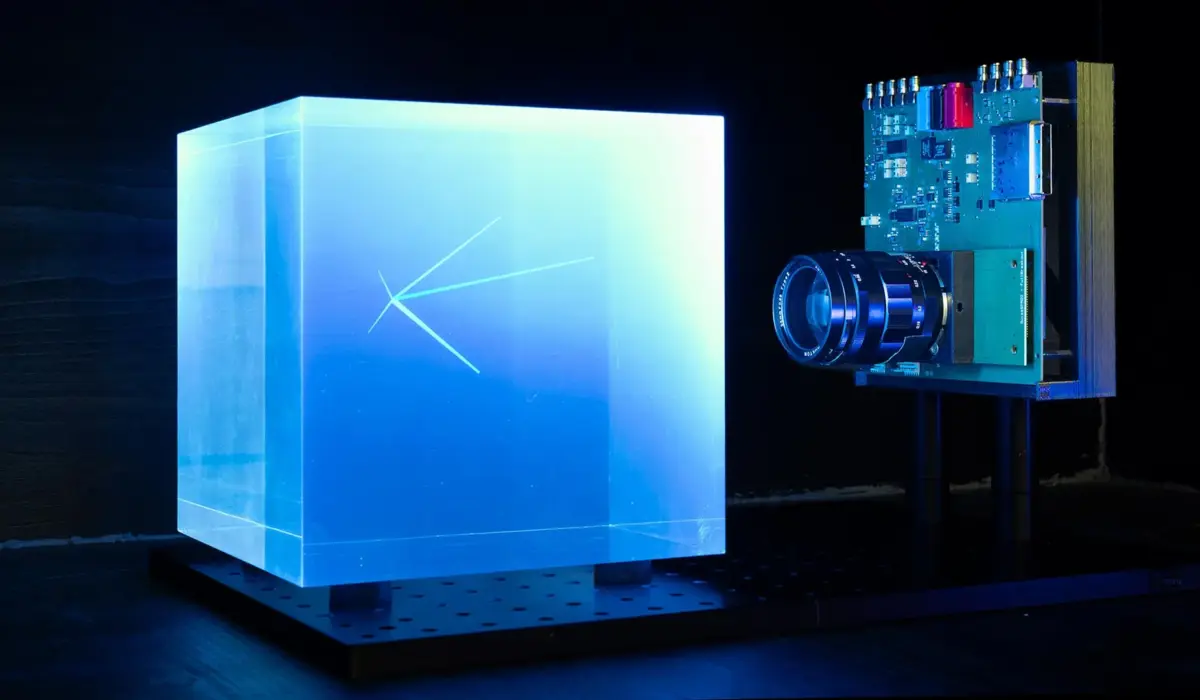
Enter PLATON. By fusing light field photography—the microscopic optical science behind plenoptic cameras—with ultra-sensitive Single-Photon Avalanche Diode (SPAD) arrays and advanced Transformer-based artificial intelligence, the ETHZ-EPFL team has successfully bypassed the need for segmentation entirely. Their proof-of-concept prototype performs ultrafast, sub-millimeter three-dimensional (3D) particle tracking inside a completely unsegmented, monolithic block of scintillator material.
Beyond rewriting the rulebook for high-energy physics, this cross-disciplinary innovation carries massive implications for medical diagnostics, with pending patents already targeting revolutionary advancements in Positron Emission Tomography (PET) scanning. As physics history has repeatedly demonstrated—from the invention of the World Wide Web at CERN to modern proton therapy—pure research aimed at unlocking the universe’s deepest secrets is once again poised to deliver a transformative gift to broader society.
Detailed Chronology: The Evolution of the PLATON Breakthrough
To truly grasp the significance of the PLATON detector, one must look at the historical trajectory of particle tracking, the birth of the collaboration, and the methodical steps that brought light field cameras into the realm of subatomic physics.
The Traditional Paradigm and Its Breaking Point
Since the mid-to-late 20th century, particle physics experiments have relied heavily on scintillation. When a high-energy charged particle traverses a scintillating material, it deposits energy, prompting atoms to emit minuscule flashes of visible light. To reconstruct the exact 3D trajectory of the particle, experimentalists had no choice but to discretize the detector. They carved the active medium into millions of tiny active volumes, channeled the resulting photons through delicate optical fibers, and routed them to photomultiplier tubes.
The logistical strain of this architecture became glaringly obvious in major international efforts. For instance, the T2K neutrino-oscillation experiment in Japan deploys a sensitive detector housing roughly two million individual plastic cubes coupled with 60,000 optical fibers. Similarly, the LHCb experiment at CERN and the Mu3e experiment at the Paul Scherrer Institute utilize millions of ultra-thin scintillating fibers to chase sub-millimeter spatial resolution.
While these instruments are engineering triumphs, they reveal an unsustainable trajectory. Scaling them up to capture rarer, more energetic interactions introduces staggering manufacturing complexities, financial escalation points, and points of failure.
Inception of the PLATON Project
Recognizing this looming architectural crisis, researchers at ETH Zurich—specifically PhD student Till Dieminger, senior scientist Dr. Saúl Alonso-Monsalve, and Professor Davide Sgalaberna’s research group—joined forces with Professor Edoardo Charbon’s Advanced Quantum Architecture Lab at EPFL in Lausanne.
Funded by the Swiss National Science Foundation under the aegis of the PLATON project, the multidisciplinary team posed a radical question: What if, instead of using millions of physical partitions to track light, we used computational optics to mathematically trace the origins of light inside a single, uninterrupted block of material?
Prototyping and Laboratory Validation
Moving from theory to empirical reality, the team developed and tested their first physical prototype. They integrated a state-of-the-art micro-lens array (MLA)—custom-designed by Raytrix GmbH—directly onto an advanced SwissSPAD2 imaging sensor developed at EPFL.
In controlled laboratory experiments, the team subjected the PLATON prototype to stringent testing environments. Utilizing a strontium-90 radioactive source to generate electrons inside a monolithic block of plastic scintillator, the researchers measured the system’s spatial resolution across extreme light regimes. Remarkably, the prototype was tested with photon counts ranging from several hundred down to a mere five detected photons.
Simultaneously, extensive Monte Carlo simulations were executed to mirror the laboratory parameters. The alignment between simulated predictions and empirical laboratory measurements was near-perfect, validating the accuracy of the team’s numerical models and clearing the path for scaled-up designs and AI integration.
Supporting Context & Metrics: Decoding the Technology
The PLATON architecture rests on the seamless integration of three distinct technological pillars: plenoptic optics, SPAD sensor gating, and Transformer-based neural networks.
1. Light Field Photography (Plenoptic Imaging)
Standard digital cameras record a two-dimensional projection of a scene, capturing the intensity and color of light rays converging on a sensor while collapsing directional data. A light field camera, however, records the plenoptic function—capturing not just how bright the light is, but the precise vector and direction from which every individual photon arrived.
By positioning a micro-lens array between the main camera lens and the imaging sensor, each microscopic lens acts as an independent sub-camera capturing the same internal volume of the scintillator from a slightly different perspective. When these disparate perspective arrays are computationally combined, the system resolves depth and reconstructs the 3D origin of faint photon flashes with astonishing precision.
2. Gated Single-Photon Avalanche Diodes (SwissSPAD2)
Scintillation light inside a particle detector is notoriously faint and fleeting. To capture these microscopic photon echoes without drowning in ambient noise, PLATON relies on the SwissSPAD2 sensor.
The sensor features gated photon detection, meaning it can be programmed to activate only within razor-thin, precisely defined temporal windows. This timing control acts as a sophisticated digital filter, locking out random background noise, electronic jitter, and dark counts while ensuring the system only registers genuine scintillation events tied to the passage of a particle.
3. Transformer Neural Networks for Subatomic Pattern Recognition
In its upcoming iterations, the PLATON system addresses the massive influx of raw optical data by abandoning traditional linear data processing in favor of cutting-edge artificial intelligence.
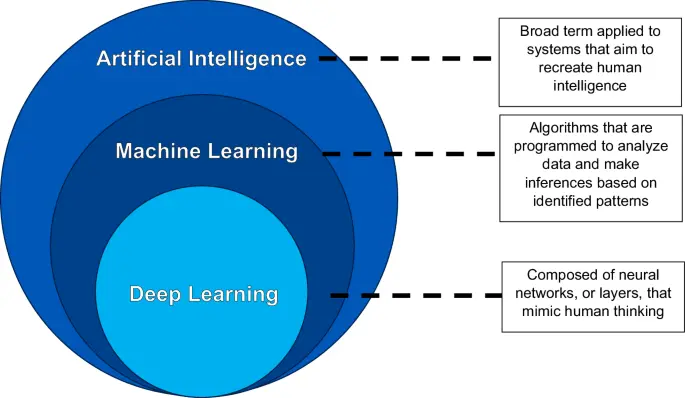
The team integrated a neural network utilizing a Transformer architecture—the very same underlying technological framework powering modern large language models like GPT. However, rather than parsing words and semantic syntax, PLATON’s Transformer is trained to analyze spatio-temporal correlations among cascading scintillation photons. By recognizing subtle patterns in where and when photons land on the sensor, the neural network reconstructs complex particle interactions with unprecedented purity and efficiency.
Key Performance Metrics at a Glance
- Spatial Resolution (Small Scale): Simulations demonstrate that an unsegmented PLATON block measuring $10 times 10 times 10text cm^3$ can comfortably achieve sub-millimeter spatial resolution ($<1text mm$).
- Spatial Resolution (Large Scale): When scaled up to a one-cubic-meter ($1text m^3$) block—simulated via point-like photon sources due to computational constraints—the system maintains a spatial resolution of just a few millimeters, rivaling state-of-the-art segmented detectors.
- Light Sensitivity: Capable of reconstructing reliable particle tracks using as few as five detected photons.
- Particle Identification: High efficiency and high purity in isolating neutrino-induced interactions that produce final-state low-momentum protons.
Official Statements and Expert Insights
The transition from conventional segmented particle tracking to unsegmented optical light field reconstruction marks a watershed moment in instrumentation design. The researchers behind PLATON emphasize that the breakthrough is as much about shifting philosophies as it is about hardware.
"We are looking at a fundamental shift in how we approach the tyranny of scale in particle detectors," notes a senior member of the research collective. "For decades, the assumption has been that to gain precision, you must multiply complexity—adding more fibers, more channels, more failure points. PLATON demonstrates that with the right combination of plenoptic imaging and computational optics, simplicity and high resolution are no longer mutually exclusive."
The integration of EPFL’s Advanced Quantum Architecture Lab expertise was vital, particularly regarding the timing capabilities of the SwissSPAD2 sensor.
"Gated photon detection allows us to peer through the noise floor of the universe," explains a lead optics engineer on the project. "When you are hunting for rare neutrino interactions, every nanosecond counts. By controlling our exposure windows with extreme temporal fidelity, we ensure that the faint whispers of subatomic particles are not lost in the background roar."
Furthermore, the integration of Transformer neural networks has opened new horizons for real-time data processing in high-energy physics environments.
"Large language models taught us how context and relationships can be mapped across massive sequences of data," remarks Dr. Saúl Alonso-Monsalve. "By teaching a Transformer to read the chronological and spatial grammar of photons, we can resolve hidden particle interactions that would otherwise be mathematically intractable in an unsegmented volume."
Future Outlook: Scaling Up and Medical Frontiers
With the proof-of-concept phase successfully concluded and documented in Nature Communications, the ETHZ-EPFL consortium is already aggressively charting the next evolution of the PLATON technology across both fundamental physics and commercial medicine.
Hardware Upgrades and Sub-Nanosecond Timing
The immediate roadmap for the PLATON hardware involves the development of a next-generation SPAD array sensor. While the current prototype relies on fixed time-window gating, the upcoming iteration will assign an individual, precise time stamp to every single detected photon.
Coupled with an optimized plenoptic optical design engineered to maximize the system’s field of view and light-collection efficiency, these upgrades are projected to push spatial resolution far below the sub-millimeter threshold across larger volumes.
The Cubic-Meter Horizon and Neutrino Physics
As computational resources expand, the team plans to run full-scale neutrino interaction simulations for detectors scaled up to one cubic meter and beyond. If these larger models mirror the success of the smaller-scale simulations, PLATON-style detectors could soon be deployed in major international neutrino-oscillation facilities, drastically slashing construction costs while drastically improving data fidelity.
Revolutionizing Medical Imaging: Positron Emission Tomography (PET)
Perhaps the most profound validation of fundamental physics research is its propensity to spin off life-saving societal technologies. Recognizing the immense medical utility of high-resolution 3D light-reconstruction, the inventors—Dieminger, Alonso-Monsalve, and Sgalaberna—have already filed three separate patents covering PLATON-derived innovations in Positron Emission Tomography (PET).
PET scanners rely on detecting pairs of gamma rays emitted indirectly by a positron-emitting radionuclide tracer introduced into the body. By applying PLATON’s plenoptic camera designs, hardware architectures, and AI-driven image-processing algorithms to medical scanners, the healthcare industry could see a quantum leap in diagnostic clarity. These advancements promise sharper anatomical localization, reduced radiation dosage requirements, and more precise real-time tracking of metabolic processes in oncology and neurology.
Conclusion
The PLATON project stands as a shining testament to the power of lateral thinking in scientific research. By taking optical engineering principles traditionally reserved for macro-photography, fusing them with ultra-fast quantum sensors, and decoding the results with artificial intelligence, Swiss researchers have dismantled a decades-old engineering barrier. As PLATON scales from laboratory benchtop prototypes to cubic-meter physics detectors and revolutionary medical scanners, it reaffirms an enduring truth: when we clear away complexity to look closer at the light, we illuminate a path toward entirely new horizons.