







Executive Overview
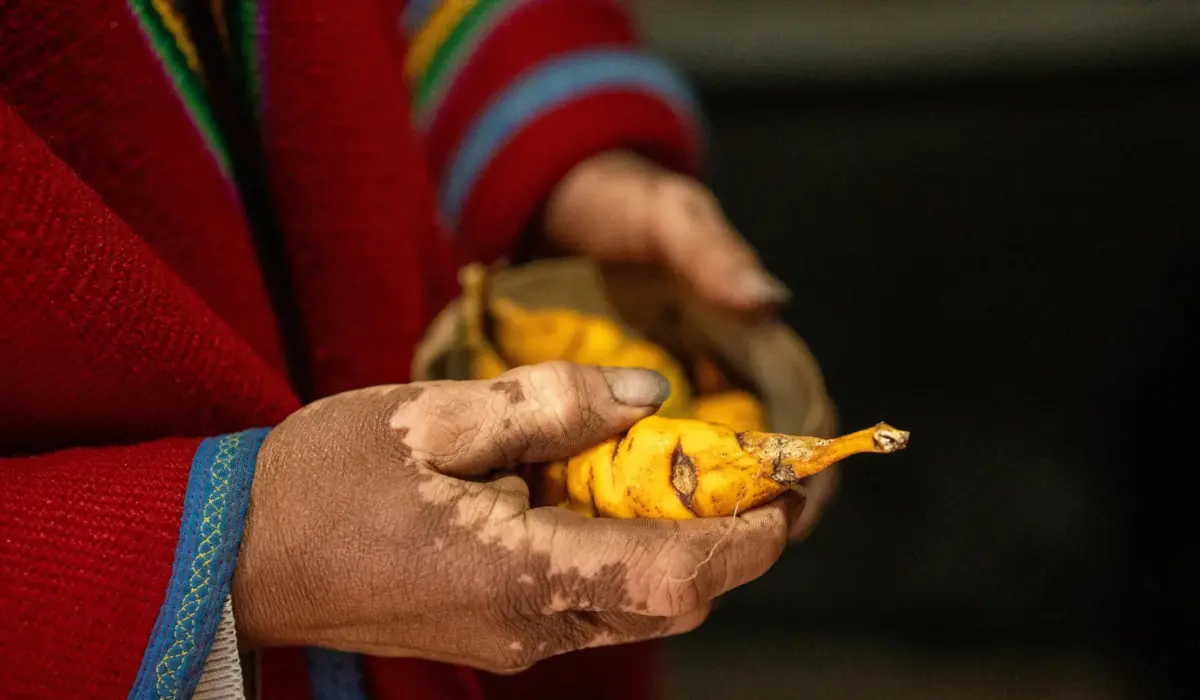
For millennia, the rugged, oxygen-thin plateaus of the high Andes have served as a crucible for human resilience. Long before European mariners crossed the Atlantic, and centuries before industrial agriculture remade the global food supply, Indigenous Andean communities mastered one of the most challenging high-altitude environments on Earth. Central to their survival was a humble yet miraculous crop: the potato. Domesticated thousands of years ago, starch-rich tubers transformed from wild mountain plants into a steadfast dietary anchor.
Now, groundbreaking genetic research reveals that this ancient reliance on potatoes did far more than sustain early civilizations—it fundamentally shaped human evolution.
In a study published in the journal Nature Communications, an international team of evolutionary anthropologists and geneticists—co-led by researchers at the University of California, Los Angeles (UCLA) and the University at Buffalo—discovered that Indigenous people in Peru today carry a remarkably high number of copies of a gene critical for starch digestion. Known as the salivary amylase gene, or AMY1, this genetic marker appears in greater concentrations among contemporary Peruvian populations than in any other known group worldwide.
The findings offer some of the most robust, unambiguous evidence to date that natural selection actively altered the human genome in direct response to a cultural shift in diet. As early Andean communities transitioned from foraging to the systematic cultivation of potatoes roughly 6,000 to 10,000 years ago, individuals equipped to digest heavy loads of dietary starch enjoyed a significant survival and reproductive advantage. Over countless generations, the relentless pressure of natural selection winnowed out those with fewer copies of the gene, leaving behind a population uniquely, genetically optimized to extract life-giving energy from the Andean harvest.
Detailed Chronology: Unraveling the Genetic Footprint of the Potato
To understand how a single agricultural shift could alter the human blueprint, researchers had to piece together a timeline spanning nearly a million years of genetic history, converging on a crucial window in the high-altitude highlands of South America.
The Deep Ancestry of AMY1
The evolutionary journey of the AMY1 gene stretches far back into human prehistory. Previous work by co-corresponding author Omer Gokcumen, a professor of biological sciences at the University at Buffalo, established that the very first duplication of the AMY1 gene occurred in ancestral human populations at least 800,000 years ago.
Long before modern humans migrated out of Africa or set foot in the Americas, our ancestors already possessed a baseline capacity for gene duplication. When early human groups migrated across the globe, they carried with them varying numbers of AMY1 copies. Some individuals naturally carried only a couple of copies, while others possessed several. For the ancestors of Indigenous Andeans who eventually settled in the high plateaus, this preexisting genetic variation served as raw material waiting to be shaped by environmental pressures.
The Agricultural Revolution in the Highlands
The turning point in Andean genetics arrived with the domestication of the potato. Archaeological and paleobotanical evidence indicates that indigenous communities began domesticating wild potato species in the Andean highlands between 10,000 and 6,000 years ago.
As agriculture took root, the potato rapidly ascended to the center of the Andean diet. Unlike fleeting seasonal foraged goods, domesticated potatoes provided a reliable, calorie-dense, and storable food source capable of sustaining human life through harsh winters and unpredictable mountain weather. However, this dietary revolution imposed a stark biological challenge: thriving on a diet heavily dependent on starchy tubers required efficient metabolic processing.
The Mechanics of Natural Selection
Once potatoes became a dietary staple, the selective landscape of the Andes shifted dramatically. People who happened to carry higher numbers of AMY1 copies produced greater quantities of the salivary amylase enzyme, enabling them to break down complex starches into usable sugars more efficiently.
According to the research team’s demographic and genetic modeling, individuals carrying roughly 10 or more copies of the gene experienced a distinct evolutionary edge beginning around 10,000 years ago. This advantage translated to an estimated 1.24% boost in survival or reproductive success per generation.
Crucially, this process was not transformative in the Lamarckian sense; individuals did not spontaneously acquire more genes simply by eating potatoes. Instead, the mechanism of natural selection was subtractive. Over millennia, individuals with lower AMY1 copy numbers faced metabolic disadvantages, yielding lower reproductive output or reduced survival rates during periods of nutritional stress. Gradually, these lineages diminished, while carriers of high copy numbers flourished, cementing an evolutionary legacy etched directly into human DNA.
Ruling Out the Post-Contact Population Bottleneck
One of the most formidable challenges facing the research team was isolating the effects of ancient potato farming from subsequent historical trauma.
Following European contact in the late 15th century, Indigenous populations across the Americas suffered catastrophic demographic collapses. Driven by imported Old World diseases, forced labor, famine, and violence, these populations experienced severe bottlenecks that wiped out vast swaths of genetic diversity. A critical question loomed: could this massive population crash—rather than ancient dietary adaptation—be responsible for the high concentration of AMY1 copies seen in Peruvians today? If individuals with lower copy numbers happened to be disproportionately wiped out during the post-contact era, it could create the false statistical illusion of ancient natural selection.
To resolve this, the researchers deployed state-of-the-art, ultra-long DNA sequencing technologies alongside newly available comparative genomic datasets. By analyzing ancient DNA markers and comparing Indigenous Peruvians with other groups, the team confirmed that elevated AMY1 copy numbers had already become heavily dominant in the Andes thousands of years before the arrival of Europeans. This chronological precision vindicated the hypothesis that long-term agricultural practices—not colonial-era bottlenecks—drove the genetic pattern.
Supporting Context & Metrics
The scientific significance of the new study is underscored by striking comparative metrics and interdisciplinary methodology.
- The Peruvian Peak: Indigenous people living in the Peruvian Andes today carry an average of 10 copies of the AMY1 gene.
- Global Comparison: When compared against 83 distinct global populations examined in the study, contemporary Peruvians carry approximately two to four more copies of the gene than any other known human population.
- The Maya Contrast: To further test their hypothesis, researchers compared Indigenous Peruvians with the Maya of Mexico—a population that shares deep ancestral roots with Andean peoples but lacks a historical tradition of intensive potato farming. While Peruvians averaged 10 copies, the Maya averaged 6 copies of AMY1, highlighting how divergent agricultural histories shaped distinct genomic profiles within the same broader ancestral lineage.
- Evolutionary Advantage: Mathematical modeling estimated that individuals with 10 or more AMY1 copies held a 1.24% survival and reproductive advantage per generation during the peak of Andean agricultural expansion.
- Deep Time Depth: The initial duplication event of the AMY1 gene occurred at least 800,000 years ago, proving that modern humans inherited a dynamic genetic architecture capable of rapid adaptation when environmental pressures shifted.
Official Statements & Expert Insights
The collaborative nature of the study brought together leading minds in anthropology, biological sciences, and genomics, yielding profound insights into human evolutionary biology.
Abigail Bigham, an associate professor of anthropology at UCLA and co-leader of the research, emphasized how the Andes serve as an unmatched natural laboratory for studying human adaptation:
"The high-altitude Andes are known for being a rich region for understanding human evolutionary adaptation—for instance, hypoxia, in which tissues do not get enough oxygen," noted Bigham, whose previous work with co-author Kelsey Jorgensen laid foundational groundwork for tracking selection in Andean starch digestion pathways. "This new research highlights how the Andes are useful for understanding human evolutionary adaptation to other selective environmental pressures like diet."
Omer Gokcumen, professor of biological sciences at the University at Buffalo and co-corresponding author, used a vivid metaphor to describe the subtle yet powerful hand of natural selection in shaping human genetics over millennia:
"Evolution is chiseling a sculpture, not constructing a building," Gokcumen explained. "It’s not as if Indigenous Andeans gained additional AMY1 copies once they started eating potatoes. Instead, those with lower copy numbers were eliminated from the population over time, perhaps because they had fewer offspring, and the ones with the higher copy numbers remained."
Reflecting on the rarity of capturing such clear genetic evidence of dietary adaptation, Gokcumen added:
"Biologists have long suspected that different groups of humans have evolved genetic adaptations in response to their diets, but there are very few cases where the evidence is this strong."
Future Outlook: Rethinking Human Evolution and Modern Diets
Beyond shedding light on the historical relationship between Andean farmers and their staple crop, this research opens exciting new frontiers in evolutionary anthropology and nutritional science.
Expanding High-Altitude Research
For decades, high-altitude human research has been dominated by studies of hypoxia—how populations cope with thin air, high ultraviolet radiation, and extreme cold. Bigham suggests that the new findings should encourage a broader, more holistic approach to studying high-elevation populations. Diet, food resource scarcity, and metabolic adaptations are equally critical components of how humans conquer Earth’s most punishing environments. Future genetic surveys may uncover similar dietary adaptations in other mountainous regions, such as the Himalayas of Nepal, where distinct agricultural staples have sustained human life for millennia.
Challenging Evolutionary Dogmas on Modern Diet
Perhaps the most provocative implications of the study extend into contemporary debates over human nutrition and wellness trends. Popular dietary movements, such as the "paleo diet," are built on the premise that human biology remains fundamentally optimized for a Paleolithic hunter-gatherer lifestyle. Proponents argue that our bodies are poorly suited to process foods introduced after the agricultural revolution.
However, the UCLA and University at Buffalo study directly challenges this static view of human metabolism. By demonstrating that human populations rapidly evolved and adapted to changing food conditions within the last 10,000 years, the research proves that our metabolic pathways are living, dynamic systems.
"There are ideas out there like the paleo diet, which is adapted to the Paleolithic environment and says we’re not suited to eat foods that come post-domestication," Bigham reflected. "लेकिन (But) I think this research shows that human populations have responded and evolved to changing food conditions within the last 10,000 years. Our metabolic pathways are not simply a product of that Paleolithic past."
As researchers continue to harness ultra-long DNA sequencing and advanced computational modeling, the story of the potato offers a powerful reminder: humanity’s evolutionary journey is ongoing, written not just in the bones of our ancestors, but in the very chemistry of how we digest our daily bread—and our mountain tubers.
Research collaborators on the study included institutions from across the globe: the University of Kansas, Pennsylvania State University, the University of Pennsylvania, the University of Puerto Rico at Cayey, Syracuse University, Cayetano Heredia University in Peru, and Bilkent University in Turkey. Funding and logistical support were provided by the National Science Foundation, the National Institutes of Health, and the Leakey Foundation.