



Executive Overview
Long before the advent of industrial manufacturing and synthetic polymers, microorganisms were already engineering their own sustainable materials. Across marine sediment, soil, and aquatic ecosystems, bacteria and archaea naturally synthesize polyhydroxyalkanoates (PHAs)—a class of biodegradable polyesters stored internally as cellular reserves of carbon and energy. For decades, the prevailing scientific consensus maintained that only microorganisms possessed the specialized biochemical machinery required to break down these complex natural plastics.
A landmark study published in Nature Ecology & Evolution by researchers at the Max Planck Institute for Marine Microbiology in Bremen, Germany, shatters this long-held assumption. The research team has discovered that the capacity to degrade microbial PHAs is not restricted to microbes; rather, it is a widespread, evolutionarily ancient trait shared by a diverse array of animals. Spanning nine distinct animal phyla and more than 66 species—including marine worms, starfish, earthworms, and terrestrial springtails—this newly uncovered metabolic ability fundamentally reshapes our understanding of global biochemical cycles.
By demonstrating that animals possess enzymes capable of dismantling natural bioplastics, the findings reveal a previously unrecognized pathway through which carbon stored by microbes flows directly into animal food webs. This investigation, which began with an extraordinary mouthless marine worm, suggests that animals have been utilizing nature’s original bioplastic for hundreds of millions of years. As industries increasingly turn to PHAs as eco-friendly alternatives to conventional petroleum-based plastics, this discovery provides critical new insights into how these materials interact with the biosphere, opening up vital avenues for ecological research and sustainable material management.
Detailed Chronology: From a Gutless Marine Worm to a Global Paradigm Shift
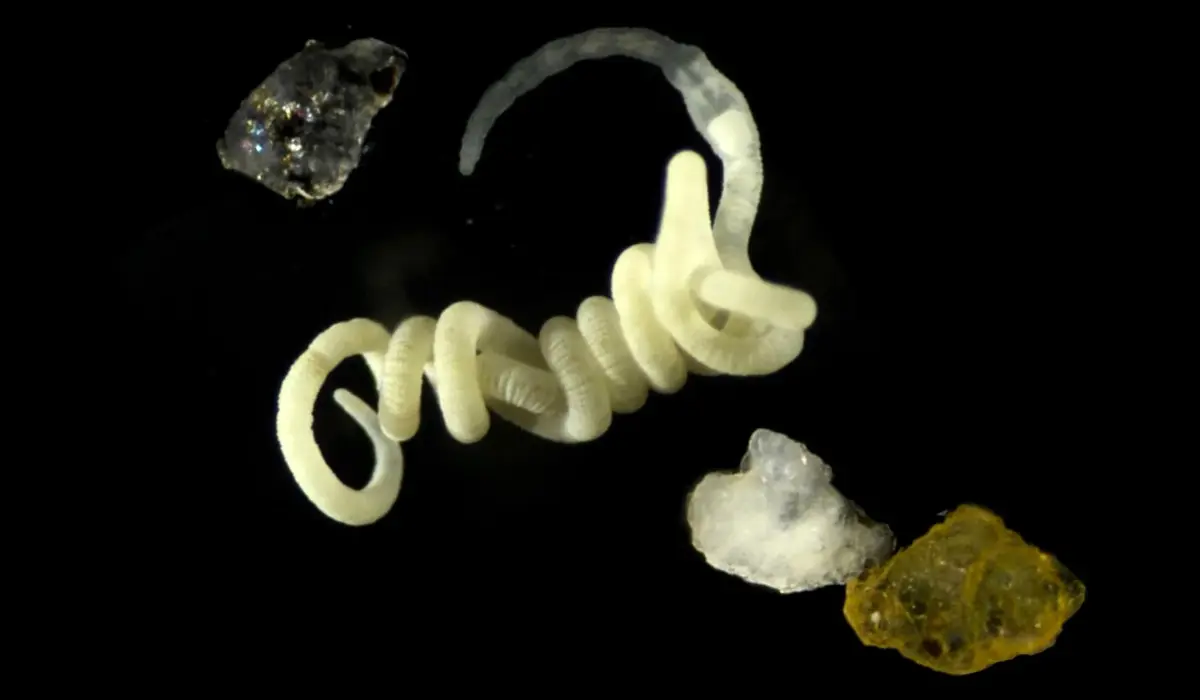
The journey to rewriting our understanding of microbial-animal carbon dynamics began in the specialized ecological niches of the marine benthos, centering on an enigmatic creature known as Olavius algarvensis.
Phase I: The Enigma of Olavius algarvensis
Olavius algarvensis is a marine worm that defies standard mammalian and invertebrate biology. Lacking both a mouth and a gut, the worm cannot ingest food or digest nutrients through conventional digestive tracts. Instead, it relies entirely on a complex consortium of symbiotic bacteria that live beneath its specialized integument. The worm absorbs nutrients by digesting these symbiotic bacterial partners directly.
During initial investigations into this symbiosis, researchers noted that one of the worm’s primary bacterial symbionts accumulated massive intracellular stores of carbon in the form of polyhydroxyalkanoates (PHAs). This biochemical hoarding sparked a critical investigative question among the research team at the Max Planck Institute: How did the host worm manage to access and metabolize this rich, densely packed energy reserve locked inside its bacterial symbionts?
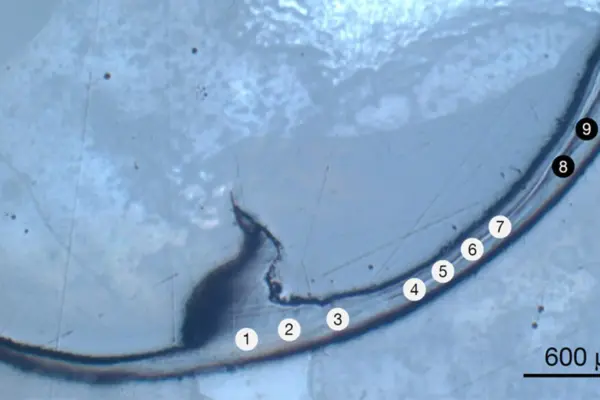
Led by Director Nicole Dubilier, the team deployed high-resolution imaging and advanced biochemical assays to inspect the tissue interfaces between the worm and its symbionts. They successfully identified a specific, highly adapted enzyme produced by the worm itself. This enzyme possessed the unique ability to cleave the ester bonds of microbial PHAs, breaking down the complex biopolymer chains into smaller, metabolically accessible molecules that the worm’s cells could readily utilize for energy and growth.
Crucially, high-resolution imaging confirmed that this PHA-degrading enzyme was localized precisely in the anatomical regions where the worm processes and digests its bacterial partners. This proved that Olavius algarvensis was not merely consuming the bacteria wholesale, but actively unlocking the concentrated high-energy carbon reserves stored within the microbial cytoplasm.
Phase II: Expanding the Scope Across the Animal Kingdom
What began as an isolated biochemical oddity in a single mouthless marine worm quickly escalated into a much broader biological inquiry. Recognizing that PHA synthesis is a widespread metabolic strategy among microorganisms in nearly every terrestrial and aquatic ecosystem, the researchers hypothesized that similar enzymatic pathways might exist in other organisms.
To test this hypothesis, lead author Caroline Zeidler and her colleagues embarked on a comprehensive bioinformatic and laboratory screening of animal genomes across diverse phyla. By searching genomic databases and isolating candidate proteins, the team investigated whether animals far removed from Olavius algarvensis carried genes encoding PHA-degrading enzymes.
The results were astonishing. The team identified related, functional enzymes in over 66 animal species spanning nine different phyla. To confirm that these genetic sequences translated into active biochemical capability, the researchers conducted in vitro laboratory assays using purified enzymes extracted from a diverse selection of distantly related organisms, including:
- Marine sponges (representing early-branching multicellular animals)
- Earthworms (ubiquitous subterranean detritivores)
- Springtails (microscopic terrestrial hexapods crucial to soil ecosystems)
In every tested instance, the enzymes successfully degraded microbial PHAs. This confirmed that the capacity to break down natural bioplastics is a deeply conserved, evolutionarily widespread trait distributed across widely divergent branches of the animal tree of life.
Supporting Context & Metrics: Understanding PHA Bioplastics
To appreciate the ecological and industrial significance of this discovery, it is essential to examine the chemical nature of polyhydroxyalkanoates and their expanding role in modern manufacturing and the global carbon cycle.
The Biology and Chemistry of PHAs
Polyhydroxyalkanoates are linear polyesters produced by bacteria and archaea through the bacterial fermentation of carbon sources. In nature, microbes synthesize PHAs when macronutrients such as carbon are abundant, but essential growth elements like nitrogen, phosphorus, or oxygen are limited. By converting excess carbon into intracellular PHA granules, microorganisms create a stable, osmotically inactive energy reserve that can be mobilized during periods of environmental starvation.
Because these compounds are synthesized entirely by living organisms, they are fundamentally distinct from synthetic, petroleum-based polymers. While conventional plastics like polyethylene, polypropylene, and polystyrene persist in natural environments for centuries, PHAs are fully biodegradable. They are broken down by specialized extracellular enzymes secreted by microorganisms—and, as the Max Planck study demonstrates, by a vast array of animals.
Industrial Applications and Market Dynamics
Beyond their natural ecological roles, PHAs have captured intense interest from the materials science and manufacturing sectors as sustainable alternatives to conventional plastics.
+-----------------------------------------------------------------+
|                    INDUSTRIAL PHA PRODUCTION                    |
+-----------------------------------------------------------------+
                          |
     +--------------------+--------------------+
     |                                         |
[ Feedstocks: ]                      [ Fermentation Tanks: ]
• Sugars                             • Controlled Microbial Growth
• Starch                             • High Carbon Conversion
• Plant Oils                         • Intracellular PHA Accumulation
     |                                         |
     +--------------------+--------------------+
                          |
                          v
         [ Extraction & Processing Phase ]
                          |
     +--------------------+--------------------+
     |                    |                    |
     v                    v                    v
[ Packaging ]      [ Agriculture ]      [ Biomedicine ]
• Food Wraps       • Fertilizer Beads   • Sutures & Implants
• Hygiene Goods • Slow Release • Drug Delivery- Industrial Synthesis: In commercial production facilities, specialized bacteria are cultivated in large-scale industrial fermentation tanks. Fed carbon-rich feedstocks derived from agricultural waste, sugars, starch, or plant oils, these microbes accumulate up to 80% of their dry weight in PHA. The biopolymer is subsequently extracted, purified, and pelletized for industrial manufacturing.
- Material Properties: PHA-based plastics exhibit favorable mechanical attributes. They can be injection-molded, extruded, or blown into films. They display good resistance to water vapor and remain structurally stable under standard ambient conditions, making them ideal for short-lifecycle consumer goods.
- Commercial Segments:
- Packaging and Consumer Goods: Utilized in single-use food packaging, agricultural films, and hygiene products where end-of-life environmental persistence is undesirable.
- Agricultural Innovation: Formulated into slow-release fertilizer beads. As the PHA matrix degrades naturally in the soil, it gradually dispenses nutrients directly to plant root systems.
- Biomedical Engineering: Valued for high-precision clinical applications. Because they are biocompatible and resorbable, PHAs are utilized in wound dressings, targeted drug delivery nanoparticles, and surgical sutures or orthopedic implants that safely degrade inside the human body without requiring surgical removal.
Despite these advantages, PHAs currently constitute a minor fraction of the global bioplastics market, largely due to higher production costs compared to petrochemical plastics. However, as regulatory pressures mount and consumer demand shifts toward circular, bio-based materials, industrial manufacturing capacity for PHAs is projected to expand exponentially over the coming decade.
Official Statements and Expert Perspectives
The profound implications of this study have drawn commentary from leading researchers in marine microbiology, evolutionary biology, and ecological science.
"One of the worm’s bacterial symbionts stores enormous amounts of carbon as PHA. We wondered whether the worm had evolved a way to access this rich energy reserve."
— Nicole Dubilier, Director at the Max Planck Institute for Marine Microbiology and corresponding author of the study.
Dubilier emphasizes that the initial driver of the research was purely physiological—seeking to understand how an animal lacking a digestive tract managed to extract nutrition from its specialized bacterial partners. The realization that this mechanism involved specialized biopolymer-degrading enzymes opened the door to much broader biological questions.
First author Caroline Zeidler highlights the sheer scale of the surprise when the investigation expanded beyond the marine benthos:
"This was the real surprise. What started as a discovery in a single marine worm turned out to be a widespread capability shared by animals from very different branches of the tree of life."
— Caroline Zeidler, Researcher at the Max Planck Institute for Marine Microbiology and lead author.
Reflecting on the evolutionary and ecological dimensions of the discovery, co-corresponding author Maggie Sogin contextualizes the deep-time relationship between animals and microbial polymers:
"Our study changes our understanding of who can use these microbial carbon stores. Animals have probably been feeding on nature’s original bioplastic for hundreds of millions of years—we’re only discovering it now."
— Maggie Sogin, Assistant Professor at the University of California, Merced, and former researcher at the Max Planck Institute.
These statements underscore a paradigm shift: microbial PHAs are not merely an inert cellular waste product or a temporary microbial storage depot isolated from the broader food web. Instead, they represent an active, dynamic trophic resource that has mediated ecological interactions across aquatic and terrestrial habitats for epochs.
Future Outlook: Implications for Ecology and Carbon Cycling
The identification of widespread PHA degradation across multiple animal phyla opens up expansive new frontiers for scientific investigation. As researchers look ahead, several critical questions and research pathways have emerged:
1. Quantifying Global Carbon Fluxes
While the Max Planck team has proven that diverse animals possess the biochemical tools to break down microbial PHAs, the exact quantitative contribution of this process to global biogeochemical carbon cycling remains unmeasured. Scientists must now determine how much microbial carbon is transferred annually to higher trophic levels via PHA degradation in soils, marine sediments, and pelagic environments. Integrating these pathways into global carbon models will refine our understanding of organic carbon mineralization and sequestration.
2. Environmental Biodegradation of Commercial Bioplastics
As global production and consumption of industrial PHA bioplastics accelerate, understanding their interaction with natural ecosystems is paramount. Environmental scientists must evaluate whether the newly discovered animal enzymes accelerate the breakdown of commercial biopolymers introduced into marine and terrestrial environments. This knowledge will aid in predicting the environmental fate of bioplastics, ensuring that industrial materials degrade safely without causing unforeseen ecological disruptions.
3. Biotechnological Innovations
The discovery of a diverse suite of natural, animal-derived PHA-degrading enzymes offers exciting opportunities for biotechnology and synthetic biology. Researchers can harness these newly characterized proteins to optimize industrial recycling processes, design targeted enzymatic treatments for bioplastic waste streams, or engineer bespoke enzymes tailored for specific biomedical and manufacturing applications.
4. Rewriting Evolutionary Paradigms
Ultimately, this research serves as a powerful reminder of how much remains hidden within the natural world. By investigating non-model organisms and pushing the boundaries of comparative genomics, scientists can uncover ancient biological processes that have operated silently beneath our notice for hundreds of millions of years. The revelation that animals are active participants in consuming Earth’s original bioplastics bridges a long-standing gap between microbiology and macroecology, setting the stage for a holistic, integrated approach to studying life on Earth.