




Executive Overview
Nitrogen is the silent architect of life. While water and carbon frequently dominate public discussions regarding the fundamental requirements of biology, nitrogen serves as an equally vital component. It is a critical building block woven into the very fabric of DNA, RNA, and the amino acids that fold into the proteins driving cellular machinery. Yet, despite comprising approximately 78 percent of Earth’s atmosphere, molecular nitrogen ($N_2$) remains stubbornly inert to most living organisms. The triple covalent bond holding two nitrogen atoms together is remarkably strong, rendering the atmospheric ocean of gas completely unusable in its raw state for the vast majority of life forms.
To bridge this biochemical chasm, nature relies on a specialized class of biological catalysts known as nitrogenases. These complex metalloenzymes perform nitrogen fixation—the miraculous biochemical process that breaks the stubborn $N_2$ bond and converts it into bioavailable ammonia ($NH_3$), feeding the biosphere. Without nitrogenases, life on Earth would starve, strangled by an abundance of an element it cannot touch.
Now, in a groundbreaking study published in the journal Nature Communications, an interdisciplinary team of researchers has looked billions of years backward into Earth’s deep past. Spearheaded by Utah State University (USU) biochemist Lance Seefeldt, USU senior scientist Derek Harris, and astrobiologists from the NASA-funded Metal Utilization and Selection across Eons (MUSE) project at the University of Wisconsin-Madison, scientists have successfully resurrected ancient nitrogen-fixing enzymes. By employing cutting-edge synthetic biology, the research team worked backward from modern genetic blueprints to synthesize and characterize ancestral versions of nitrogenases that may have sustained the earliest ecosystems on our planet.
This pioneering research transcends paleontology and biochemistry. Traditionally, scientists have relied on the terrestrial fossil record, ancient sedimentary rocks, and isotopic ratios locked in stone to reconstruct the environmental conditions of early Earth. However, rocks only tell part of the story. By resurrecting functional, ancient enzymes in a laboratory setting, researchers have introduced an entirely new paradigm: "ancestral molecular reconstruction." This approach allows scientists to directly interrogate the biochemical capabilities of extinct proteins, offering unprecedented clarity on how primitive life adapted to an alien, primordial Earth.
Furthermore, the implications of this study ripple far beyond our planet’s history. By unlocking the evolutionary history of nitrogen fixation, researchers are gaining critical insights that could revolutionize sustainable agriculture in the face of modern climate change, design life support systems for long-duration space exploration, and refine the biosignatures astrobiologists use when scanning distant exoplanets for signs of alien life.
Detailed Chronology of the Discovery
To understand the magnitude of the recent breakthrough in Nature Communications, one must trace the meticulous timeline of biochemical evolution, laboratory innovation, and collaborative astrobiology that brought this study to fruition.
Decades of Enzymatic Foundation
The journey toward resurrecting ancient nitrogenases spans decades of rigorous biochemical research. For over thirty years, Dr. Lance Seefeldt—now professor and head of USU’s Department of Chemistry and Biochemistry—has dedicated his career to untangling the structural and functional mysteries of modern nitrogenases. These enzymes are notoriously delicate and complex, requiring precise clusters of iron, molybdenum, and sulfur atoms to catalyze the reduction of atmospheric nitrogen.
While Seefeldt and his peers mapped out the intricate choreography of modern nitrogenases, a fundamental question remained unanswered: How did these magnificent biological engines evolve over Earth’s four-billion-year history? How did early microbial communities fix nitrogen on an anoxic, metal-rich primitive planet that bore little resemblance to the modern world?
The Birth of the MUSE Project
The quest to answer these evolutionary questions found a unifying home within the Metal Utilization and Selection across Eons (MUSE) project. Funded by NASA as part of its Astrobiology Program, MUSE brings together top-tier microbiologists, chemists, and geobiologists to explore how the availability of metals on early Earth shaped the evolution of life’s machinery.
At the helm of MUSE is Dr. Betül Kaçar, a professor of bacteriology at the University of Wisconsin-Madison and the corresponding author of the recent study. Kaçar specializes in paleobiotechnology—a discipline that merges evolutionary biology with synthetic chemistry to "bring dead genes back to life." By combining Seefeldt’s deep expertise in nitrogenase enzymology with Kaçar’s pioneering methods in ancestral gene resurrection, the collaborative team was positioned to crack open a chapter of Earth’s history that had long remained illegible.
Synthetic Resurrection in the Laboratory
The core methodology of the study involved computational evolutionary biology paired with synthetic gene synthesis. The researchers analyzed the genetic sequences of modern nitrogenases found across a diverse array of contemporary microbes. Using sophisticated phylogenetic algorithms, they reconstructed the most probable ancestral gene sequences that gave rise to today’s nitrogenases, tracing evolutionary lineages backward through deep time.
Once these ancestral sequences were computationally predicted, the team synthesized the physical DNA strands in the laboratory and inserted them into modern host microbes. This process essentially forced living cells to express proteins that had not existed on Earth for billions of years.
Dr. Derek Harris, a senior scientist at USU who played a central role in the physical characterization of these proteins, led the laboratory assays.
"Our role in the study was to characterize a library of the synthetically reconstructed ancestral nitrogenase genes," explains Harris. "Under controlled lab conditions, we measured the nitrogen isotope fractionation in the cell biomass of the engineered strains."
By meticulously measuring how these resurrected enzymes processed nitrogen isotopes, the team could establish biochemical baselines. They observed how ancient nitrogenases functioned under varying environmental conditions, providing a direct window into the metabolic realities of ancient organisms.
Supporting Context & Metrics: The Geochemical and Astrobiological Stakes
To fully grasp why resurrecting nitrogenases is a scientific triumph, one must examine the geochemical context of early Earth and the limitations of traditional analytical methods.
The Limits of the Rock Record
For generations, geochemists have studied the history of life by examining the geochemical signatures preserved in the sedimentary rock record. Elements like carbon, sulfur, and nitrogen possess different stable isotopes (such as $^14N$ and $^15N$). When biological enzymes process these elements, they display a preference for lighter isotopes, leaving a distinct isotopic "fingerprint" in organic matter trapped in rocks.
However, interpreting these ancient rocks comes with significant caveats.
"Until now, science has relied on ancient rock and fossils to study early life," notes Seefeldt. "Our planet was vastly different billions of years ago. Modern microbes access atmospheric sources of nitrogen through nitrogenases, which are just one family of enzymes. Study of fossilized enzymes assumes ancient enzymes produced the same isotopic signatures as modern enzymes."
This is the critical blind spot that the new study addresses. Geochemists have long assumed that ancient nitrogenases behaved identically to their modern descendants when calculating ancient nitrogen cycles. By actually building and testing ancestral nitrogenases, Seefeldt, Harris, Kaçar, and their colleagues have proven that ancient enzymes possessed unique fractionation signatures and catalytic properties. This realization demands a recalibration of how scientists interpret the geochemical history of our planet.
Metrics of Nitrogen Fixation and Evolution
To contextualize the scale of nitrogen cycling, consider the following biochemical metrics:
- Atmospheric Abundance: $N_2$ accounts for roughly $78%$ of Earth’s current atmosphere, representing an astronomical reservoir of inert chemical energy.
- Energy Cost: Biological nitrogen fixation is energetically exorbitant. Modern nitrogenases require the hydrolysis of at least 16 molecules of adenosine triphosphate (ATP) to fix a single molecule of $N_2$, alongside a dedicated supply of high-energy electrons.
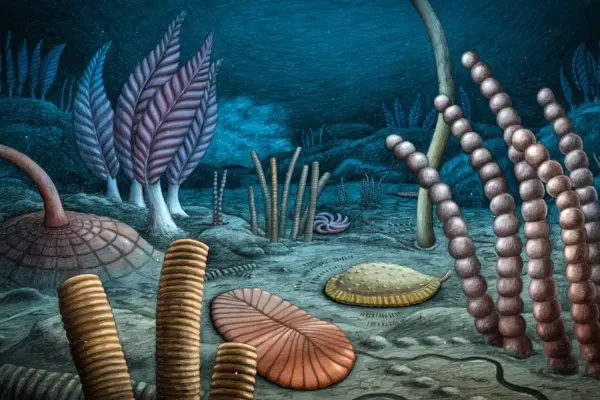
- Geological Timeline: Isotopic evidence suggests that some form of nitrogen fixation was operating on Earth at least 3.2 billion years ago—and potentially even earlier, during the Archean Eon, long before oxygen accumulated in the atmosphere due to the Great Oxidation Event.
By resurrecting enzymes that operated during these ancient epochs, the MUSE research team can now quantify the energetic constraints and isotopic fractionation dynamics of life before oxygen-dependent organisms fundamentally transformed the planet’s geochemical cycles.
Official Statements and Expert Insights
The collaborative nature of the research highlights a broader paradigm shift within astrobiology: the marriage of laboratory experimentation with planetary history. The principal investigators emphasize that understanding life’s origins on Earth is the absolute prerequisite for identifying life anywhere else.
Reflecting on the profound philosophical and scientific implications of the work, Dr. Betül Kaçar emphasizes the continuum between past, present, and future astrobiology:
"The search for life starts here at home, and our home is four billion years old," states Kaçar, director of the MUSE project. "So, we need to understand our own past. We need to understand life before us, if we want to understand life ahead of us and life elsewhere."
This sentiment encapsulates the core ethos of modern astrobiology. Earth is not merely a singular, isolated habitat; it is the only known biological reference point in the cosmos. By decoding how life solved the nitrogen crisis under the harsh, anoxic skies of a young Earth, scientists establish universal principles of biochemistry that apply to any rocky world in the universe.
Dr. Lance Seefeldt echoes this dual focus, bridging the gap between deep evolutionary history and pressing modern applications:
"All living organisms need nitrogen to survive and, though it’s all around us, we can’t access it directly," Seefeldt explains. "Enzymes called nitrogenases enable nitrogen fixation, which converts nitrogen to a form plants, animals, humans and other life forms can access. And we’re just beginning to understand the extent to which, over the Earth’s four-billion-year history, these nitrogenases have evolved."
Future Outlook: From Ancient Earth to Martian Agriculture
While the intellectual thrill of resurrecting ancient enzymes offers a profound look into deep time, the practical applications of this research are remarkably forward-looking. The insights gained from studying ancestral nitrogenases hold transformative potential for terrestrial agriculture and extraterrestrial exploration.
Tackling Global Agricultural Challenges
On modern Earth, human agriculture relies heavily on the Haber-Bosch process—an industrial method invented in the early 20th century that synthesizes ammonia fertilizer using high heat and pressure, consuming roughly 1 to 2 percent of the world’s total energy supply. In many developing regions, access to commercial fertilizers remains limited, leaving populations vulnerable to famine and malnutrition exacerbated by climate change, shifting rainfall patterns, and severe droughts.
Seefeldt points out that understanding the full evolutionary spectrum of nitrogenases—both ancient and modern—provides a biological roadmap for the future:
"Understanding nitrogenases, both ancient and modern, is critical to helping us tackle current agricultural challenges in a changing climate, including areas at risk of famine due to drought and lack of access to commercial fertilizers," he notes.
By learning how nature engineered nitrogenases to operate under diverse, extreme, and ancient environmental conditions, bioengineers may be able to design hyper-efficient or drought-resilient nitrogen-fixing crops. Engineering staple crops like wheat, rice, and corn to directly fix their own nitrogen could eliminate humanity’s catastrophic reliance on synthetic chemical fertilizers, curbing agricultural runoff and revolutionizing global food security.
Cultivating Life in Space and on Mars
Beyond Earth, Seefeldt’s involvement in NASA-funded initiatives underscores the direct relevance of this work to space exploration. As humanity sets its sights on establishing sustainable outposts on the Moon and crewed settlements on Mars, in-situ resource utilization (ISRU) becomes paramount. Transporting every pound of fertilizer or food from Earth to Mars is economically and logistically prohibitive.
To survive on another world, astronauts must cultivate crops locally. Mars possesses a thin, carbon dioxide-rich atmosphere and nitrogen gas ($N_2$) making up about 2.6 percent of its air. Unlocking biological mechanisms to efficiently fix nitrogen in extraterrestrial soils—or engineering microbial bio-fertilizer systems modeled after ancient, robust nitrogenases—will be a cornerstone of Martian agriculture.
Shaping the Search for Extraterrestrial Biospheres
Ultimately, the resurrection of ancient nitrogenases redefines the toolkit of the astrobiologist. When robotic rovers or future crewed missions drill into the Martian subsurface, or when space telescopes analyze the atmospheric composition of distant exoplanets for chemical disequilibrium, scientists are hunting for metabolic fingerprints.
Nitrogen, and the biological cycling thereof, leaves distinct isotopic and atmospheric signatures. By knowing how ancestral enzymes fractionationed isotopes and sustained primitive ecosystems, scientists can better interpret ambiguous biosignatures detected light-years away.
The ancient proteins built in a Utah and Wisconsin laboratory are more than academic curiosities; they are time capsules. They whisper the secrets of how life first learned to conquer the elements, providing humanity with an indispensable compass for navigating both our planet’s agricultural future and our interstellar destiny.