







Executive Overview
For generations, humanity’s place in the natural world has been visualized as a neat, linear ascent. From the iconic, stooped ape-like ancestor to the upright, tool-making hominid, and finally to modern Homo sapiens, human evolution has long been taught as a progressive sequence of distinct evolutionary steps. However, groundbreaking new research from Monash University is challenging this foundational narrative, arguing that our traditional systems for naming and classifying human ancestors are broken, outdated, and increasingly misaligned with modern science.
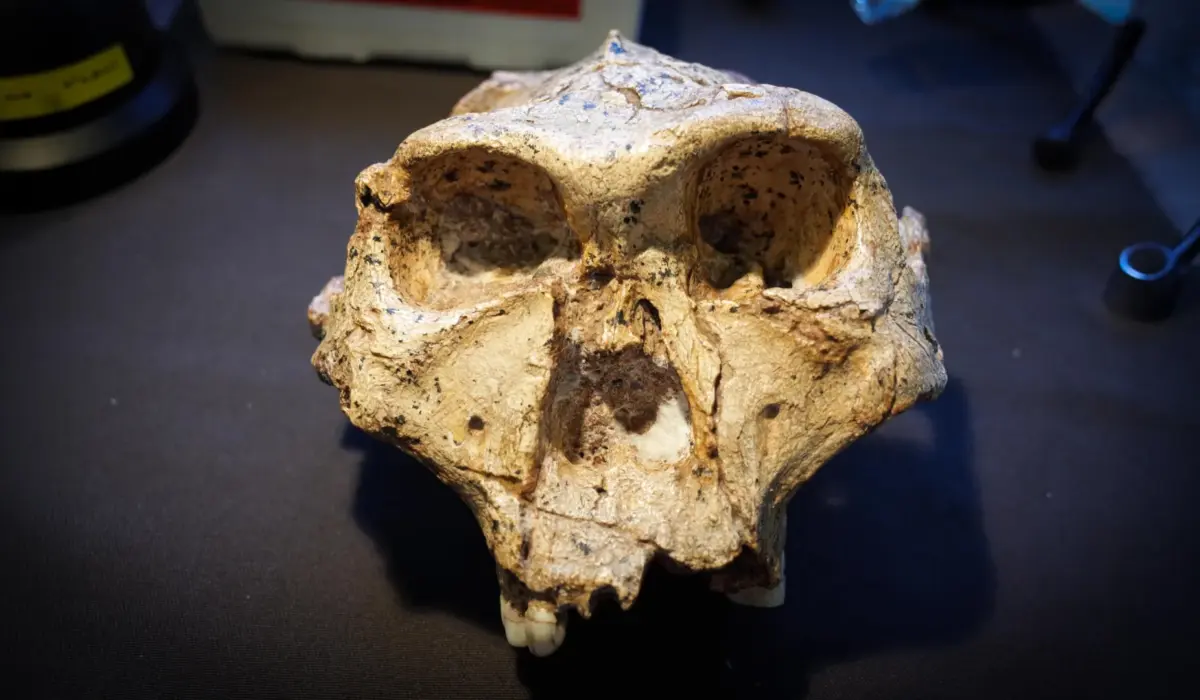
Published in the prestigious American Journal of Biological Anthropology, the study calls for an radical reconsideration of human taxonomy. Lead researcher Dr. Ian Towle, a Research Fellow at the Monash Biomedicine Discovery Institute, has put forward a provocative and far-reaching proposal: to dissolve existing genus boundaries and place all human species, alongside their closely related fossil relatives from the past four to five million years, within a single, expanded genus: Homo.
This proposed taxonomic overhaul is not merely a bureaucratic shift in nomenclature; it represents a fundamental acknowledgement of a messy, deeply tangled evolutionary web. Over the past several decades, an explosion of fossil discoveries, coupled with revolutionary breakthroughs in paleogenetics and evolutionary analysis, has dismantled the once-clear boundaries separating our species from other hominid groups. Traits that textbooks traditionally used to define the genus Homo—such as large brain volume, sophisticated tool production, and advanced behavioral adaptations—are no longer exclusive.
By expanding the genus Homo to encompass genera like Australopithecus and Paranthropus, Dr. Towle’s research aims to create a more stable, scientifically accurate framework that mirrors the actual complexity of our evolutionary past. This in-depth report explores the catalysts behind this proposed taxonomic revolution, the shifting definitions of what it means to be human, and what this radical new model means for the future of paleoanthropology.
Detailed Chronology: How Our View of Human Evolution Evolved
To understand why a radical revision of human taxonomy is suddenly necessary, it is vital to examine how our current classification system came to be. For centuries, Western science struggled to categorize human beings within the broader animal kingdom. When Carl Linnaeus established modern biological nomenclature in the 18th century, he placed humans firmly within the primate order, eventually giving rise to the binomial Homo sapiens (meaning "wise man").
The Mid-20th Century: The Linear Paradigm Takes Root
Throughout the mid-20th century, paleoanthropology experienced a wave of major fossil discoveries across Africa and Eurasia. Remains of early hominids—such as the groundbreaking discovery of the Taung Child in South Africa in 1924, which introduced the world to Australopithecus africanus—forced scientists to expand the human family tree.
During this era, evolutionary scientists constructed a relatively straightforward, linear model of human ancestry. The prevailing view organized hominids into distinct, sequential groups:
- Ape-like ancestors at the base.
- The genus Australopithecus representing a more derived, bipedal transitional phase.
- Early members of the genus Homo (such as Homo habilis and Homo erectus) marking the advent of large brains and stone tool technology.
- Homo sapiens standing at the pinnacle of this evolutionary ladder.
This system relied on sharp morphological divisions. Australopithecus was viewed as a small-brained, gracile biped; Paranthropus (often termed the "robust australopithecines") was categorized as a specialized, dead-end side branch characterized by massive chewing jaws and sagittal crests; and Homo was defined by expanding encephalization and technological mastery. For decades, this compartmentalized framework provided a comfortable, albeit overly simplistic, map of human origins.
The Late 20th Century: Cladistics and the Taxonomic Revolution
While the rest of evolutionary biology underwent a massive philosophical shift in the 1970s and 1980s—adopting cladistics, a system that classifies organisms strictly based on shared common ancestry and monophyletic groups (clades)—paleoanthropology lagged behind.
Traditional taxonomic practices in human evolution often retained older, typological methods. Instead of grouping species strictly by branching descent, researchers frequently relied on grade-based classifications, grouping animals together simply because they shared a similar level of physiological complexity or "grade" of adaptation (e.g., small brains versus large brains).
The 21st Century: The Fossil Record Breaks the Mold
Over the last twenty years, the pace of paleoanthropological discovery has accelerated exponentially. Researchers working across Africa, Asia, and Europe have unearthed an unprecedented trove of hominid fossils. Concurrently, revolutionary leaps in ancient DNA (aDNA) extraction and protein mass spectrometry have unlocked genetic data from fossils previously thought too degraded to yield secrets.
These discoveries have systematically dismantled the neat boundaries of the 20th-century model. We now know that multiple human species coexisted on Earth for millions of years. Furthermore, genetic evidence has revealed complex histories of interbreeding (admixture) between distinct groups, such as Neanderthals, Denisovans, and Homo sapiens.
As Dr. Ian Towle and his colleagues point out, the traditional pillars used to uphold taxonomic categories have crumbled under the weight of this new evidence, setting the stage for the Monash University study’s bold intervention.
Supporting Context & Metrics: Blurring the Boundaries of Genus Homo
The core argument of the Monash University research centers on the failure of traditional diagnostic traits to accurately separate Homo, Australopithecus, and Paranthropus. When scientists scrutinize the physiological and behavioral metrics of fossils spanning the last 4 to 5 million years, the historical dividing lines dissolve.
1. Brain Size (Encephalization)
Historically, brain expansion was considered the definitive hallmark of the genus Homo. The emergence of Homo habilis (the "handy man") in East Africa around 2.4 million years ago was famously linked to a notable jump in cranial capacity compared to australopithecines.
However, recent fossil finds have revealed a staggering overlap in brain sizes across these supposedly distinct groups. Some early members of the Homo lineage possessed cranial capacities well within the range of Australopithecus. Conversely, certain australopithecine specimens display neurological developments and brain reorganizations that challenge the notion of a simple, sudden leap in intelligence tied exclusively to the Homo genus.
2. Tool Use and Technological Complexity
For decades, the creation and utilization of stone tools were thought to be the exclusive domain of Homo. The Oldowan stone tool industry—dating back approximately 2.6 million years—was routinely attributed to early Homo species.
This paradigm was shattered by archaeological discoveries in Kenya (at the Lomekwi 3 site), which pushed the earliest known stone tool production back to 3.3 million years ago—predating the earliest accepted members of Homo by hundreds of thousands of years. Furthermore, recent taphonomic and archaeological studies strongly suggest that Paranthropus and Australopithecus species were also capable of complex behaviors, including butchering animals with stone tools and manipulating their environments in sophisticated ways.
3. Anatomical and Ecological Adaptations
Behavioral and ecological differences once used to draw hard lines between these genera have likewise proven fluid. While Paranthropus was traditionally pigeonholed as a specialized vegetarian consuming hard, low-quality plant foods (due to its massive molar teeth and heavy chewing apparatus), micro-wear and isotope analyses have shown that these hominids possessed surprisingly flexible diets, overlapping significantly with early Homo.
"These groups do not necessarily represent distinct evolutionary branches, or ‘clades’, and differences in behavior and ecology once used to distinguish them have also become increasingly difficult to maintain," explains Dr. Towle.
Because evolution is fundamentally non-linear—characterized by parallel development, mosaic evolution (where different body parts evolve at different rates), and rampant interbreeding—forcing these fossil groups into rigid, distinct genera creates an artificial illusion of order that misrepresents biological reality.
Official Statements and Expert Perspectives
The publication of the Monash University study in the American Journal of Biological Anthropology has sent ripples through the international paleoanthropological community. By directly challenging the utility of established taxonomic categories, the research has ignited a robust debate regarding how scientists should name, organize, and communicate our evolutionary history.
In outlining the rationale behind the study, lead researcher Dr. Ian Towle emphasized that the current taxonomy is no longer fit for purpose:
"Recent fossil discoveries and advances in evolutionary and genetic analysis make this an ideal time to reconsider whether our traditional taxonomy still accurately reflects human evolution," Dr. Towle stated.
"The more we learn about our ancestors and close fossil relatives, the more we realize how complex and non-linear our family tree is. Expanding the
Homogenus to also include species ofAustralopithecusandParanthropuswill allow us to account for differences without regularly reclassifying particular groups."
Dr. Towle points out a major practical issue in modern paleontology: whenever a new, transitional fossil is unearthed, it frequently triggers fierce, protracted debates over which genus it belongs to. Species are continually bounced between Australopithecus and Homo, or assigned entirely new, debated genera, creating unnecessary confusion in the scientific literature and public discourse.
By absorbing Australopithecus and Paranthropus into an expanded genus Homo, scientists could establish a more stable, encompassing taxonomic framework. Under this system, species-level variations would still be recognized (e.g., Homo africanus or Homo robustus, rather than maintaining separate genera), but the overarching umbrella would better capture the broad, closely intertwined evolutionary radiation of hominids that walked the Earth over the past 5 million years.
While some traditionalists in the field may resist such a sweeping disruption to familiar nomenclature, many evolutionary biologists and systematists have welcomed the proposal as a long-overdue alignment with modern cladistic principles. As the philosophy of biological classification increasingly demands that all named groups reflect true monophyletic lineages, the porous boundaries of archaic hominid genera have become impossible to ignore.
Future Outlook: What Next for Paleoanthropology?
The proposition put forward by Monash University researchers marks the beginning—not the end—of a major conversation within the scientific community. As paleoanthropology steps further into the 21st century, the implications of this study stretch across academic research, museum curation, and science education.
1. Re-evaluating the Scientific Literature
If the taxonomic shift proposed by Dr. Towle gains traction, it will require a massive restructuring of academic literature, taxonomic databases, and evolutionary textbooks. Scientific papers spanning decades will need to be contextualized within the updated nomenclature, and researchers will be forced to re-examine how they define taxa in phylogenetic software and cladistic analyses.
2. Transforming Public Education and Museum Displays
For the general public, human evolution has long been communicated through linear diagrams—most famously Rudolph Zallinger’s 1965 illustration "The Road to Homo Sapiens" (popularly known as the "March of Progress"). Museum exhibits and educational curricula have slowly worked to replace this outdated linear model with branching tree diagrams.
However, adopting an expanded genus Homo would require an even more dramatic shift in how we talk about our origins. It challenges the human-centric exceptionalism embedded in our language. If australopithecines and robust hominids are recognized as members of the genus Homo, the psychological boundary separating "us" from "them" becomes far more porous, framing human evolution not as a solitary march toward perfection, but as a diverse, sprawling radiation of successful bipedal primates.
3. The Role of Emerging Technologies
As the field looks to the future, technological advancements will continue to test and refine taxonomic models. Proteomic analysis—extracting ancient proteins from fossil bone fragments too old or degraded to yield DNA—is opening up brand-new avenues for identifying fragmented and unclassifiable hominid remains. As these technologies yield deeper insights into the biological affinities of early hominids, researchers will rely on flexible, robust taxonomic frameworks like the one proposed by Monash University to make sense of the data.
Conclusion
The research from Monash University serves as a timely reminder that science is an iterative, self-correcting endeavor. As our empirical knowledge of the fossil record deepens, the conceptual boxes we built in the 19th and 20th centuries inevitably burst at the seams. By proposing to unite Australopithecus, Paranthropus, and Homo under a single, expanded genus, Dr. Ian Towle and his colleagues have offered a courageous, scientifically grounded blueprint for the future of paleoanthropology—one that fully embraces the messy, magnificent, and wonderfully complex reality of human evolution.