









Executive Overview
The landscape of modern medicine is continuously reshaped by the intersection of robotics, artificial intelligence, and telecommunications. Yet, a fundamental paradox persists: while specialized medical interventions become increasingly sophisticated, access to basic, foundational diagnostics remains glaringly unequal. For the 60 million Americans living in rural communities—and billions more worldwide—geography often dictates health outcomes. Long before a patient can receive specialized treatment, they must navigate the diagnostic "top of the funnel," a process where ultrasound imaging serves as a critical first line of defense. Unfortunately, a severe maldistribution and chronic shortage of qualified sonographers have turned routine diagnostic imaging into a waiting-game bottleneck, with delays stretching from weeks to months even in major metropolitan healthcare systems.
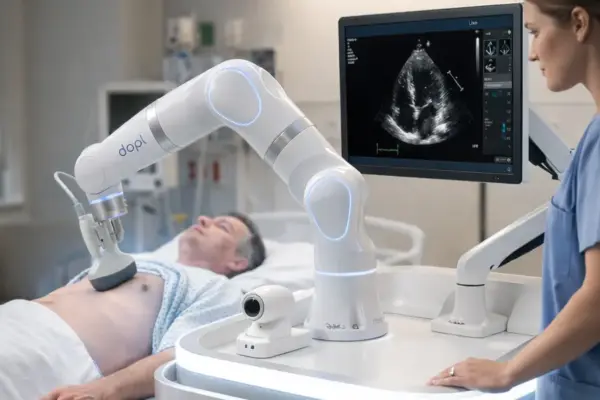
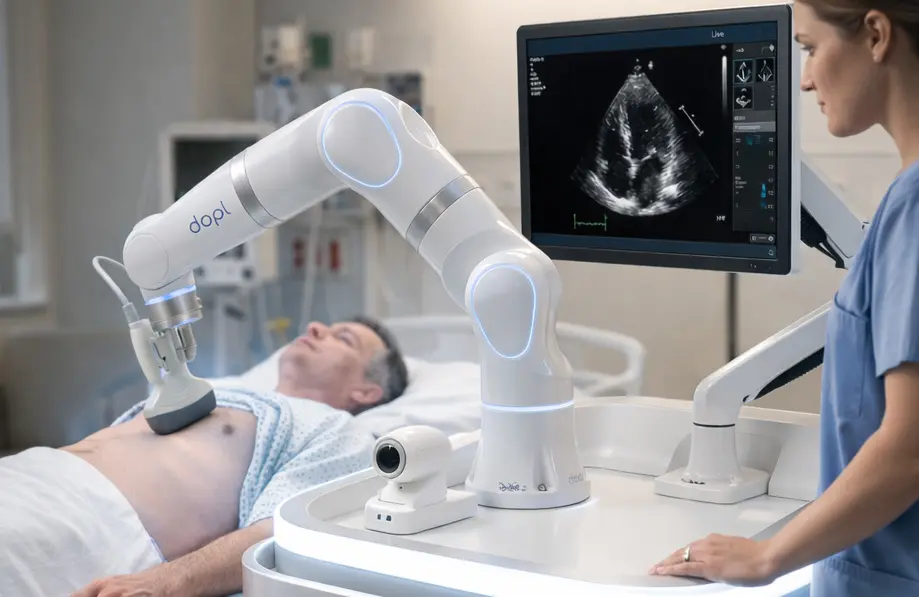
Enter Dopl Technologies, a forward-thinking medtech startup headquartered in Bothell, Washington. Fresh off a successful $6.3 million seed funding round, Dopl is developing a cutting-edge robotics and software ecosystem designed to break down geographic barriers. At the heart of this initiative is Traverse, an advanced remote robotic ultrasound platform that empowers specialists to execute precise diagnostic scans from miles away. Led by co-founder and CEO Ryan James—a former Nvidia medical AI engineer with a deep-rooted family legacy in clinical medicine—Dopl is pioneering a future where specialized care is no longer bound by proximity. By combining off-the-shelf hardware with proprietary software, zero-latency haptic feedback, and advanced computer vision, Dopl is not merely solving a workforce shortage; it is laying the foundational infrastructure for an autonomous, telerobotic healthcare revolution.
Detailed Chronology: From Minimally Invasive Roots to Diagnostic Innovation
The trajectory of Dopl Technologies is a masterclass in market responsiveness, iterative design, and strategic pivoting. The company’s story begins well before its recent funding milestone, rooted deeply in the academic and professional background of its leadership.
Foundations and Early Explorations
Ryan James’s journey toward founding Dopl was shaped by a lifelong immersion in healthcare. Growing up in Kalamazoo, Michigan, surrounded by a family of practicing physicians, James developed an early appreciation for the direct impact of clinical care. Simultaneously, an innate fascination with computing drew him to the University of Michigan, where he earned a degree in computer science. Seeking to build a rigorous technical foundation, James moved to Seattle, contributing his talents to industry giants like Microsoft and Nvidia before pursuing a Ph.D. in health informatics.
This robust academic and professional convergence—spanning machine learning, artificial intelligence, and health systems—ultimately intersected with clinical reality when James met two mission-aligned physicians at the University of Washington. Sharing a mutual dedication to democratizing healthcare access, they recognized that modern technology could bridge the vast chasms isolating patients from clinical expertise.
The Original Focus: Minimally Invasive Cardiac Procedures
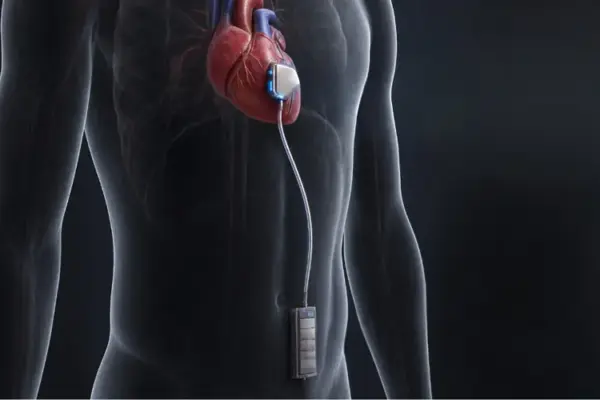
Initially, Dopl directed its engineering prowess toward high-complexity, minimally invasive interventions. For roughly five to seven years, the startup concentrated heavily on robotic-assisted cardiac procedures, such as catheter ablations. Working in collaboration with rural healthcare facilities, Dopl successfully demonstrated the feasibility of performing remote cardiac catheter ablations, proving that advanced surgical expertise could be projected across geographic divides.
The Pivotal Realization: Listening to the Market
Despite the technical triumphs of their minimally invasive endeavors, close engagement with clinical partners revealed an even more acute, foundational bottleneck. When interviewing hospital administrators and clinicians about remote electrophysiology, the recurring feedback was striking:
"This is great. We would love to have the expertise of an electrophysiologist in our hospital, but we just need basic access to ultrasound because our patients can’t even be diagnosed for a cardiac catheter ablation because we don’t have ultrasound to diagnose them."
This realization catalyzed a strategic pivot. Management understood that advanced downstream treatments are entirely dependent on upstream diagnostics. If rural and underserved hospitals lacked the sonographers necessary to identify conditions in the first place, high-end therapeutic robots would remain underutilized luxuries. Consequently, Dopl redirected its deep expertise in telerobotics toward ultrasound—the universal entry point of clinical diagnostics.

Supporting Context & Metrics: The Scale of the Problem and the Technology
To fully appreciate the significance of Dopl’s platform, one must examine the staggering scale of the healthcare access crisis and the engineering hurdles required to solve it.
The Global and Domestic Access Crisis
The numbers surrounding diagnostic imaging deficits paint a stark picture:
- Global Impact: Approximately 5 billion people worldwide lack adequate, timely access to essential healthcare services and diagnostic imaging.
- Domestic Disparities: Within the United States, roughly 60 million individuals reside in rural communities characterized by severe provider shortages.
- Urban Bottlenecks: The crisis is not strictly rural. Even patients residing within blocks of major medical centers—such as the University of Washington medical complex—routinely face waiting periods ranging from three weeks to three months for routine ultrasound diagnostics due to overwhelming backlogs and national workforce deficits.
The "Special Sauce": Software, Connectivity, and Hardware Agnosticism
While various telemedicine and remote imaging devices exist, Dopl distinguishes itself through a hardware-agnostic architecture. Rather than manufacturing proprietary, expensive hardware from scratch, Dopl leverages off-the-shelf components, drastically reducing development friction and lowering barriers to commercial adoption.
The core elements of the ecosystem include:
- Cobots: Off-the-shelf six- and seven-degree-of-freedom collaborative robots.
- Haptic Controllers: Off-the-shelf six-degree-of-freedom haptic input devices.
- Vision Systems: Traditional RGB cameras alongside advanced RGBD (depth-sensing) cameras.
- Sensing Modalities: Integrated pressure sensors and force-torque sensors located at the end effector.
Dopl’s proprietary "special sauce" lies in the software, secure connectivity infrastructure, and artificial intelligence models that bind these components together. During every telerobotic session, the platform continuously acquires operational and visual data. This telemetry is harnessed over time to enhance system intelligence, gradually introducing semi-autonomous guidance features for sonographers and setting the stage for fully autonomous diagnostic scans in the future.
Official Statements: Insights from Co-Founder and CEO Ryan James
In an exclusive discussion with Medical Design & Outsourcing, Ryan James elaborated on the technological philosophy, operational hurdles, and economic drivers powering Dopl Technologies.
Solving the Sonographer Experience
Overcoming latency and creating an authentic clinical "feel" was arguably the startup’s most formidable engineering challenge. James contrasts Dopl’s approach with legacy remote-imaging systems:
"When you look at a lot of the competing technologies, they’re using joysticks, Xbox controllers, traditional video feeds, which functions. But what makes Dopl different is we make the remote expert feel like they’re in the room with the patient, scanning like they always have. That not only decreases the barrier for training, it creates this incredible, delightful experience for the remote sonographer."
This immersive experience is anchored by zero-latency haptic feedback. By coupling real-time computer vision models—which map the patient’s physical topology on the bedside—with force-torque and pressure sensors, the remote operator experiences genuine tactile resistance.

"It feels like an apple is resting on your chest when we’re doing a cardiac scan," James explained, emphasizing the critical importance of a soft, safe touch during delicate diagnostic procedures.
Navigating the Investment Climate
Securing $6.3 million in a notoriously conservative and capital-tight venture environment is no small feat. Addressing fellow medtech entrepreneurs facing similar fundraising hurdles, James offered pragmatic advice rooted in execution and shared vision:
"It can be challenging, but you’ve just got to stick with it. There are a lot of people out there who have capital who are investing in medtech. You’ve got to find people like yourself who are passionate about this field and really want to make a difference — and of course, make a money doing it. As long as you can show the big opportunity and how your company is different and that you can reach that opportunity, the money’s there to raise. And then it’s all about execution at that point."
Future Outlook: Beyond Ultrasound to a Fully Telerobotic Era
While Dopl’s immediate commercial focus centers on the rollout of the Traverse remote ultrasound platform—initially offered as a turnkey bundle comprising one robot, one controller, an ultrasound machine, and associated cameras—the company’s long-term vision is breathtakingly expansive.
The Evolution Toward Autonomy
As hospitals deploy Dopl’s turnkey systems and expand integration to encompass legacy inventory, the continuous influx of scan data will fuel machine learning pipelines. Over successive iterations, the platform will transition from purely remote-controlled operations to intelligent, semi-autonomous assistance, ultimately aiming for complete diagnostic autonomy where routine scans can be executed without direct human piloting.
Expanding the Horizon: From Stroke Care to Universal Procedure Delivery
The underlying architecture developed by Dopl—secure, low-latency telerobotic connectivity paired with off-the-shelf robotics—is inherently modular. Having proven its efficacy in cardiac catheter ablations and now scaling diagnostic ultrasound, the company eyes a broad spectrum of future clinical applications.
When asked about potential adjacencies such as telerobotic stroke care, James expressed absolute confidence:
"Absolutely. I think everything is going to move in this direction."
Looking toward a 10- to 30-year horizon, Dopl’s ultimate mission is to help restructure the entire healthcare industry. By providing the foundational software and security infrastructure required for remote operation, Dopl envisions a healthcare ecosystem where geographical borders dissolve completely—ensuring that specialized examinations and complex procedures can be delivered telerobotically and autonomously to any patient, anywhere in the world.