









Executive Overview
Three years ago, deep beneath the Mediterranean Sea, an astronomical instrument recorded a phenomenon that has since captivated and confounded the global astrophysics community. On February 13, 2023, the KM3NeT/ARCA neutrino observatory—anchored off the coast of Sicily and operating at a mere fraction of its ultimate capacity—detected the most energetic cosmic neutrino ever witnessed by humanity.
Carrying a staggering energy level of approximately 220 PeV (peta-electronvolts), this ghostly subatomic particle shattered previous records. Its energy was more than ten times greater than any high-energy neutrino previously cataloged by detectors on Earth. The sheer magnitude of the particle immediately sparked a high-stakes scientific investigation. Where did it come from? What cosmic mechanism could possibly accelerate a single subatomic speck to velocities and energies that defy conventional astrophysical models?
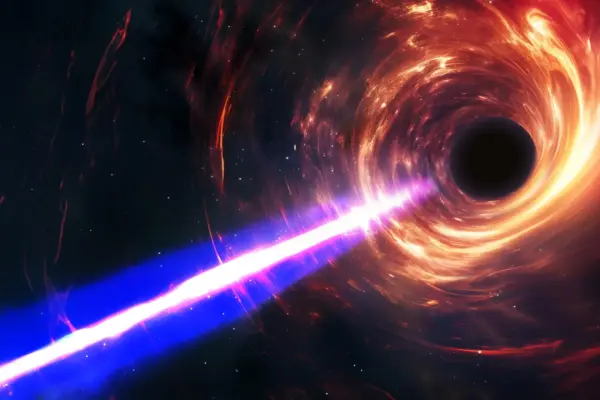
For years, the origin of this unprecedented particle remained a profound enigma. However, a groundbreaking study recently published in the Journal of Cosmology and Astroparticle Physics (JCAP) offers a compelling breakthrough. According to the research, this ultra-high-energy neutrino may have originated from blazars—some of the most violent, energetic, and exotic objects in the observable universe. Powered by supermassive black holes sitting at the centers of distant galaxies, these cosmic powerhouses shoot colossal, relativistic jets of plasma directly toward our solar system.
Using advanced computational simulations and multi-messenger astronomy data sourced from observatories around the globe, an international team of researchers mapped out how a diffuse population of these extreme accelerators could generate such a particle. While scientists caution that definitive proof remains on the horizon, this discovery represents a pivotal step forward. It bridges the gap between theoretical particle physics and observational astronomy, hinting at a hidden universe of ultra-high-energy phenomena just waiting to be uncovered as next-generation detectors come fully online.
Detailed Chronology: The Hunt for the Record-Breaking Particle
The journey toward understanding the 220 PeV neutrino reads like a forensic cosmic detective story, beginning on a winter day in the Mediterranean and stretching through years of rigorous data analysis and multi-institution collaboration.
Phase 1: The Discovery in the Deep (February 13, 2023)
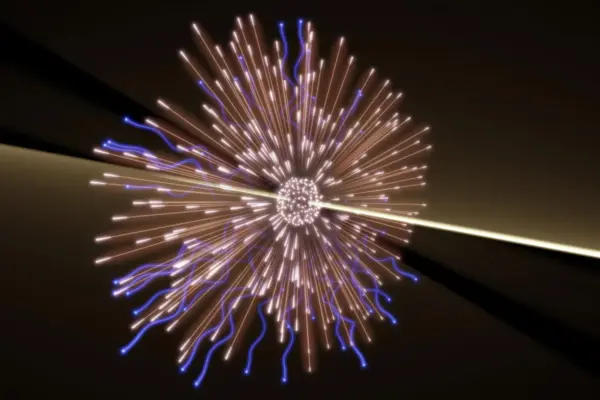
On February 13, 2023, the KM3NeT/ARCA detector—strategically placed thousands of meters underwater off the coast of Sicily—registered a faint, unmistakable flash of Cherenkov radiation. This optical signature indicated the passage of an extremely high-energy neutrino interacting with the surrounding matter.
What made the detection even more remarkable was the state of the observatory itself. KM3NeT/ARCA was, and still is, under active construction. At the moment of this historic event, only 21 detection lines were fully operational. This meant the telescope was running at a mere 10 percent of its planned final size. Despite operating with one hand tied behind its back, the partial detector captured a signal so singular and powerful that it immediately altered the landscape of neutrino astronomy.
Phase 2: Treating the Cosmos Like a Crime Scene
In the wake of the detection, astrophysicists approached the event much like forensic investigators piecing together a complex crime scene. Because neutrinos carry no electrical charge and interact only weakly with matter, they travel across the universe in straight lines, completely unperturbed by magnetic fields or interstellar gas. This makes them pristine messengers pointing directly back to their sources, but it also strips away clues about their journeys.
Researchers began by establishing a roster of potential hypotheses. Could the neutrino have been born from the decay of ultra-high-energy cosmic rays interacting with the Cosmic Microwave Background (CMB)—the residual thermal radiation left over from the Big Bang? Or did it emerge from a localized, point-like cosmic source? Or perhaps, as the data increasingly suggested, it was part of a diffuse flux generated by a vast population of extreme cosmic engines?
To test these scenarios, the research team employed advanced open-source simulation tools, most notably AM3, to model realistic populations of blazars. By adjusting key parameters—such as magnetic field strengths, the size of emission regions around supermassive black holes, baryonic loading, and proton spectral indices—the scientists simulated how these environments would produce both neutrinos and accompanying gamma rays. They then compared their simulated outputs against empirical data gathered by major global observatories, including the IceCube Neutrino Observatory in Antarctica and NASA’s Fermi Gamma-ray Space Telescope.
Phase 3: The Multi-Messenger Conundrum and the "Diffuse Background" Hypothesis
In modern astrophysics, breakthroughs often rely on "multi-messenger astronomy"—the simultaneous detection of electromagnetic radiation (radio waves, visible light, X-rays, and gamma rays) alongside gravitational waves or neutrinos from the same celestial event.
When astronomers scoured archival data for an electromagnetic counterpart matching the exact timestamp and sky coordinates of the February 2023 neutrino, they hit a wall. There was no corresponding blast of gamma rays or flare of X-rays pointing to a single, isolated cataclysmic event.
Rather than dead-ending the investigation, this absence of a point-source counterpart provided a crucial clue. It ruled out certain types of violent, isolated explosions and pushed the research team toward a more subtle explanation: the neutrino likely originated from a diffuse background. In other words, rather than being the product of one dramatic local event, the particle was part of a cumulative flux contributed by a vast, distant population of extreme accelerators—namely, blazars scattered across the cosmos.
Supporting Context & Metrics: Decoding Blazars and Neutrino Physics
To appreciate the significance of the recent JCAP study, it is essential to understand the physics of the objects involved and the sheer scale of the energy measurements governing the research.
What is a Blazar?
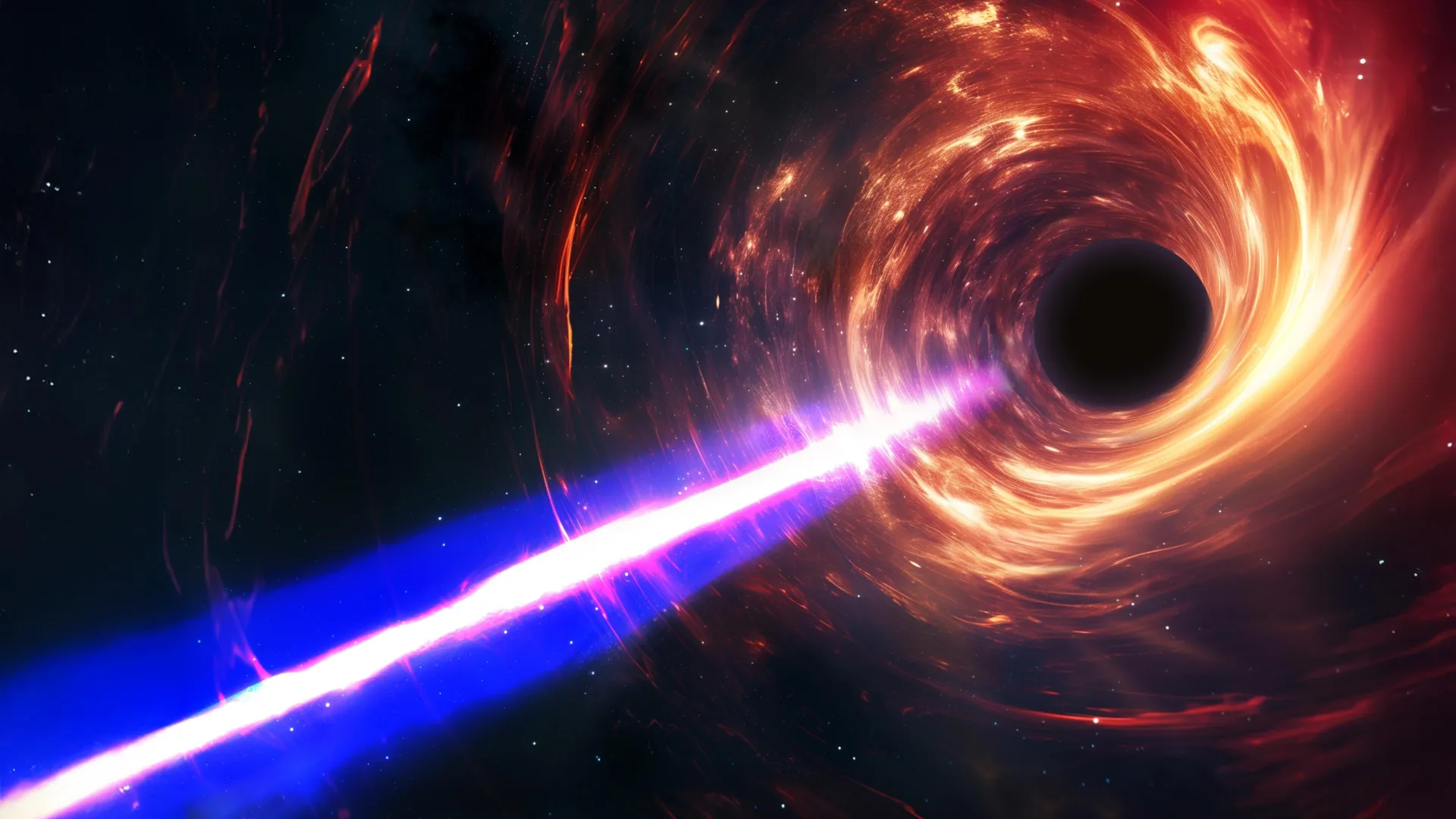
Blazars are a specialized and particularly violent subclass of active galactic nuclei (AGN). At the heart of most large galaxies lies a supermassive black hole containing millions or even billions of times the mass of our Sun. As matter spirals inward toward the black hole, it forms an accretion disk characterized by intense gravitational and frictional forces, heating up to millions of degrees.
In a blazar, this system goes a step further. Powerful magnetic fields twist and collimate the infalling material, shooting twin jets of plasma outward from the black hole’s poles at nearly the speed of light. Crucially, a blazar is classified as such because one of these relativistic jets happens to be pointed directly toward Earth. For human astronomers, looking down a blazar jet is akin to staring straight down the barrel of a cosmic particle accelerator.
Understanding the Energy Scale: PeV and Beyond
To put the 220 PeV energy level into perspective, it helps to examine the units of measurement used by particle physicists:
- Electronvolt (eV): The amount of kinetic energy gained by a single electron accelerating through an electric potential difference of one volt.
- Mega-electronvolt (MeV): $10^6$ eV.
- Giga-electronvolt (GeV): $10^9$ eV.
- Tera-electronvolt (TeV): $10^12$ eV.
- Peta-electronvolt (PeV): $10^15$ eV.
A 220 PeV neutrino carries roughly $2.2 times 10^17$ electronvolts of energy. To generate a subatomic particle with this much kinetic energy requires macroscopic engines capable of tapping into gravitational and magnetic forces on a scale incomprehensible by terrestrial standards. Prior to this event, high-energy neutrino detections typically hovered well below this threshold, making the Mediterranean discovery an absolute outlier in the cosmic census.
The Modeling Parameters
In their study, the researchers focused heavily on two critical variables within their blazar simulations:
- Baryonic Loading: This metric quantifies the ratio of energy carried by protons relative to electrons within the plasma jets. A higher baryonic loading increases the likelihood of proton-proton or proton-photon interactions, which in turn drive efficient neutrino production.
- Proton Spectral Index: This parameter dictates how proton energies are distributed within the accelerator. Fine-tuning this index allowed the team to determine whether blazars could realistically accelerate particles to the extreme energies required to produce a 220 PeV neutrino without violating existing gamma-ray background limits established by Fermi.
Official Statements and Expert Insights
The collaborative nature of modern astrophysics means that breakthroughs like this are forged by hundreds of researchers pooling their expertise across institutions worldwide.
Meriem Bendahman, a researcher at INFN Naples and a prominent member of the KM3NeT collaboration, played a central role in the study. Reflecting on the multitude of potential origins for the record-breaking particle, Bendahman noted the complexity of the detective work:
"There are several possible explanations for the origin of this particle. For example, it has been proposed that such neutrinos are generated when ultra-high-energy cosmic rays interact with the cosmic microwave background radiation, the residual light from the early Universe. But there is also the possibility that the neutrino originates from a diffuse flux produced by a population of extreme accelerators, such as blazars."
Addressing the lack of a simultaneous electromagnetic signal—a hurdle that initially complicated the investigation—Bendahman emphasized how negative evidence helped narrow down the field:
"This does not completely rule out the possibility of a point-like source, but it leads us to consider that our neutrino may come from a diffuse background—that is, from a flux of neutrinos including contributions from many sources."
Summing up the robustness of the team’s computer models when measured against existing empirical constraints from IceCube and Fermi, Bendahman stated:
"We modeled a realistic population of blazars with physically motivated parameters, and we found that this population of blazars could explain the origin of this ultra-high-energy event, while also being consistent with the constraints that we have regarding the gamma-ray and neutrino observations."
Future Outlook: A New Window on the Universe
While the association between the 220 PeV neutrino and blazars represents a major theoretical milestone, the authors of the study are quick to emphasize that the work is far from finished. Proving a hypothesis of this magnitude requires more data, stricter statistical thresholds, and independent confirmations from multiple observatories.
Fortunately, the future of neutrino astronomy is brighter—and busier—than ever before.
The Completion of KM3NeT
At present, the KM3NeT/ARCA detector off the coast of Sicily is continuing its phased construction. As more detection lines are lowered into the abyssal waters of the Mediterranean, the observatory’s effective volume will expand dramatically. Operating at full capacity, KM3NeT will possess unprecedented sensitivity to high-energy and ultra-high-energy neutrinos originating from the southern hemisphere and the galactic plane.
Researchers anticipate that with a fully realized detector, events that currently appear as isolated, once-in-a-lifetime anomalies will become part of a broader, structured dataset.
Expanding Global Collaboration
The synergy between Mediterranean detectors like KM3NeT, Antarctic giants like IceCube, and space-based gamma-ray telescopes like Fermi forms an interconnected web of cosmic surveillance. By combining signals across different wavelengths and messenger types, astronomers are steadily closing the net on the universe’s most elusive particle accelerators.
If future observations validate the blazar hypothesis, the implications will ripple across multiple disciplines of physics. It will force astrophysicists to revise their models of particle acceleration inside relativistic jets, proving that supermassive black holes can push nature’s speed and energy limits far beyond what contemporary theories previously allowed.
As Meriem Bendahman concluded:
"We need more observational data. KM3NeT is still under construction, and we detected this ultra-high-energy neutrino with only a partial configuration. With the full detector and more data, we will be able to perform more powerful statistical analyses and open a new window on the ultra-high-energy neutrino universe. We have never observed such a high-energy neutrino before, and if it turns out to come from cosmic accelerators like blazars, it would give us new insight into how these objects can emit particles at energies beyond what we previously expected."
Until then, the ghost particle of February 2023 remains a silent sentinel from the deep cosmos—a single messenger carrying secrets from the most violent corners of space, waiting for humanity to build the tools smart enough to read them.