









Executive Overview
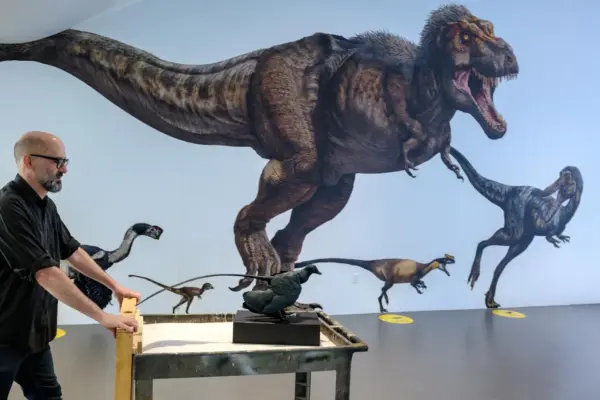
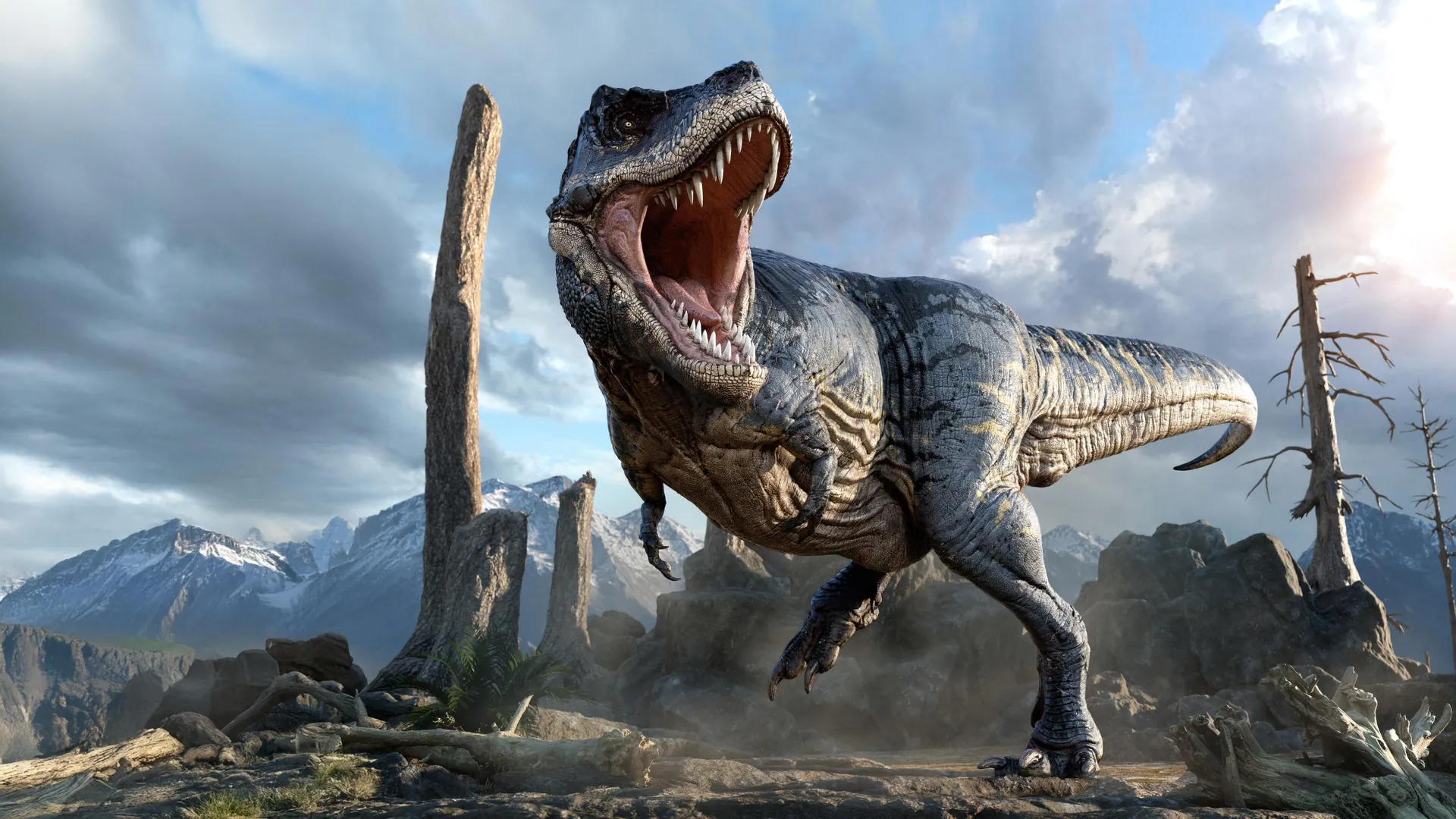
Paleontological research published on July 15, 2026, in the open-access journal PLOS One has shed new light on the predatory and scavenging behaviors of the Late Cretaceous period. Led by researcher Bethania C. T. Siviero and her colleagues at Loma Linda University, the study details the discovery of fossilized dinosaur bones in northeastern Wyoming bearing distinct tooth marks. According to the research team, these markings were almost certainly left behind by Tyrannosaurus rex, the apex predator of its ecosystem.
The investigation centered on an exhaustive analysis of more than 3,000 individual bones recovered from a rich fossil bed dating back roughly 72 to 66 million years. The vast majority of these specimens belonged to Edmontosaurus annectens, a prominent herbivorous hadrosaur species characterized by its distinctive, duck-like bill. While thousands of bones were processed and cataloged, only a small fraction—just 12 specimens—displayed structural modifications that could be definitively or tentatively linked to tooth impacts. Among these, four bones exhibited exceptionally clear, distinct patterns whose spacing, depth, and morphology matched the unique dental architecture of T. rex.
Beyond identifying the perpetrator of these prehistoric bites, the research team developed a comprehensive diagnostic framework designed to help paleontologists distinguish genuine bite marks from other forms of bone modification. In ancient ecosystems, post-mortem weathering, geological erosion, insect borings, and even skeletal pathologies can mimic the punctures and grooves left by teeth. By establishing rigorous criteria to separate true feeding traces from environmental or pathological artifacts, the Loma Linda University study offers an essential methodological advancement for paleoecology. The findings not only reinforce our understanding of T. rex trophic dynamics—confirming that the king of tyrannosaurids actively hunted and scavenged Edmontosaurus—but also refine the scientific community’s toolkit for reconstructing ancient food webs.
Detailed Chronology and Investigation
The Wyoming Fossil Beds: A Window Into Deep Time
The journey toward these findings began deep within the sedimentary layers of northeastern Wyoming, a region globally renowned for yielding exceptionally well-preserved Late Cretaceous fossils. The geological formations here span the final chapters of the Mesozoic Era, capturing the critical window between 72 and 66 million years ago. During this epoch, the Western Interior Seaway bisected North America, creating a dynamic, subtropical coastal landscape characterized by meandering river systems, expansive floodplains, and lush, swampy forests.
It was within this ancient theater of life and death that massive herds of Edmontosaurus annectens grazed on primitive flowering plants, conifers, and ferns. These duck-billed dinosaurs were among the most successful and abundant herbivores of their time, making them a primary caloric resource for the large carnivorous theropods sharing their habitat. When these animals died—whether through natural causes, disease, or violent predation—their remains were occasionally entombed in fluvial sediments, setting the stage for fossilization.
Field Recovery and the Scale of the Analysis
To understand the ecological interactions governing this ecosystem, Siviero and her research team undertook a massive analytical undertaking. Rather than focusing on isolated, spectacular showpieces, the scientists cast a wide net, systematically examining more than 3,000 individual bones recovered from the Wyoming site.
This exhaustive sample size was critical to ensuring statistical validity and avoiding selection bias. The bones represented various anatomical elements, including limb bones, ribs, vertebrae, and neural spines. Each specimen underwent rigorous macroscopic and microscopic examination to document any surface irregularities, depressions, punctures, furrows, or perforations.
Out of the massive assemblage of over 3,000 Cretaceous bones inspected, the vast majority bore no evidence of carnivore interaction. They displayed only the expected signatures of subaerial weathering, minor trampling, and sediment compaction. However, exactly 12 bones—a mere 0.4% of the total sample—revealed anomalous surface traces that immediately drew the researchers’ attention.
Isolating the T. rex Signature
Microscopic and comparative analysis of the 12 modified bones allowed the team to narrow down the culprits behind the damage. The prehistoric ecosystem of Late Cretaceous Wyoming was not monopolized by a single carnivore; it hosted a diverse assemblage of predatory dinosaurs, including smaller dromaeosaurs, troodontids, and large apex predators, alongside semi-aquatic apex predators like crocodilians.
Among the dozen modified specimens, four bones displayed strikingly distinct patterns of spacing and indentation. The geometry of these punctures and score marks matched the known tooth morphology of an adult Tyrannosaurus rex—specifically, the robust, D-shaped cross-section of its premaxillary and maxillary teeth, which were built to exert crushing forces capable of fracturing thick bone. The size, depth, and distance between consecutive punctures aligned precisely with the anatomical spacing of a tyrannosaurid jaw.
The remaining eight marked bones exhibited modifications that were either too ambiguous to assign to a specific taxon or indicative of smaller carnivores and scavengers. Some of these secondary marks could be attributed to opportunistic feeding by smaller theropods or large crocodilians that shared the riparian habitats of the ancient floodplain.
Supporting Context and Metrics
Quantifying the Evidence: Statistics of the Study
To fully grasp the significance of the PLOS One publication, it is helpful to examine the numerical breakdown of the research data. The metrics underscore both the rarity of preserved bite marks in the fossil record and the immense scale of field paleontology required to unearth statistically sound behavioral insights.
| Metric Category | Data Point / Value | Ecological Context |
|---|---|---|
| Publication Date | July 15, 2026 | Published in the open-access peer-reviewed journal PLOS One. |
| Geographic Location | Northeastern Wyoming, USA | Rich Late Cretaceous fossil beds within ancient floodplain deposits. |
| Temporal Range | 72 to 66 million years ago | Spanning the final stages of the Mesozoic Era, just prior to the K-Pg extinction event. |
| Total Bones Examined | > 3,000 individual elements | A robust sample size minimizing selective sampling bias. |
| Primary Taxon Studied | Edmontosaurus annectens | A massive, duck-billed ornithischian herbivore. |
| Total Modified Bones | 12 specimens (0.4%) | Exhibiting anomalous surface depressions, punctures, or grooves. |
| Definitive T. rex Matches | 4 specimens | Displaying tooth spacing and morphology consistent with adult T. rex. |
Feeding and Scavenging Dynamics
A pivotal element of the study involves determining the exact timing of the bite marks relative to the death of the prey animals. By meticulously inspecting the margins of the punctures and grooves, the researchers searched for signs of bone healing—such as bone remodeling, reactive woven bone growth, or callus formation.
In every single instance across the marked specimens, there was a total absence of healing indicators around the tooth traces. In biology, living bone responds to trauma by initiating a repair cascade; if an animal survives a predator attack, the bone heals around the injury, leaving a distinct pathological signature. The complete lack of healing response in the Wyoming fossils demonstrates conclusively that the bites occurred either at the absolute moment of death (peri-mortem) or long after the animal had perished (post-mortem).
This finding provides a clear picture of carcass utilization in the Late Cretaceous. When combined with prior geological and taphonomic research from the same fossil site, the data supports a dual-behavioral model for Tyrannosaurus rex. Some Edmontosaurus individuals were actively hunted and killed by apex predators, while others died from natural causes and subsequently lay exposed on the landscape. In both scenarios, T. rex acted as both active predator and scavenger, capitalizing on available protein sources across the prehistoric floodplains.
The Diagnostic Challenge: Separating True Bites From Artifacts
One of the most valuable contributions of the Loma Linda University study is its rigorous approach to taphonomic anomaly identification. In the field of paleontology, misidentifying surface damage on fossil bone can lead to flawed behavioral hypotheses and inaccurate ecological reconstructions.
Bite marks are not the only natural phenomena that leave holes, gouges, and channels in skeletal remains. Geological forces can create convincing pseudo-tooth marks through the abrasive action of sharp, moving sediment grains under immense overburden pressure. Furthermore, biological agents—ranging from bone-boring insects and dermestid beetles to invertebrate activity in damp soils—frequently excavate small pits and tunnels that mimic insect or carnivore damage.
Additionally, systemic bone diseases, localized infections (osteomyelitis), and pre- or post-burial weathering can cause bone cortex to collapse, flake, or pit in ways that easily deceive untrained eyes. To combat this, Siviero and her colleagues compiled an exhaustive diagnostic guide. By categorizing the specific morphological traits of true tooth strikes—such as crushed internal trabecular bone beneath a surface puncture, characteristic micro-striations, and predictable inter-tooth spacing—the team has provided researchers with a reliable framework to filter out environmental noise and isolate genuine predator-prey interactions.
Official Statements and Academic Insights
The publication of the study has drawn widespread commentary from the academic community, highlighting the importance of interdisciplinary taphonomy in modern paleontology. The authors themselves emphasized the delicate nature of interpreting bone modifications and the broader implications for reconstructing ancient food webs.
In their official paper, lead author Bethania C. T. Siviero and her colleagues articulated the core motivation behind their diagnostic framework:
"Correctly identifying bone depressions and perforations is important because not all of these features are tooth marks. Some are caused by diseases, while others result from post-mortem processes such as insect activity or other processes due to bone exposure. Distinguishing between these different types of bone modifications is essential, as they can provide valuable information about an animal’s condition before death as well as the processes that affected its remains after death."
Elaborating on the broader significance of tracking dental trauma across deep time, the research team added:
"The study of tooth marks on fossil bones is important because it provides valuable insights into animal behavior and interactions between species."
Independent paleontologists and taphonomists not directly involved with the Loma Linda University project have also praised the study’s methodological rigor. Dr. Alan Vance, a vertebrate taphonomist specializing in Late Cretaceous Mesozoic ecosystems, noted that the creation of a standardized interpretive guide fills a long-standing gap in the literature.
"For decades, researchers have debated whether specific surface markings on hadrosaur bones were the result of tyrannosaurid predation, trampling, or post-depositional crushing," Dr. Vance explained. "By analyzing a massive sample size of over 3,000 bones and meticulously sorting out pathological and environmental artifacts from true dental strikes, Siviero’s team has established a gold standard for future taphonomic investigations. It moves us past speculation and grounds our understanding of T. rex ecology in hard, quantifiable data."
Future Outlook and Continuing Research
Expanding the Geographic and Taxonomic Scope
While the 2026 study focused exclusively on northeastern Wyoming’s Late Cretaceous formations, the implications of the research extend far beyond this single locality. The diagnostic guide developed by Siviero and her colleagues is already being adopted by research teams working across the American West, including the Hell Creek Formation spanning Montana, North Dakota, South Dakota, and Wyoming.
Future research initiatives aim to apply these refined criteria to other dinosaurian assemblages, examining whether similar bite patterns appear on the bones of ceratopsians—such as Triceratops—and ankylosaurs found in the same strata. Because T. rex coexisted with a diverse array of armored and horned herbivores, comparative studies on how different prey species were handled, consumed, and scavenged will provide a more holistic view of apex predator ecology.
Technological Innovations in Taphonomy
As analytical technologies continue to advance, the study of fossil bone modifications is entering a high-resolution digital era. Researchers are increasingly turning to non-destructive imaging techniques, such as micro-computed tomography (micro-CT) scanning and 3D surface laser profilometry, to analyze the internal geometry of suspected tooth marks.
By generating precise three-dimensional digital models of bone punctures, scientists can map the internal propagation of micro-fractures caused by high-pressure biting. This technological integration allows paleontologists to calculate the approximate bite force exerted by the feeding animal, test different jaw angles, and digitally simulate the interaction between a tyrannosaurid tooth and a hadrosaur rib or neural spine.
Furthermore, advancements in elemental analysis and chemical profiling of fossil surfaces may soon allow researchers to detect microscopic traces of enamel residue or organic proteins left behind during a bite, opening up entirely new avenues for confirming the identity of ancient predators.
Conclusion: Rebuilding the Ancient World
The research published in PLOS One by Siviero et al. serves as a powerful reminder that paleontology is about much more than simply unearthing massive skeletons; it is about breathing life back into extinct ecosystems and decoding the intricate biological relationships that sustained them millions of years ago.
By meticulously cataloging thousands of bones, separating genuine predator damage from environmental degradation, and linking specific tooth traces to Tyrannosaurus rex, the Loma Linda University team has anchored our knowledge of Late Cretaceous predator-prey dynamics in rigorous science. As these diagnostic tools and imaging technologies continue to evolve, humanity’s window into the final days of the age of dinosaurs grows ever sharper, revealing the raw, unvarnished realities of life, death, and survival at the end of the Mesozoic.