










Executive Overview
The landscape of active implantable medical devices (AIMDs) is poised for a profound transformation. ITEN, a recognized leader in the development and high-volume manufacturing of advanced solid-state energy storage solutions, has officially announced a sweeping strategic development program. Operating out of its headquarters in Dardilly (Lyon), France, the company is adapting its high-capacity solid-state battery technology to meet the intensely rigorous demands of Class III medical devices—the highest risk classification governed by regulatory bodies worldwide, reserved for life-sustaining and life-supporting technologies.
Christened the SOLIMED project, this major initiative is a key component of the broader European IPCEI (Important Projects of Common European Interest) Tech4Cure initiative. By leveraging its proprietary nanomaterial expertise, ITEN aims to eliminate the historical compromises of conventional chemical power sources. Traditional batteries rely on liquid electrolytes and organic solvents, which introduce inherent vulnerabilities such as flammability, thermal runaway, and progressive volumetric swelling. ITEN’s all-ceramic, monolithic solid-state architecture completely bypasses these hazards.
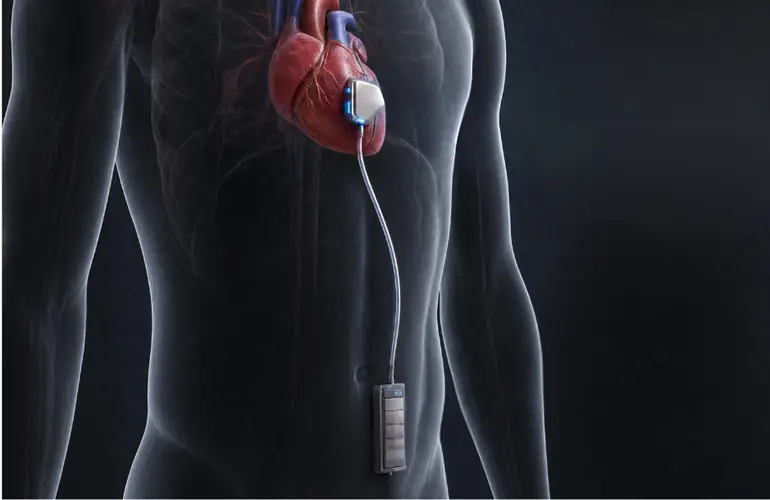
The developmental targets for the SOLIMED program are nothing short of ambitious. ITEN is engineering cells designed to achieve an energy density of 600 Wh/L, a cell capacity exceeding 2 Ah, and rapid-charging capabilities capable of recovering 80% of total capacity in under 20 minutes. Initially targeting complex applications such as implantable cardiac assist pumps, the technology promises to shrink device footprints, dramatically accelerate transcutaneous wireless recharging, and extend operational lifespans. By reducing the frequency of surgical battery-replacement procedures, this breakthrough stands to alleviate substantial physical and psychological burdens for patients while establishing a new benchmark for medical-grade energy storage.
Detailed Chronology: From DeepTech Innovation to Class III Medical Integration
To fully understand the significance of ITEN’s entry into the Class III medical device market, it is essential to trace the strategic evolution of the company’s technology platform. ITEN did not arrive at this juncture overnight; rather, the SOLIMED initiative represents the culmination of years of targeted industrial scaling, fundamental materials research, and European collaborative funding.
The Foundation of Nanomaterial Expertise
Years prior to the SOLIMED announcement, ITEN established its footprint in the DeepTech ecosystem by focusing on the physics and chemistry of nanomaterials. Recognizing that conventional lithium-ion batteries were hitting performance plateaus—particularly regarding miniaturization, safety, and power density—the company pivoted toward all-solid-state architectures. By engineering full-ceramic electrodes that are precisely stacked and overmolded, ITEN mastered the ability to manufacture micro-batteries and energy storage devices capable of delivering exceptional power bursts without degrading.
Early Medical Adoption: Class I and Class II Devices
Before targeting life-critical implantable hardware, ITEN validated its manufacturing capabilities and reliability metrics in less restrictive regulatory environments. The company successfully developed and supplied solid-state energy storage solutions for Class I and Class II medical devices. These applications—ranging from external diagnostic monitors to smart wearable health trackers—served as a vital proving ground. They allowed ITEN to refine its automated high-volume production lines, verify the long-term cyclical stability of its ceramic cells, and build a compliance framework aligned with rigorous medical industry standards.
Integration into the European IPCEI Tech4Cure Framework
The launch of the SOLIMED project marked a strategic inflection point for the French enterprise. By securing a place within the European IPCEI Tech4Cure initiative—a multi-national program designed to foster breakthrough healthcare innovations and secure European technological sovereignty—ITEN gained both institutional backing and a clear mandate to scale its platform upward. This framework catalyzed the current development phase, shifting the company’s organizational focus from external wearables to fully internal, life-sustaining Class III medical hardware, starting with implantable cardiac pumps.
Supporting Context & Metrics: Engineering the Ultimate Implantable Power Source
Powering devices that reside permanently within the human body represents one of the most punishing engineering challenges in modern science. The constraints are unforgiving: a power source must occupy a minimal volume, deliver uninterrupted energy, withstand body heat, and maintain absolute safety over years—or even decades—of continuous operation.
Overcoming the Flaws of Liquid Electrolytes
Conventional rechargeable batteries utilized in consumer electronics and legacy medical devices rely on liquid or gel-based organic electrolytes. While functional, these liquid chemistries present two major failure modes when implanted:
- Thermal Runaway and Outgassing: Under fault conditions, short circuits, or mechanical stress, liquid organic electrolytes can decompose exothermically, leading to fires or catastrophic ruptures.
- Volumetric Breathing: Liquid-based cells tend to swell and contract during charge and discharge cycles. This mechanical movement places chronic stress on internal seals and surrounding tissues, severely limiting the operational lifespan of the battery.
ITEN’s all-solid-state architecture eradicates these issues. By utilizing a monolithic ceramic structure, the battery eliminates volatile organic solvents entirely, rendering thermal runaway chemically impossible. Furthermore, the solid-state design drastically reduces volume variation during cycling, removing the primary mechanical driver of battery degradation and failure.
Quantitative Performance Targets
The technical parameters established for the SOLIMED program outline a transformative leap forward for implantable power systems:

| Performance Metric | Target Specification | Clinical & Practical Implications |
|---|---|---|
| Cell Energy Density | 600 Wh/L | Enables significantly smaller, more ergonomic device housings, reducing patient discomfort and tissue erosion. |
| Cell Capacity | > 2 Ah | Provides the sustained amperage required for high-draw mechanical circulatory support systems. |
| Fast-Charging Speed | 80% recovery in < 20 minutes | Optimizes transcutaneous wireless charging sessions, minimizing the duration patients must remain tethered to external power bases. |
| Architectural Stability | Monolithic ceramic / Zero liquid | Eliminates swelling, fluid leakage risks, and flammability, ensuring supreme biocompatibility and patient safety. |
Redefining Biocompatible Encapsulation
Beyond the chemistry of the cell itself, ITEN is reimagining how battery subsystems are packaged. Traditional implantable batteries rely heavily on hermetically sealed titanium cases to isolate toxic liquid chemicals from bodily fluids. Through advanced post-processing techniques, ITEN is evaluating novel biocompatible overmolding materials for its solid-state modules. Because the solid-state cells are inherently stable and non-hazardous, future device manufacturers may be freed from bulky, rigid metal housings, opening the door to highly integrated, flexible, and anatomically conformable implant designs.
Official Statements and Industry Perspective
The announcement of the SOLIMED program has drawn significant attention from both the medical technology sector and European industrial policymakers.
Vincent Cobée, Chief Executive Officer of ITEN, emphasized the monumental nature of the transition into the Class III medical space during his official address:
"Implantable medical devices represent one of the most demanding applications for any energy storage technology. Safety is paramount, but it must be combined with high energy density, fast charging, reliability, and long operating life. This development program is a major milestone for ITEN and a strong validation of our core solid-state technology platform. It opens the way to a new generation of solutions for Class III medical devices, supporting our ambition to become a global leader in advanced solid-state energy storage."
Industry analysts note that Cobée’s background and leadership are guiding ITEN through a critical maturation phase—scaling from a niche DeepTech innovator into a high-volume industrial supplier capable of meeting the stringent traceability, quality control, and regulatory demands of medical device original equipment manufacturers (OEMs).
From a macroeconomic and geopolitical standpoint, European Union officials have highlighted the SOLIMED project as a textbook example of industrial policy success. By anchoring the research, development, and high-volume manufacturing of next-generation medical batteries within Europe, the initiative directly supports the European Union’s broader strategic goals of technological sovereignty, supply chain resilience, and leadership in advanced healthcare infrastructure.
Future Outlook: Transforming the Class III Medical Landscape
As ITEN advances the SOLIMED development program, the implications extend far beyond cardiac assist devices. While mechanical circulatory support serves as the rigorous proving ground for initial validation, the underlying technology platform is inherently scalable across a wide spectrum of active implantable medical devices.
Expanding Horizons Across Medical Specialties
The roadmap for ITEN’s solid-state technology encompasses several critical medical fields:
- Neuromodulation: Deep brain stimulators (DBS) and spinal cord stimulators (SCS) require reliable, long-lasting power sources. Reducing battery size allows for less invasive placement procedures and smaller subcutaneous pockets.
- Auditory Implants: Cochlear implants demand high efficiency within exceptionally tight volumetric constraints situated close to sensitive cranial structures.
- Implanted Drug Delivery Pumps: Targeted therapeutic delivery systems rely on continuous, highly regulated power to meter precise doses of medication over extended periods.
The Patient-Centric Horizon
Ultimately, the success of ITEN’s initiative will be measured not just in watt-hours or recharge speeds, but in human outcomes. For patients living with chronic, life-threatening conditions, every surgical intervention carries risks of infection, recovery downtime, and psychological distress. By engineering batteries that last significantly longer—potentially matching or exceeding the operational lifespan of the device itself—and by enabling rapid, efficient transcutaneous charging, ITEN’s solid-state technology promises to restore a profound sense of normalcy and freedom to recipients of Class III medical implants.
As ITEN continues to scale its industrial manufacturing capabilities and collaborates with leading medical device developers across Europe and the globe, the horizon for implantable medical technology is shifting away from compromise. Through the power of advanced solid-state ceramics, the future of life-sustaining medicine is smaller, safer, and infinitely more resilient.