







Executive Overview
In an era defined by aggressive targets for environmental repair, ecological restoration has largely become an industrial enterprise. Across the United Kingdom and continental Europe, millions of pounds are funneled into intensive habitat interventions—heavy machinery, precise soil inversion, and commercial seed mixes featuring standardized agronomic cultivars—all in an effort to kick-start biodiversity on former agricultural lands.
However, a landmark 11-year empirical study led by Professor Carl Sayer at University College London (UCL) Geography suggests that humanity’s impulse to actively manage every square acre of nature may be entirely counterproductive.
Published in the journal Restoration Ecology, Sayer’s long-term research tracked the spontaneous ecological recovery of a two-hectare former arable field in Bodham, North Norfolk. Following its final harvest of oilseed rape in 2005, agricultural practices ceased due to poor drainage and water retention issues. Aside from a traditional, low-intensity annual hay cut designed to mimic historic farming management and prevent scrub encroachment, the land was deliberately left to its own devices.
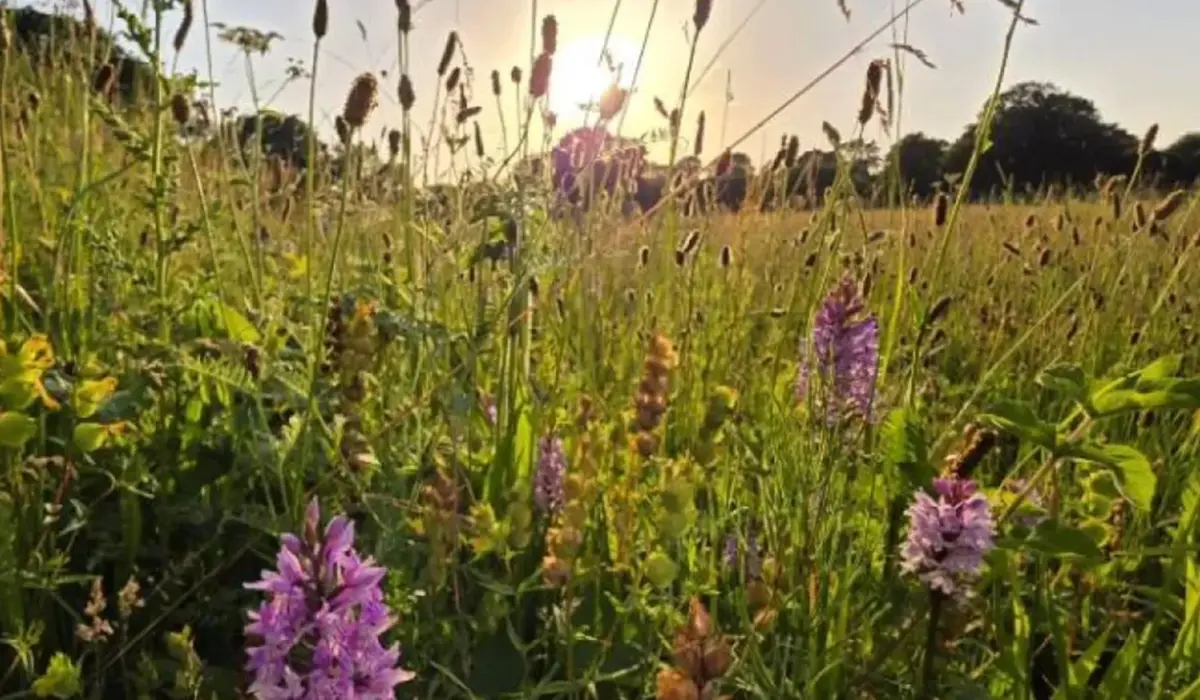
The results challenge the foundational assumptions of modern conservation science. Within just a decade to fifteen years, the abandoned farmland naturally transitioned into a remarkably rich, structurally complex wildflower meadow. The site experienced a doubling of plant species diversity per survey plot, accompanied by the spontaneous arrival of thousands of orchids, yellow rattle (Rhinanthus minor), and other locally rare flora.
By demonstrating that passive, nature-led recovery can equal or exceed the outcomes of expensive, interventionist restoration programs, this study forces a radical reappraisal of conservation orthodoxy. As policymakers race to meet binding legal commitments for landscape-scale nature recovery, Professor Sayer’s findings pose an uncomfortable yet deeply liberating question: in the quest to heal degraded ecosystems, should we be favoring human patience over the commercial seed packet?
Detailed Chronology
The Genesis of an Accidental Experiment (2005–2011)
The story of Sayer’s Meadow is as much a personal chronicle of familial patience as it is a rigorous scientific investigation. The two-hectare plot in North Norfolk is owned by Professor Carl Sayer’s father, Derek Sayer, who co-authored the study. For decades, the land was subjected to intensive modern agriculture, ending with a final crop of oilseed rape in 2005.
Farming the plot had always been an uphill battle. The land suffered from persistent drainage problems, making it notoriously difficult to work with conventional agricultural machinery. When commercial farming operations officially ceased, the family faced a fork in the road common to landowners across rural Britain: actively intervene to manage the fallow ground, or step back and observe.
At the time, conventional ecological wisdom and professional conservation advice heavily favored active intervention. Landowners seeking to establish wildflower meadows were routinely advised to strip the topsoil to reduce nutrient loads, purchase expensive native commercial seed mixes, and meticulously sow them across the acreage.
Professor Sayer, a limnologist and freshwater ecologist whose career has been dedicated to understanding complex aquatic and terrestrial systems, felt a strong pull toward a different hypothesis. Deeply interested in the innate, evolutionary capacity of ecosystems to heal themselves when relieved of anthropogenic pressure, he resisted the temptation to seed the land.
Instead, a minimalist management regime was established. The sole human intervention was a traditional annual hay cut, timed carefully at the end of summer to remove accumulated biomass, keep aggressive grasses in check, and allow late-season seeds to drop. Beyond this routine, the land was effectively handed back to nature.
The Survey Framework and Baseline Metrics (2011)
To capture the trajectory of the landscape’s recovery scientifically, Professor Sayer partnered with collaborator Pete Robinson to design a long-term monitoring protocol. Rigorous, multi-decade ecological studies tracking unassisted grassland regeneration are exceptionally rare in modern conservation science, largely because they demand rare consistency, long-term funding, and persistent physical monitoring over decades.
In 2011—six years after the final crop—the researchers established a network of permanent survey plots across the two-hectare field. This baseline survey revealed a typical post-arable landscape: dominated by a relatively low diversity of competitive, nitrophilic weeds and coarse agricultural grasses leftover from decades of fertilizer application. At this stage, the average number of distinct plant species recorded within each permanent survey plot stood at approximately 10.
The Turning Point: Spontaneous Regeneration (2011–2018)
As the surveys progressed at intervals of every two to three years, the researchers began documenting an extraordinary transformation. Rather than plateauing into a monotonous monoculture of dominant grasses—a common failure mode in unmanaged fallow fields—the vegetation structure began to diversify rapidly.
By the mid-2010s, the chemical legacy of intensive farming began to fade as the annual hay cut systematically exported nutrients off-site. Without the crutch of commercial seed mixes, the seed bank already present in the soil, combined with propagules successfully transported from the surrounding countryside, began to express itself.
The botanical inventory expanded year on year. The researchers noted the arrival of indicator species that typically signify high ecological value and ancient grassland continuity. Yellow rattle—a vital semi-parasitic annual plant known colloquially as the "meadow maker" because it suppresses dominant grasses and opens up ecological niches for smaller forbs—established itself across the site, naturally engineering the sward’s competitive balance.
The Flourishing Landscape (2018–2022)
By the conclusion of the 11-year tracking period in 2022, the transformation of Sayer’s Meadow was complete. The average number of plant species found within each permanent survey plot had doubled, leaping from roughly 10 species in 2011 to nearly 20 species by the end of the study.
Most strikingly, the meadow had become a stronghold for locally rare and specialist flora. Thousands of southern marsh orchids (Dactylorhiza praetermissa) had colonized the wetter, poorly drained zones of the field, creating a stunning visual spectacle that quickly became a local landmark and a source of delight for residents of the nearby village of Bodham. Other notable arrivals included greater tussock-sedge (Carex paniculata), common centaury (Centaurium erythraea), and an array of native vetches, trefoils, and scabiouses.
Supporting Context & Metrics
Quantitative Breakdown of Recovery
To fully appreciate the significance of the North Norfolk study, it is necessary to examine the hard metrics captured across the 11-year monitoring period:
- Site Area: Approximately 2 hectares (c. 5 acres) of former arable land.
- Duration of Study: 11 active monitoring years (2011–2022), following cessation of farming in 2005.
- Species Richness Growth: The mean plant species count per permanent survey plot doubled from ~10 species (2011) to ~20 species (2022).
- Intervention Level: Zero commercial seed sowing; zero topsoil stripping; managed exclusively via a traditional late-summer annual hay cut.
- Key Indicator Species Established: Southern marsh orchid (Dactylorhiza praetermissa), yellow rattle (Rhinanthus minor), greater tussock-sedge (Carex paniculata), and common centaury (Centaurium erythraea).
The Mechanism of Arrival: How Did the Plants Get There?
A central question raised by the Sayer’s Meadow study is the exact provenance of the flora that colonized the site. While certain hardier species undoubtedly persisted in a dormant state within the agricultural soil seed bank—waiting out years of chemical fertilizer application and deep plowing—the appearance of specialized, localized wetland and meadow plants points to external dispersal vectors.
The researchers hypothesize that wildlife played a critical role in this botanical colonization. Mobile fauna, particularly roe and fallow deer, muntjac, and various avian species traversing the North Norfolk agricultural matrix, act as living vectors for plant diaspores. Seeds caught in fur, embedded in mud on hooves, or ingested and subsequently excreted can travel across miles of fragmented countryside, effectively stitching together isolated habitat patches.
This mechanism underscores a vital ecological reality: landscapes possess a profound, innate connectivity that human planning frequently underestimates. When suitable environmental conditions are re-established—such as the attenuation of soil fertility through hay cropping and the mitigation of dense competition by natural parasitic pressures like yellow rattle—the ecological network responds dynamically.
Safeguarding Genetic Diversity and Local Adaptation
Beyond the sheer numbers of species, the UCL Geography study highlights a critical genetic dimension that is often overlooked in conventional habitat restoration: provenance.
When conservation projects rely on commercial seed mixes, they frequently utilize seeds harvested from distant commercial growers, foreign agricultural fields, or specialized propagation facilities. While these mixes may produce a visually appealing meadow in the short term, they introduce non-local genetic strains into the regional ecosystem. These commercial cultivars may lack the evolutionary resilience required to withstand localized climatic stresses, regional soil chemistry, or co-evolved local pests and diseases.
Conversely, natural colonization—whether via dormant soil seed banks or local wildlife vectors—ensures that the resulting plant populations are intensely adapted to the micro-climatic and edaphic realities of the specific site. As Professor Sayer noted, this approach preserves true local distinctiveness, preventing Britain’s wildflower meadows from becoming homogenized, generic ecosystems populated by standardized, off-the-shelf flora.
Economic and Logistical Implications
In the current economic climate, scaling up biodiversity restoration is as much a logistical challenge as it is a biological one. Governments across the UK and Europe have established ambitious legal frameworks—such as the UK’s Environmental Improvement Plan and the European Union’s Nature Restoration Law—aimed at reversing decades of ecological decline across vast tracts of agricultural land.
Traditional restoration methodologies are notoriously capital-intensive. Stripping topsoil from a degraded arable field to reduce nutrient levels can cost tens of thousands of pounds per hectare, requiring heavy earthmoving machinery that damages soil architecture and emits significant carbon. Purchasing high-purity, species-rich native seed mixes adds another heavy financial burden.
The Sayer’s Meadow model flips this paradigm on its head. By demonstrating that passive regeneration, paired with a standard agricultural hay cut that can pay for itself through fodder sales, can achieve superior ecological outcomes, the research offers a blueprint for low-cost, high-efficiency rewilding. It suggests that financial constraints should no longer be viewed as a barrier to ecological repair; rather, doing less, financially speaking, may actually achieve more ecologically.
Official Statements
Reflecting on the unexpected journey of his family’s land, Professor Carl Sayer, Professor of Limnology and Freshwater Ecology at UCL Geography, offered a candid assessment of the project’s broader implications:
"The field belongs to my family, and after an oilseed rape crop in 2005 we stopped farming it as the land was difficult to drain. I really wanted a wildflower meadow and all advice was to seed it, but I resisted the temptation, as I have always been interested in nature’s ability to recover itself."
Highlighting the emotional and aesthetic rewards of a hands-off approach, Professor Sayer continued:
"When the first orchids started appearing in our surveys, we were thrilled and now the meadow is unbelievably diverse, with thousands of orchids that delight locals in the village. Our study shows what can be achieved by a traditional hay cutting approach combined with nature’s brilliant spontaneity. A visit to the meadow is like stepping back through time."
Directly addressing the policy and philosophical shifts required in modern conservation, Professor Sayer emphasized the urgency of rethinking restoration standards:
"Our study shows that resisting seeding and allowing nature to lead may be worth trying a lot more in wildflower meadow restoration. Natural plant recovery better safeguards genetic diversity than seeding and ensures that local species thrive, making meadows less generic. As things stand the UK needs nature recovery fast, at big scales. In the push to achieve this goal our study poses the question: should we be employing patience over seed packet more often?"
Future Outlook
As environmental scientists, conservation practitioners, and agricultural policymakers digest the findings published in Restoration Ecology, Sayer’s Meadow is poised to become a foundational case study in modern landscape management.
The implications of this research extend far beyond the borders of North Norfolk. Across the UK, millions of hectares of marginal farmland face an uncertain economic future amid shifting post-Brexit agricultural subsidy regimes. Farmers and landowners are increasingly looking for viable, sustainable land-use alternatives that can generate income while delivering public goods, such as carbon sequestration, flood mitigation, and biodiversity net gain.
The passive restoration model validated by the UCL Geography team provides a compelling framework for these landowners. By demonstrating that land taken out of intensive production can heal itself without requiring heavy financial investment in seed and soil manipulation, the study removes a major economic barrier to entry for landowners wishing to embrace rewilding or regenerative agriculture.
Furthermore, the ecological benefits of species-rich grasslands extend directly into climate change adaptation and ecosystem resilience. Diverse root systems improve soil structure, enhance water infiltration to mitigate local flooding, and lock away organic carbon in the soil profile. Simultaneously, the explosion of floral diversity provides critical food webs and nesting habitats for declining populations of pollinating insects, birds, and small mammals.
Ultimately, the Bodham experiment serves as a timely reminder of nature’s formidable resilience. In our eagerness to manage, engineer, and curate the natural world, conservationists have sometimes fallen into the trap of treating ecosystems as fragile gardens requiring constant human supervision.
Professor Sayer’s 11-year study proves that when we have the courage to step back, put down the seed packets, and practice patience, nature has an extraordinary, self-sustaining capacity to heal the wounds we have inflicted upon it. As governments search for scalable solutions to the biodiversity crisis, the most radical conservation strategy of all may simply be learning to get out of the way.