









Executive Overview
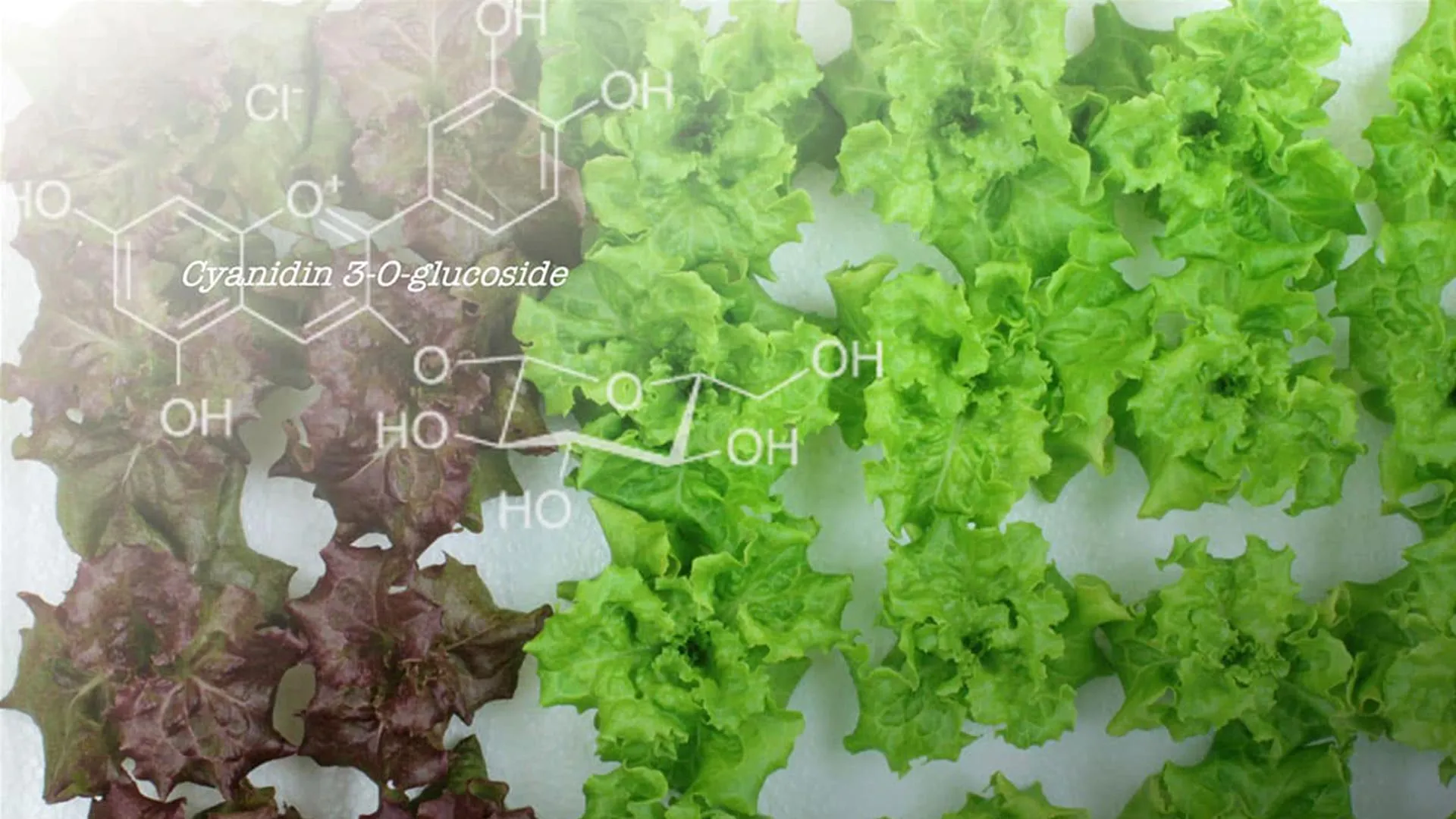
Agricultural science is rapidly evolving past simple agronomic metrics like yield and drought resistance. Today, researchers are increasingly focused on the molecular architecture of crops, seeking to optimize them for specific health-promoting compounds, environmental resilience, and controlled-environment agricultural (CEA) production. In a recent scientific breakthrough, a research team led by the Ezura group has demonstrated how precise genome editing can be utilized to fundamentally reroute the biochemical pathways of red leaf lettuce (Lactuca sativa).
By employing targeted genetic modification to silence a single, critical enzyme—dihydroflavonol 4-reductase (DFR)—the researchers successfully suppressed the plant’s signature red pigmentation. However, the true significance of the study extends far beyond aesthetics. Rather than shutting down flavonoid synthesis altogether, the targeted disruption caused a metabolic bottleneck. This bottleneck redirected the plant’s internal chemistry, leading to a substantial accumulation of upstream flavonoid precursors, most notably quercetin.
Crucially, these profound metabolic shifts occurred without imposing any measurable penalties on plant growth or overall biomass production. This discovery shatters the conventional assumption that altering high-level secondary metabolite pathways invariably compromises crop vigor. For the commercial agriculture and indoor farming sectors, this breakthrough opens up entirely new avenues for biofortification. It suggests that growers and breeders can custom-design functional leafy greens, tailoring their nutritional profiles to meet specific dietary demands without sacrificing agricultural yield. As indoor vertical farming and plant factories gain global momentum, this research provides a vital blueprint for engineering specialized crops optimized for closed-loop, climate-controlled environments.
Detailed Chronology of the Research
The journey toward rewriting the metabolic pathways of red leaf lettuce represents the culmination of years of foundational biochemistry, advanced genetic engineering, and meticulous plant phenotyping. To understand the magnitude of the Ezura group’s findings, it is essential to trace the chronological unfolding of the science, from the underlying biochemistry of plant pigments to the precise genome-editing interventions that altered them.
Phase I: Unpacking the Biochemistry of Red Pigmentation
Long before the advent of modern genome editing, botanists and food scientists sought to understand why certain varieties of lettuce, cabbage, and other leafy greens developed striking red and purple hues. The answer lies in anthocyanins—a specialized group of polyphenol pigments belonging to the broader flavonoid family. Beyond giving plants their vibrant colors, anthocyanins have captured the intense interest of nutritionists and medical researchers due to their potent antioxidant properties, which help neutralize harmful free radicals in the human body.
In plants, anthocyanins are not produced haphazardly; they are the end product of a long, highly regulated, enzyme-driven biosynthetic pathway. The biochemical assembly line begins with phenylalanine, an essential amino acid. Through a cascade of enzymatic transformations, phenylalanine is converted into a variety of intermediate compounds and flavonoids. These intermediate molecules serve multiple ecological functions for the plant, ranging from UV-light protection and pollinator attraction to pathogen defense. Eventually, a subset of these flavonoids undergoes final enzymatic conversions, transforming into the pigmented anthocyanins responsible for the dark red leaves characteristic of red leaf lettuce.
Phase II: Identifying the Genetic Switch
With the complete mapping of the flavonoid biosynthesis pathway, geneticists pinpointed the specific molecular checkpoints governing anthocyanin production. Among the most critical enzymes in this pathway is dihydroflavonol 4-reductase (DFR). DFR acts as a gatekeeper enzyme, catalyzing a crucial reduction step immediately preceding the final stages of anthocyanin formation. Without functional DFR, the biochemical chain breaks down, halting the conversion of upstream precursors into the final red pigments.
Rather than attempting to knock out multiple genes downstream—a complex and risky endeavor prone to unintended pleiotropic effects—the Ezura group targeted the DFR gene directly. By utilizing precise genome-editing technologies, the researchers successfully introduced targeted mutations that switched off the gene responsible for producing the DFR enzyme.
Phase III: The Metabolic Rerouting
Upon disabling the DFR gene, the immediate and most visible phenotypic change was the loss of the plant’s characteristic red pigmentation. The genetically modified lettuce lost its dark coloration, adopting a greener phenotype that visually resembled conventional green leaf lettuce varieties. However, the true story of the experiment lay hidden beneath the surface, accessible only through comprehensive biochemical analysis.
When the researchers performed high-performance liquid chromatography and detailed metabolic profiling of the modified lettuce leaves, they uncovered a dramatic structural shift within the plant’s internal chemistry. Because the DFR bottleneck prevented the pathway from proceeding toward anthocyanin production, the intermediate compounds began to back up.
Rather than wasting these biochemical resources, the plant redirected its metabolic activity. The analysis revealed a significant surge in the concentrations of several upstream flavonoids. Most notably, levels of quercetin—a potent flavonol renowned for its anti-inflammatory and antioxidant health benefits—spiked dramatically. The data confirmed that blocking a single downstream enzyme could effectively reprogram the plant’s metabolic output, forcing it to accumulate high-value intermediate health compounds instead of its usual end-stage pigments.
Supporting Context & Metrics
To fully appreciate the implications of this study, it is necessary to examine the broader context of plant biofortification, metabolic flux analysis, and the unique economic pressures facing modern agriculture.
The Biofortification Imperative
Global health initiatives increasingly emphasize the role of functional foods—crops that provide health benefits beyond basic nutritional sustenance. Polyphenols, flavonoids, and antioxidants are central to this movement. Red leaf lettuce has long been recognized as a valuable dietary source of these compounds compared to standard iceberg or light green varieties. However, consumer preferences and nutritional requirements vary wildly, and traditional breeding methods are often too slow to keep pace with demand.
The Ezura group’s approach bypasses the generational lag of traditional cross-breeding. By utilizing genome editing to manipulate metabolic pathways directly, scientists can rapidly tune the concentrations of specific phytochemicals. The accumulation of quercetin, in particular, represents a major win for functional food design. Quercetin is widely studied for its potential to support cardiovascular health, reduce allergic responses, and combat oxidative stress. By forcing the lettuce to stockpile quercetin and related flavonoids, the researchers have effectively created a biofortified "super-green" with enhanced therapeutic potential.
Growth Dynamics and Biomass Metrics
One of the historical hurdles in metabolic engineering has been the unintended drag that genetic alterations place on plant fitness. In many past attempts to modify secondary metabolite pathways, researchers found that disrupting key enzymatic steps led to stunted growth, reduced leaf surface area, and lower overall biomass yields. These growth penalties rendered the modified crops commercially unviable.
[Phenylalanine]
       │
       ▼ (Enzyme-driven reactions)
[Flavonoids & Intermediates]
       │
       ├─► (Blocked by DFR knockout) ──► [Anthocyanins (Red Pigment)] (Suppressed)
       │
       └─► [Metabolic Rerouting] ──────► [Accumulation of Quercetin & Precursors] (Enhanced)
The Ezura group’s findings challenge this historical precedent. Despite the sweeping changes in pigment composition and flavonoid concentrations, the modified lettuce showed no meaningful reduction in growth parameters. Leaf development, cellular expansion, and overall biomass accumulation proceeded at rates comparable to unmodified control plants.
This decoupling of metabolic enhancement from growth penalty is a critical metric for commercial translation. It proves that the plant’s energy allocation and primary metabolism were not critically disrupted by the DFR knockout. Consequently, agricultural producers would not have to choose between nutritional enhancement and economic yield; they can achieve both simultaneously.
Official Statements and Research Insights
While the technical details of the biochemistry and genetics provide the framework of the study, the broader implications are best understood through the strategic perspective of the researchers and agricultural economists monitoring the field.
The Ezura research group emphasizes that this methodology establishes a foundational template for crop customization. According to the team, the ability to direct metabolic traffic toward precursor compounds opens a vast design space for agricultural biotechnology. Instead of merely accepting the biochemical output that evolution provided, human intervention can now curate the molecular profile of crops to suit specific industrial, culinary, and pharmaceutical needs.
Furthermore, the researchers note that flavonoid biosynthesis is exceptionally dynamic, exhibiting high sensitivity to environmental stimuli such as ambient temperature, light quality, and light intensity. This environmental responsiveness introduces both a challenge and an opportunity. In traditional open-field agriculture, fluctuating weather patterns make it difficult to guarantee consistent levels of secondary metabolites from harvest to harvest. However, the rise of controlled-environment agriculture (CEA) and advanced plant factories changes the equation entirely.
In an official statement regarding the broader application of their findings, the research team highlighted the synergy between their genetic modification technique and modern indoor farming infrastructure:
"Because plant factories allow growers to carefully control environmental factors such as light intensity and thermal dynamics, our findings may help support the development of specialized lettuce varieties optimized specifically for closed-loop, indoor cultivation systems."
This convergence of precision breeding and high-tech controlled environments represents a paradigm shift in how leafy greens will be produced in the coming decades.
Future Outlook: Commercialization and Controlled-Environment Agriculture
As the agricultural sector confronts the compounding pressures of climate change, arable land degradation, and shifting consumer expectations, innovations like the Ezura group’s DFR-knockout lettuce point the way toward resilient, high-value production systems.
Integrating with Plant Factories and Vertical Farms
The future of commercial leafy green production is increasingly moving indoors. Vertical farms and automated plant factories utilize advanced LED lighting arrays, hydroponic or aeroponic nutrient delivery, and tightly regulated atmospheric controls to maximize growth velocity and resource efficiency. However, one of the ongoing economic challenges for vertical farmers is differentiating their products in a crowded marketplace. Standard green and red leaf lettuces, while fresh, often compete on razor-thin commodity margins.
The ability to engineer lettuce varieties with customized functional components—such as hyper-accumulated quercetin—offers vertical farming enterprises a powerful tool for product differentiation. By pairing genome-edited seeds with finely tuned indoor lighting recipes known to stimulate flavonoid accumulation, indoor growers can market specialized "functional foods" targeted at health-conscious consumers, medical nutrition markets, and pharmaceutical extractors.
Regulatory and Market Horizons
While the scientific proof-of-concept has been successfully established, several milestones remain on the path to commercialization. Although the researchers have not yet directly compared the modified plants with conventional green lettuce varieties in large-scale agronomic trials, red lettuce is already celebrated for its baseline high level of polyphenol production. Leveraging this inherent genetic predisposition makes red lettuce an ideal chassis for further metabolic engineering.
Regulatory landscapes surrounding genome-edited crops are also evolving rapidly across key global markets. Jurisdictions in North America, parts of South America, and Asia are increasingly streamlining the regulatory approval process for gene-edited crops that do not contain foreign DNA, distinguishing them from traditional transgenic GMOs. Because the Ezura group’s technique involves a targeted knockout of an endogenous gene rather than the insertion of exogenous genes from other species, the regulatory pathway may prove more navigable than those of earlier biotechnology generations.
Conclusion
The successful redirection of the flavonoid biosynthesis pathway in red leaf lettuce marks a major milestone in plant science. By surgically disabling the dihydroflavonol 4-reductase enzyme, researchers have demonstrated that plant metabolism can be intelligently reprogrammed to amplify health-promoting precursors like quercetin without sacrificing plant vigor or biomass yield. As these innovations transition from academic laboratories into commercial plant factories and vertical farms, they promise to redefine the intersection of agriculture, nutrition, and technology—delivering crops that are not only resilient and productive, but explicitly designed to optimize human health.
The research detailed in this report was conducted by the Ezura group and is supported by generous funding from the Program on Open Innovation Platform with Enterprises, Research Institute and Academia, administered by the Japan Science and Technology Agency (JST-OPERA, grant number JPMJOP1851).