











Executive Overview
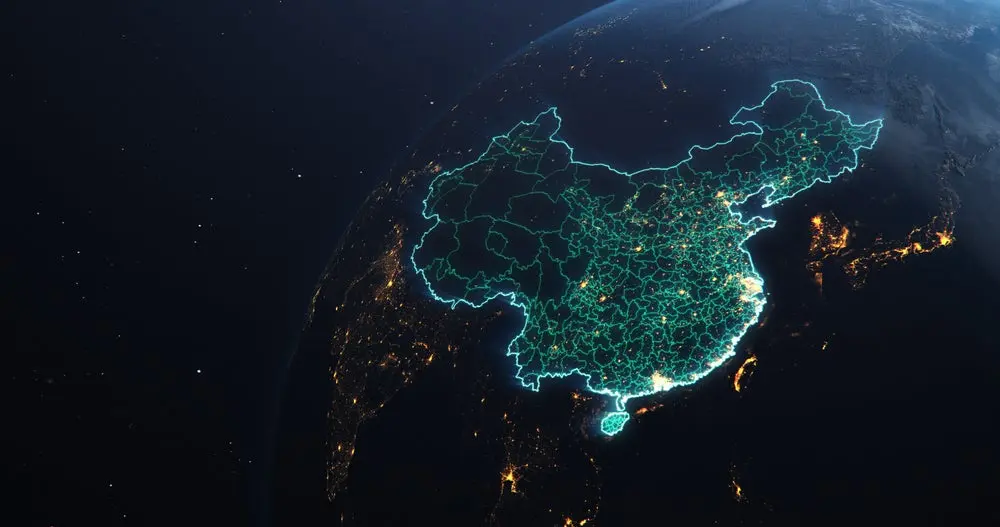
Over the past decade, the global landscape of oncology clinical research has undergone a seismic shift, with the People’s Republic of China emerging as an indispensable nexus for multi-regional clinical trials (MRCTs). Once viewed primarily through the lens of local data generation for domestic market entry, China is now a powerhouse of biopharmaceutical innovation, accounting for approximately a quarter of all global drug development programs. This transformation is underpinned by a massive, diverse patient population, a sophisticated and dense contract research organization (CRO) ecosystem, and significantly accelerated timelines from early discovery to first-in-human trials.
Driving this momentum is a rapidly modernizing regulatory apparatus. By aligning its standards with international frameworks—most notably the implementation of ICH E6(R3) guidelines—China has integrated itself into synchronized global development programs. Furthermore, the National Medical Products Administration (NMPA) has introduced expedited review pathways, including a landmark 30-working-day Investigational New Drug (IND) "no-objection" framework for qualifying innovative assets.
However, this high-speed environment is not without friction. For multinational sponsors, capitalizing on China’s immense potential requires far more than dropping a protocol into a high-volume site network. Success demands a rigorous commitment to "China readiness"—a comprehensive strategic alignment encompassing asset eligibility, parallel site activation, sophisticated risk management, and deep regulatory acumen. Organizations that fail to prepare risk squandering the very efficiencies they seek to capture.
Detailed Chronology: The Evolution of China’s Regulatory and Clinical Framework
To understand how China became a global focal point for oncology trials, one must trace the deliberate, step-by-step evolution of its regulatory environment over the last fifteen years.
Phase I: The Legacy System and Local Isolation (Pre-2015)
Historically, conducting a clinical trial in China was notoriously protracted. The NMPA (formerly the China Food and Drug Administration, or CFDA) operated under a rigid, backlogged review paradigm. Sponsors were routinely required to generate localized phase I safety data in Chinese patients before initiating global Phase III trials locally. This sequential approach meant that China was typically added years after U.S. and European IND clearances, isolating Chinese patients from cutting-edge therapies and delaying global filing timelines.
Phase II: Regulatory Overhaul and ICH Integration (2015–2020)
A watershed moment occurred in 2015 when the State Council issued sweeping opinions on reform of the drug and medical device review and approval systems. This catalyzed a wholesale modernization of the CDE (Centre for Drug Evaluation). China subsequently joined the International Council for Harmonisation of Technical Requirements for Pharmaceuticals for Human Use (ICH) in 2017. Over the next few years, local regulations were systematically rewritten to mirror global standards, shifting from a slow administrative approval model to a 60-working-day tacit approval (IND default) system. This era laid the groundwork for parallel global development strategies.
Phase III: The Rise of Domestic Innovation and Global Participation (2020–2024)
As regulatory bottlenecks cleared, domestic Chinese biopharma investment surged. By 2023, China-origin assets accounted for roughly 25% of global pipelines. Concurrently, Chinese principal investigators and clinical sites became regular fixtures at premier international oncology congresses, such as the American Society of Clinical Oncology (ASCO) and the European Society for Medical Oncology (ESMO). Chinese sites were no longer passive participants recruited merely for patient recruitment numbers; they were active intellectual contributors to global multicenter protocols.
Phase IV: The 30-Working-Day Paradigm and ICH E6(R3) (2024–Present)
Following successful pilot programs testing ultra-fast review frameworks, the NMPA codified a streamlined 30-working-day IND "no-objection" pathway for qualifying innovative therapies. This positioned the Chinese regulatory timeline on par with—and in some operational metrics, exceeding the speed of—the United States Food and Drug Administration (FDA). This evolution reached another milestone with the scheduled implementation of ICH E6(R3) on March 31, 2026. This updated Good Clinical Practice (GCP) standard cemented China’s full interoperability with Western regulatory frameworks, enabling simultaneous global trial launches without geographical staggering.
Supporting Context & Metrics: The Mechanics of Chinese Clinical Efficiency
The migration of global oncology trials toward Chinese clinical research centers is propelled by hard economic and logistical metrics. For sponsors operating in an environment of escalating clinical trial costs and shrinking capital markets, China offers compelling operational advantages.
+-------------------------------------------------------------------------+
|                  Comparative Metric Benchmarks                          |
+------------------------------+--------------------+---------------------+
| Metric                       | US / EU Benchmark  | China Benchmark     |
+------------------------------+--------------------+---------------------+
| Discovery-to-IND Cycle       | Baseline           | 50% - 70% Faster    |
| Patient Enrollment Velocity  | Baseline           | 2x - 5x Faster      |
| Operational Cost Index       | Baseline           | Significantly Lower |
| Global Pipeline Share (2023) | ~75% (Aggregate)   | ~25%                |
+------------------------------+--------------------+---------------------+
Unmatched Patient Recruitment Velocity
Cancer incidence demographics in China provide an extraordinarily deep pool of treatment-naive and diverse oncology patients. Because many top-tier tier-3 hospitals in urban centers treat massive patient volumes, patient enrollment rates in specific oncology indications can be two to five times faster than traditional benchmarks in the United States and Western Europe. For trials struggling with protracted recruitment windows—the primary bottleneck in clinical development—Chinese sites can dramatically shorten the time required to lock a database.
Accelerated Development Cycles
Early-phase discovery-to-IND cycles are estimated to run 50% to 70% faster in China than in legacy Western markets. This velocity is fueled by a dense, highly competitive contract research organization (CRO) ecosystem, experienced site management organizations (SMOs), and a deeply ingrained, execution-focused corporate and clinical culture.
Cost-Effectiveness and Budget Optimization
While operational costs have steadily risen alongside the sophistication of Chinese medical centers, conducting trials in China remains markedly more cost-effective than in the US, UK, or Western Europe. These savings allow sponsors to stretch research budgets further, enabling larger sample sizes, more extensive biomarker analyses, and broader correlative studies that enrich the overall dataset.
However, industry experts caution that this environment is not uniform. Disease prevalence, standard-of-care variations, and institutional capabilities vary widely across indications. A successful entry strategy requires granular, indication-specific feasibility assessments rather than a generalized, one-size-fits-all approach.
Official Regulatory Frameworks: Decoding the NMPA’s 30- and 60-Working-Day IND Pathways
The cornerstone of China’s modern regulatory appeal is the NMPA’s bifurcated IND review system. While the standard pathway provides a 60-working-day tacit approval window, the newly institutionalized 30-working-day "no-objection" pathway represents a major leap forward for truly innovative assets.
Eligibility Criteria for the 30-Working-Day Pathway
To qualify for the accelerated 30-working-day route, an investigational product must satisfy strict criteria established by the NMPA and CDE:
- Class I Innovative Status: The product must incorporate new active substances that have not been approved for marketing anywhere in the world.
- Global Synchronization: The asset must feature a globally synchronized clinical development program, ensuring that regulatory submissions and subsequent commercial launches are coordinated across major global jurisdictions.
- Special National Designations: Products that have secured specific NMPA recognitions—such as the Pediatric SPARK Plan, the Rare Disease Care Plan, innovative traditional Chinese medicines, or designations as Priority Innovative Drugs with Significant Clinical Value and National Full-Chain Policy Support—are prime candidates.
To date, the vast majority of assets successfully navigating this 30-day window are globally synchronized biologics and targeted small molecules where early Chinese data is designed to directly inform global pivotal trial design.
Future Outlook: The Seven Pillars of "China Readiness" for Oncology Sponsors
Merely possessing an innovative oncology asset is insufficient to capture the value of the Chinese clinical trial market. Navigating local regulatory intricacies, human genetic resource administration (HGRA) approvals, import licenses, and complex hospital ethics committees requires rigorous pre-planning.
To bridge the gap between global strategy and local execution, oncology sponsors must operationalize a seven-step "China readiness" framework:
+---------------------------------------------------------------------------------+
|                       The Seven Pillars of "China Readiness"                    |
+-------------------+-------------------------------------------------------------+
| 1. Asset Audit    | Confirm Class I innovative status & unmet medical need.     |
+-------------------+-------------------------------------------------------------+
| 2. Pathway Fit    | Evaluate whether the 30-day IND timeline matches strategy.  |
+-------------------+-------------------------------------------------------------+
| 3. Site Selection | Choose lead PIs and sites with pristine inspection records. |
+-------------------+-------------------------------------------------------------+
| 4. Risk Mitigation| Address cytokine release, biomarkers, and advanced tech.    |
+-------------------+-------------------------------------------------------------+
| 5. Rapid Start-Up | Build budgets, licenses, and labs for FPI within 12 weeks.  |
+-------------------+-------------------------------------------------------------+
| 6. Dossier Polish | Compile CDE-standard dossiers with precise oncology data.   |
+-------------------+-------------------------------------------------------------+
| 7. Timeline Buffer| Account for potential technical shifts to the 60-day review.|
+-------------------+-------------------------------------------------------------+
1. Confirm Asset Eligibility
Sponsors must verify that their candidate qualifies as a Class I innovative drug—particularly oncology biologics, antibody-drug conjugates (ADCs), and precision targeted therapies. Priority should be given to pipelines addressing urgent, unaddressed clinical needs within Chinese patient cohorts.
2. Determine Pathway Appropriateness
Evaluate whether the 30-working-day timeline genuinely serves the global development master plan. This route is most valuable when early safety and efficacy data generated in China will actively shape global strategy, such as determining pivotal trial design, defining indication sequencing, or accelerating worldwide launch timelines.
3. Select and Prepare Lead Sites and Principal Investigators (PIs)
Success in Chinese oncology trials hinges on partnering with top-tier tier-3 hospitals and globally experienced principal investigators. Sponsors must engage PIs early, running project setup and institutional ethics committee reviews in parallel with IND dossier preparation to eliminate sequential delays.
4. Tighten Risk Management for Advanced Therapies
Oncology pipelines frequently incorporate complex modalities—such as bispecific antibodies, cellular therapies, and complex companion diagnostics—that carry distinct safety profiles (e.g., severe cytokine release syndrome or immune-related adverse events). Sponsors must implement robust, preemptive risk-mitigation protocols and data-quality frameworks tailored to these complexities.
5. Commit to Rapid Start-Up Execution
A regulatory approval is meaningless if operational activation lags. Sponsors must ensure that clinical trial budgets, site contracts, clinical trial import licenses, local laboratories, and imaging vendors are fully synchronized to achieve First Patient In (FPI) within 12 weeks of IND clearance. Operational start-up timelines must be treated as core components of the development plan, not afterthought add-ons.
6. Compile "30-Day Ready" IND Dossiers
The submission package must meet the rigorous evaluation standards of the NMPA and CDE. This includes providing precise, oncology-specific justifications for human dosing, titration regimens, patient selection criteria, and primary endpoints. The dossier must be explicitly flagged for the 30-working-day pathway with all mandatory supporting appendices attached.
7. Plan for Technical Review Shifts
Sponsors must build operational contingency buffers. Complex chemistry, manufacturing, and controls (CMC) questions, non-clinical data inquiries, or expert panel consultations can occasionally cause the CDE to transition an application from the 30-day pathway to the standard 60-day review. Incorporating this contingency into master timelines prevents downstream disruption.
Conclusion
As the global pharmaceutical industry looks toward the next generation of cancer therapeutics, China’s role as an engine of clinical research is secure. The convergence of harmonized international standards, expedited review pathways like the NMPA’s 30-working-day IND framework, and unmatched patient recruitment velocities make Chinese clinical sites an indispensable component of any forward-thinking global oncology strategy.
However, realizing this potential requires shedding antiquated assumptions. Success belongs exclusively to sponsors who embrace holistic "China readiness"—integrating Chinese sites into global development plans from day one, anticipating regulatory nuances, and partnering with experienced local CROs capable of navigating the dynamic Chinese regulatory environment. Those who master this alignment will not only accelerate their path to market but will secure a definitive competitive advantage in the global fight against cancer.