





Executive Overview
For decades, the narrative of human evolution was taught as a straightforward, branching tree. In this traditional model, modern humans (Homo sapiens) emerged as a distinct lineage, occasionally brushing shoulders with well-known archaic cousins like the Neanderthals and Denisovans before standing entirely alone. However, a seismic shift in paleogenomics is rewriting this neat, linear diagram.
A groundbreaking study published in the journal Science by researchers at the University of California, Berkeley, reveals that two previously unknown human relatives left enduring traces of their DNA in people alive today. This discovery adds a profound new layer to the genetic legacy previously attributed solely to Neanderthals and Denisovans. More importantly, it reinforces a paradigm shift in anthropology: human evolution was not a branching tree, but a complex, highly interconnected web of populations defined by repeated migrations, encounters, and interbreeding over hundreds of thousands of years.
The UC Berkeley team made this discovery without relying on rare, fragile fossils or ancient bones. Instead, they pioneered a novel computational technique called TRACE (TRacking Archaic Contributions via ARG Estimation). By examining hundreds of complete, present-day human genomes from around the globe, TRACE reconstructs ancient genealogical connections across generations.
The findings are striking. Researchers identified a "ghost ancestor"—an unidentified human lineage that interbred with modern humans in Africa more than 50,000 years ago, leaving genetic markers present in all modern human populations today. Furthermore, the team detected genetic material from an even more ancient "super-archaic" population. This lineage split from other humans roughly 1.8 million years ago, interbred with Denisovans in Eurasia, and ultimately trickled down into the modern human genome. These revelations prove that interbreeding among diverse human groups was pervasive, shaping our biology, immunity, and survival long before Homo sapiens colonized the globe.
Detailed Chronology: A Timeline of Hidden Interbreeding
To understand the magnitude of this discovery, it is necessary to map out the vast chronological spans over which these genetic encounters occurred. The human evolutionary timeline, illuminated by methods like TRACE, stretches back millions of years through successive waves of divergence and contact.
1.8 Million Years Ago: The Super-Archaic Split
At the deepest end of the newly uncovered genetic timeline lies the super-archaic lineage. Genomic signatures indicate that this population diverged from other human ancestors approximately 1.8 million years ago. While no fossil DNA from this exact population has ever been sequenced, researchers note that this timeframe closely aligns with the emergence and geographic expansion of Homo erectus populations across Eurasia.
800,000 Years Ago: The Ghost Lineage Emerges
Fast-forwarding to around 800,000 years ago, a second major evolutionary split occurred. This timeline matches the period when Middle Pleistocene Homo groups were actively living and evolving in Africa. This lineage, dubbed the "ghost ancestor," separated from the trunk of the tree that would eventually lead to modern humans, Neanderthals, and Denisovans. While Neanderthals and Denisovans later branched off into their own distinct geographical spheres, the ghost lineage maintained a separate existence until crossing paths with early Homo sapiens.
Over 200,000 Years Ago: The Eurasia Encounter
Long before modern humans ventured out of Africa in their final major migrations, the super-archaic population made its mark on the ancient world. Genetic evidence suggests these super-archaic hominins interbred with Denisovans residing in Eurasia more than 200,000 years ago. Through this ancient liaison, super-archaic DNA became embedded within the Denisovan gene pool, where it lingered for millennia as a hidden genetic passenger.
More Than 50,000 Years Ago: The African Ghost Encounter
Prior to the major exodus of Homo sapiens out of Africa—which occurred roughly 50,000 years ago—early modern humans encountered the ghost lineage on the African continent. Unlike the Neanderthal and Denisovan mixing events, which happened exclusively outside Africa, this interbreeding event took place entirely within African borders. Because it happened before the global dispersal of our species, the genetic material from this ghost lineage was carried out of Africa by migrating populations, explaining why it is found in modern humans worldwide today.
50,000 Years Ago to Present: The Out-of-Africa Dispersal
As Homo sapiens expanded into Eurasia around 50,000 years ago, they repeatedly encountered Neanderthals and Denisovans. These well-documented trysts left modern non-African genomes with roughly 1% to 2% Neanderthal DNA, while some populations in Asia and Oceania inherited significant Denisovan ancestry. Eventually, Denisovans passed down a tiny fraction of the even older super-archaic DNA they had absorbed centuries prior, completing a multi-generational relay race of ancient genetic transmission.
Supporting Context & Metrics: Decoding the Genome Without Fossils
The technical breakthrough underpinning these discoveries lies in the limitations of traditional archaeology. Extracting and sequencing ancient DNA from fossils has revolutionized anthropology, but it is fundamentally constrained by preservation. Organic material degrades over millennia, and in warm, humid climates like Africa, DNA survival is exceedingly rare. Consequently, scientists lacked the fossil records necessary to investigate ancient interbreeding events using traditional wet-lab archaeology.
To overcome this roadblock, UC Berkeley associate professor of molecular and cell biology Priya Moorjani, graduate student Yulin Zhang, postdoctoral researcher Arjun Biddanda (now at Johns Hopkins University), and their colleagues engineered TRACE.
How TRACE Works
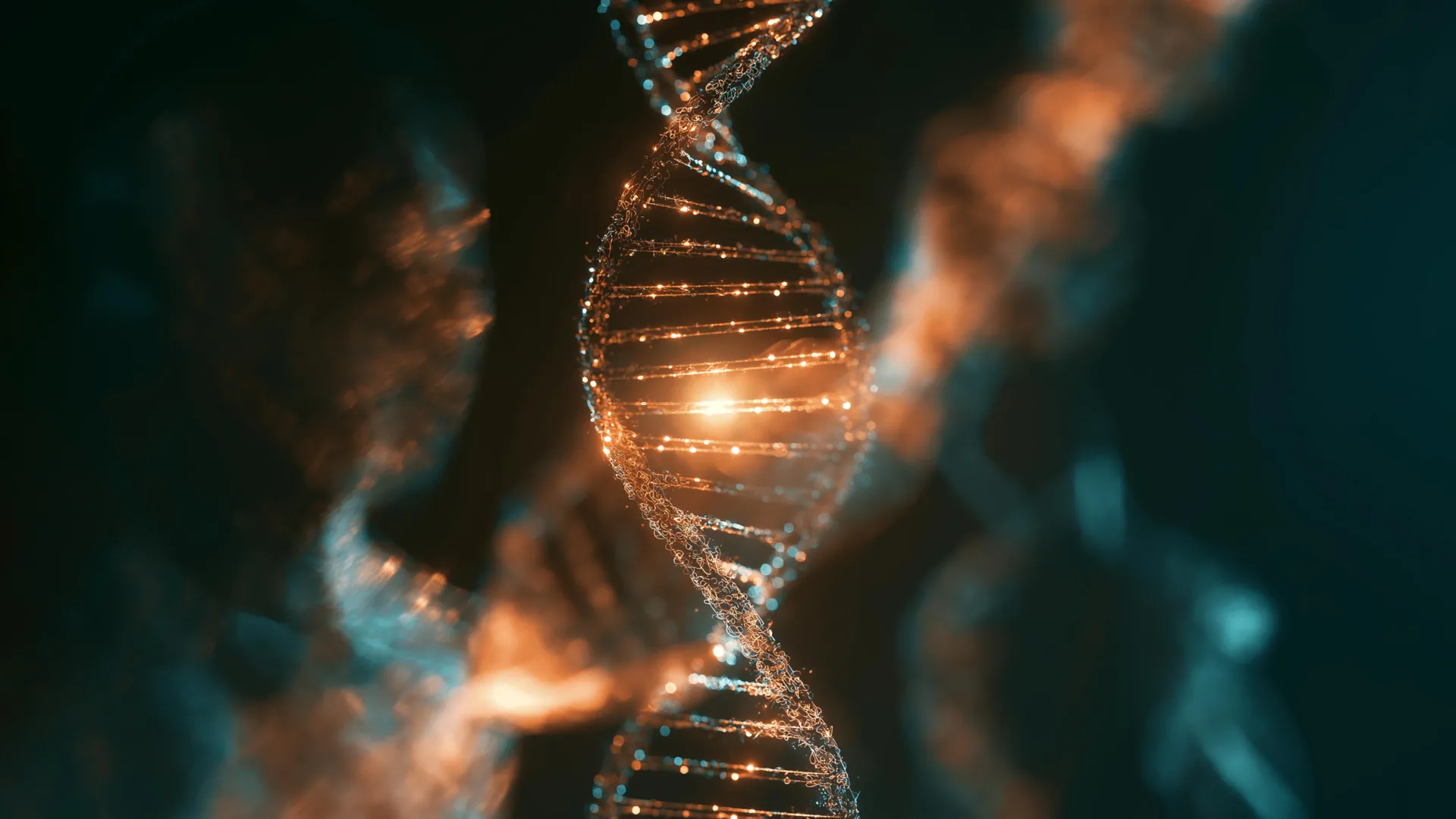
Rather than analyzing ancient bones, TRACE searches for archaic genetic regions using complete, high-coverage genomes from present-day people. The algorithm builds an ancestral recombination graph (ARG), reconstructing the genealogical relationships among DNA segments across many generations.
- Spotting Ancestral Signals: Genealogies preserve a living record of evolutionary history. By identifying genomic regions whose ancestry extends unusually far back in time—far beyond the typical coalescent point of standard Homo sapiens lineage—TRACE can flag foreign genetic contributions.
- Proving Global Distribution: When applied to human genomes from diverse global populations, TRACE successfully identified known Neanderthal and Denisovan signatures. However, it also isolated distinct blocks of DNA that matched neither.
- Quantifying the Legacy:
- Ghost Ancestry: Accounts for approximately 0.5% to 1% of the modern human genome. Because it is present in both African and non-African populations in similar proportions, it proves the interbreeding occurred before the global human diaspora.
- Neanderthal Ancestry: Accounts for roughly 1% of the modern human genome globally.
- Super-Archaic Ancestry in Denisovans: Denisovan genomes contain an estimated 3% to 5% super-archaic ancestry, a fraction of which successfully passed into the genomes of modern Oceanic populations.
Genomic Hotspots and Natural Selection
Interestingly, these archaic DNA segments are not randomly distributed across our chromosomes. Researchers discovered that many of the surviving archaic variants are heavily concentrated in genomic regions associated with immune system defenses and metabolism.
When early human populations migrated into unfamiliar territories, they encountered novel pathogens, climates, and food sources. Interbreeding with long-established indigenous hominin populations served as an evolutionary shortcut. Instead of waiting millions of years for advantageous mutations to arise spontaneously through random chance, Homo sapiens acquired pre-tested genetic toolkits from archaic cousins who had already spent millennia adapting to those local environments. Beneficial variants were subsequently retained and amplified by natural selection over countless generations.
Official Statements and Expert Insights
The implications of the TRACE study extend far beyond statistical genetics, challenging how researchers conceptualize the human family tree.
"Previous publications suggested that there might be ghost ancestry—ancestry from unknown archaic lineages in modern humans—but they hadn’t concluded whether this unknown ancestry is present only in Africans or not, and when this introgression event happened,"
— Yulin Zhang, UC Berkeley graduate student and co-first author of the study.“We were actually able to find and map genomic locations in modern humans that are from this ghost lineage and show that this ghost ancestry is in all modern humans, not only in Africans.”
The discovery of the super-archaic lineage provides an unprecedented window into deep evolutionary history, bridging a gap that physical fossils have thus far failed to fill.
"The super-archaic finding is particularly exciting because it reveals genetic contributions from a human lineage that lived over a million years ago, despite the absence of any sequenced DNA from that population,"
— Arjun Biddanda, postdoctoral researcher at Johns Hopkins University and co-first author.
Reflecting on the broader philosophical and biological implications of the research, Professor Priya Moorjani emphasized the need to discard rigid models of speciation.
"With ancient DNA from Neanderthals and Denisovans and with these new genealogical methods, we are learning that mixture among human populations has been very pervasive across time, and that this is also likely to be true at ancient time scales,"
— Priya Moorjani, UC Berkeley associate professor of molecular and cell biology.“We often think of human evolution as a branching tree, but new genomic data and analytical methods reveal a much more interconnected history—more like a complex web of populations connected by repeated episodes of migration and mixing.”
Future Outlook: The Next Frontier in Evolutionary Biology
While the publication of these findings in Science marks a monumental milestone, the researchers view it as merely the opening salvo in a new era of computational paleogenomics. Several critical avenues lie ahead for the scientific community:
- Expanding Genome Databases: TRACE relies on the statistical power of large, diverse genomic datasets. As global biobanks incorporate DNA sequences from a broader, more representative range of understudied human populations—particularly across Africa, Asia, and the Americas—the resolution of these genealogical maps will sharpen. This expansion may uncover even weaker, more elusive signals from additional unknown human relatives.
- Uncovering Fossil Identities: Scientists are actively searching for physical anchors to match the genetic ghosts. Recent breakthroughs in paleoproteomics—the recovery of ancient protein sequences from fossils like Homo erectus—offer tantalizing hope. If protein data can be successfully matched with computational genomic predictions, researchers may finally put a face and a fossil record to the "super-archaic" ancestor.
- More Denisovan Genomes: Currently, our understanding of Denisovan genetics is heavily bottlenecked by sample size; to date, only one high-coverage Denisovan genome has been fully sequenced and published. Securing additional Denisovan fossil samples will allow scientists to cross-reference how super-archaic DNA varied across different Denisovan sub-populations over time and space.
- Cross-Species Application: The computational framework of TRACE is not uniquely tailored to humans. Moorjani and her colleagues believe the algorithm can be adapted to study the evolutionary histories of other complex species across the tree of life. Whether applied to bears, canids, or great apes, TRACE offers a powerful lens to detect hidden episodes of ancient hybridization across the natural world.
Ultimately, this study demonstrates that humanity’s past is far richer, messier, and more collaborative than previously imagined. We carry within our cells not just the legacy of a single triumphant species, but the literal biological echoes of numerous vanished worlds—a living testament to an ancient, interconnected network of human survival.