








Executive Overview
At first glance, a human, an octopus, and a stony coral share virtually nothing in common. They inhabit vastly different ecological niches, possess radically divergent anatomies, and are separated by hundreds of millions of years of distinct evolutionary history. Yet, hidden deep within their cellular architecture, their chromosomes still contain recognizable, conserved fragments inherited from a common animal ancestor that swam, crawled, or drifted through primeval waters more than 600 million years ago.
How those ancient genomic building blocks were systematically reorganized, fractured, fused, and inherited as animal life diversified has long remained one of the most profound puzzles in evolutionary biology. Now, in a landmark study published in the prestigious journal Science Advances, an international team of researchers led by the University of Vienna has cracked the code of long-term chromosome evolution.
By analyzing more than 5,800 publicly available, high-resolution genomes representing 4,454 species across 19 animal phyla, the researchers have constructed the largest and most comprehensive chromosome comparison in the history of biology. Their findings reveal that animal genomes do not evolve through an infinite, haphazard number of possible pathways. Instead, chromosomal reorganization tends to travel along a highly restricted, highly predictable set of irreversible routes that the research team has dubbed "evolutionary highways."
This groundbreaking framework—termed evolutionary genome topology—provides a universal coordinate system for the animal kingdom’s vast genomic diversity. Beyond rewriting our understanding of deep evolutionary history, this universal map offers powerful new tools for predicting the future trajectories of genomic evolution and identifying vulnerable or uniquely divergent lineages that require urgent conservation focus.
Detailed Chronology: The Journey to Mapping the Animal Tree of Life
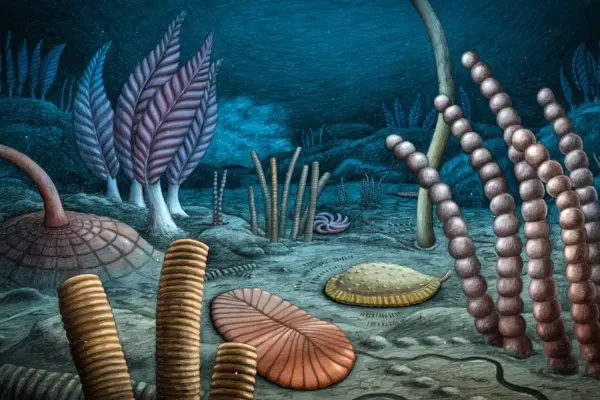
To understand the magnitude of the University of Vienna-led study, one must look at the historical bottleneck that has constrained comparative genomics for decades. Every living animal on Earth traces its lineage back to a singular, primordial common ancestor that existed over 600 million years ago. As life diversified during the Ediacaran and Cambrian periods and beyond, this foundational genetic material was subjected to relentless evolutionary pressures. Chromosomes repeatedly fused, fragmented, inverted, and rearranged as new species, families, and phyla emerged.
While sequencing technologies advanced exponentially over the past twenty years—resulting in the sequencing of tens of thousands of individual animal genomes—comparative genomics remained severely limited. The vast majority of these sequenced genomes were produced merely as "drafts." Draft genomes act like a scattered puzzle box: they reveal which genes an organism possesses, but they fail to show the precise physical arrangement and ordering of those genes along the length of complete chromosomes.
Overcoming this limitation required the advent of chromosome-scale assemblies. Producing these complete genomic layouts is computationally and technically demanding, requiring scientists to map the precise architecture of entire chromosomes. Only recently has the scientific community amassed a critical mass of these high-resolution assemblies to make a broad, cross-phyla comparison statistically viable.
Seizing this moment, the international research team assembled the unprecedented dataset of 5,800+ chromosome-scale genomes. To make sense of this astronomical volume of data, the scientists developed a novel analytical framework: evolutionary genome topology. Rather than focusing solely on microscopic DNA sequence variations (the individual base pairs), this method abstracts genomes into a spatial map of structural arrangements.
When the researchers plotted thousands of genomes onto this universal map, a striking pattern emerged. Chromosome architecture does not evolve randomly across the tree of life. Instead, lineages are channeled along specific structural routes—the evolutionary highways. Furthermore, different animal phyla entered, traveled along, or diverted from these highways at radically different rates and epochs, leaving a permanent, indelible historical record written directly into their DNA.
Supporting Context & Metrics: Unlocking the Mechanics of "Fusion-with-Mixing"
At the heart of these evolutionary highways is a powerful and irreversible mechanical force that the researchers previously identified and named "fusion-with-mixing."
In classical genetics, chromosomal aberrations can sometimes be undone or corrected. However, fusion-with-mixing occurs when two separate chromosomes permanently fuse end-to-end, and the genes located near the fusion point undergo extensive intermixing. Once this structural merger takes place, the original, ancestral arrangement of genes can never be restored.
This absolute irreversibility is what makes fusion-with-mixing such a profound tool for evolutionary biologists. Because the changes cannot be undone, every single fusion event leaves a permanent genomic marker—a molecular scar that acts as an unalterable monument to shared ancestry. By reading these historical markers, scientists can reconstruct ancient phylogenetic relationships with unprecedented precision. Indeed, researchers have already begun leveraging this exact type of structural chromosomal evidence to resolve some of the most contentious debates in phylogenetics, such as identifying the precise sibling group to all other modern animals.
The study revealed that variations in chromosome counts and structures across the animal kingdom are primarily driven by two foundational operations: the combination (fusion) of ancestral chromosomes or their separation (fission). In either scenario, when fusion-with-mixing is triggered, it forcefully shoves a lineage onto a radically different evolutionary trajectory.
Because these changes are irreversible, a major chromosomal detour permanently alters where an animal lineage lands within what the researchers call "genome-architecture space." As cumulative rounds of chromosome mixing pile up over millions of years, diverging lineages drift further and further apart in this architectural landscape. Crucially, these structural shifts frequently impact critical regulatory blocks, including master developmental genes responsible for body plan formation, tissue differentiation, and embryonic development.
Furthermore, the topological map illuminated several biological outliers—lineages that occupy hyper-isolated regions of genome space because their chromosomal architecture bears almost no resemblance to standard animal patterns. Among the most distinctive genomes identified in the study are those of:
- Mosquitoes: Displaying highly specialized and reorganized chromosomal structures.
- Glass Sponges (Hexactinellida): Ancient, deep-sea organisms possessing remarkably idiosyncratic genomic layouts.
- Earthworms (Annelids): Exhibiting complex chromosomal rearrangements that set them apart from other closely related invertebrates.
By spotlighting these structural anomalies, the framework gives conservationists and evolutionary biologists a sophisticated filter to flag evolutionarily distinct lineages that possess few living evolutionary cousins and therefore warrant heightened scientific and protective scrutiny.
Official Statements: Perspectives from the Research Front
The implications of this large-scale topological framework extend far beyond theoretical phylogenetics, offering tangible utilities for modern ecological and conservation science.
Reflecting on the overarching goals of the study, Oleg Simakov, a professor at the University of Vienna who co-led the research, emphasized the predictive power of the new model:
"Understanding these rules of evolution doesn’t just tell us about the past. It also lets us ask where genome evolution might go next and enables us to identify key measures for the conservation of animal biodiversity."
Simakov’s perspective underscores a paradigm shift in genomics: moving away from viewing DNA as a static archive and toward understanding genomes as dynamic, physical systems governed by structural rules and physical constraints.
Echoing this sentiment, Darrin Schultz, who spearheaded the work as a postdoctoral researcher at the University of Vienna and is now an Assistant Professor at Lehigh University and Lehigh Oceans, highlighted the visual and conceptual power of the new analytical map:
"For the first time, we can see thousands of genomes on a single map and trace the unique paths along which animals’ DNA evolved. Viewing the map as a whole gives us a picture of the patterns by which animal genomes have changed over time. And if we fold the map up in a different way, we can compare how different groups of animals took different paths from each other after splitting onto different evolutionary paths."
These statements highlight the collaborative, global nature of modern data-driven biology, where the synthesis of thousands of independent sequencing efforts yields emergent insights that were completely invisible at the individual species level.
Future Outlook: Navigating the Next Frontier of Biodiversity Conservation
As human pressures on global ecosystems accelerate, understanding the deep-time mechanics of life on Earth has never been more urgent. The introduction of evolutionary genome topology opens up a vast horizon of practical and theoretical applications.
1. Predictive Evolutionary Modeling
Because the evolutionary highways mapped by Simakov, Schultz, and their colleagues follow restricted, irreversible pathways, scientists now possess a foundational framework capable of simulating future genome evolution. By running computational models based on known rates of chromosome fusion-with-mixing, researchers can explore how animal genomes might respond to sustained environmental stressors, shifting climates, and habitat fragmentation over coming millennia.
2. Precision Conservation and Biodiversity Prioritization
Traditional conservation biology often prioritizes species based on ecological roles, population counts, or immediate extinction risks (such as IUCN Red List status). However, evolutionary genome topology introduces an entirely new dimension of value: architectural uniqueness. Lineages that occupy isolated, highly specialized regions of genome-architecture space—such as the aforementioned glass sponges and specialized insects—represent irreplaceable deep-branching experiments in genomic design. Losing these species means losing millions of years of unique structural evolutionary history that cannot be replicated elsewhere on the tree of life.
3. Unraveling Gene Regulation and Phenotypic Diversity
A vital frontier for future research lies in investigating the direct functional consequences of these macro-genomic shifts. Do major chromosomal detours actively drive morphological innovation? Are shifts in genome topology correlated with rapid evolutionary radiations or the evolution of novel physiological traits? By providing a standardized, kingdom-wide coordinate system, this study bridges the gap between macro-evolutionary genomics and micro-evolutionary developmental biology (evo-devo).
Ultimately, this monumental study transforms our perception of the living world. The sprawling diversity of the animal kingdom—from the simple coral polyp to the complex human brain—is not a chaotic explosion of infinite genetic possibilities. Rather, it is a magnificent, highly structured journey traveled along ancient, well-worn evolutionary highways, mapped at last by modern science.
Funding and institutional support for this landmark research were generously provided by the European Research Council (Horizon 2020 / European Union Research and Innovation Programme, grant No. 945026), the Austrian Science Fund (FWF, grant P32190), and the prestigious Rupert Riedl Prize of the Vienna Haus des Meeres Verein.