











Executive Overview
In a monumental leap forward for experimental quantum mechanics, a research team from the Tokyo University of Science (TUS) has successfully observed matter-wave diffraction in positronium—a short-lived, exotic atom composed of an electron and its antimatter counterpart, a positron. Led by Professor Yasuyuki Nagashima, alongside Associate Professor Yugo Nagata and Dr. Riki Mikami, the research team bypassed decades of technological roadblocks to produce a high-coherence, high-energy positronium beam capable of displaying undeniable quantum interference patterns.
Published in Nature Communications, this milestone does more than merely add another particle to the long list of entities known to exhibit wave-particle duality. By demonstrating that a bound lepton-antilepton system acts as a unified quantum wave, the research provides unprecedented insights into the fundamental fabric of quantum physics. This breakthrough breaks open new frontiers for non-destructive materials science, ultra-precise atomic spectroscopy, and long-sought-after gravitational tests involving antimatter.
For nearly a century, scientists have expanded the boundaries of quantum mechanics by demonstrating wave behavior in electrons, neutrons, whole atoms, and massive complex molecules. Yet, capturing this behavior in positronium—an extremely fragile, self-annihilating system of equal-mass particles—remained an elusive holy grail of atomic physics. The successful realization of a controlled positronium beam now promises to transform theoretical models into practical instruments of discovery, fundamentally changing how researchers probe both the subatomic realm and complex material surfaces.
Detailed Chronology: The Journey to Positronium Diffraction
Unraveling the Quantum Riddle of Wave-Particle Duality
The foundational era of quantum physics was defined by a radical paradigm shift: the realization that matter, traditionally viewed strictly as localized corpuscles, also possesses wave-like properties. Louis de Broglie’s pioneering 1924 hypothesis proposed that every moving particle or object has an associated wavelength inversely proportional to its momentum. This wave-particle duality was subsequently verified through landmark experiments, most notably the double-slit experiment.
When George Paget Thomson and independent researchers fired electrons through thin crystalline foils, they observed concentric rings reminiscent of light diffraction. Over the decades, physicists pushed this envelope further, confirming matter-wave diffraction with heavier neutrons, complex helium atoms, and eventually massive macromolecules like buckyballs ($C_60$).
Despite these sprawling technological triumphs, certain exotic systems remained immune to observation. Chief among them was positronium ($Ps$). Discovered by Martin Deutsch in 1951 at Massachusetts Institute of Technology (MIT), positronium is a purely leptonic atom consisting of an electron ($e^-$) and a positron ($e^+$) bound together in orbit around a shared center of mass. Because both constituents possess identical mass and opposite electrical charges, positronium is electrically neutral overall, yet structurally distinct from hydrogen and other baryonic atoms.
The Technological Bottleneck: Why Positronium Was So Hard to Trap
The primary obstacle preventing the observation of positronium wave behavior was not theoretical doubt, but engineering reality. Positronium is inherently unstable. In its singlet state (para-positronium), it has a lifetime of merely 125 picoseconds, while the triplet state (ortho-positronium) lives for roughly 142 nanoseconds before undergoing mutual annihilation into gamma photons.
Creating a beam of positronium with sufficient energy, low spatial divergence, and strict momentum coherence—the exact ingredients required to register a clean diffraction pattern—was a formidable challenge. Past attempts routinely failed because the positronium atoms lacked the necessary kinetic control or directional focus. To yield diffraction, the de Broglie wavelength of the beam must closely match the lattice spacing of the diffraction grating. For positronium, this demanded the generation of energetic, tightly collimated beams that could survive long enough to pass through a target grating and register on a detector without degrading or annihilating prematurely.
Precision Engineering: The TUS Breakthrough
To overcome these barriers, Professor Nagashima’s laboratory at the Tokyo University of Science devised an ingenious production pipeline. Instead of relying on traditional, haphazard methods of positronium generation, the team engineered a sophisticated multi-stage apparatus.
- Negative Ion Generation: The process began by generating negatively charged positronium ions ($Ps^-$), which consist of one positron and two electrons. These ions allow for electrostatic manipulation and acceleration, giving researchers precise control over the beam’s kinetic energy.
- Laser Photodetachment: Once the $Ps^-$ ions were accelerated to the desired energy parameters—reaching an impressive 3.3 kiloelectronvolts (keV)—they were intercepted by a precisely timed, high-intensity laser pulse. This laser stripped away the extra electron through photodetachment, converting the charged ions into a fast-moving, neutral, and highly coherent stream of positronium atoms.
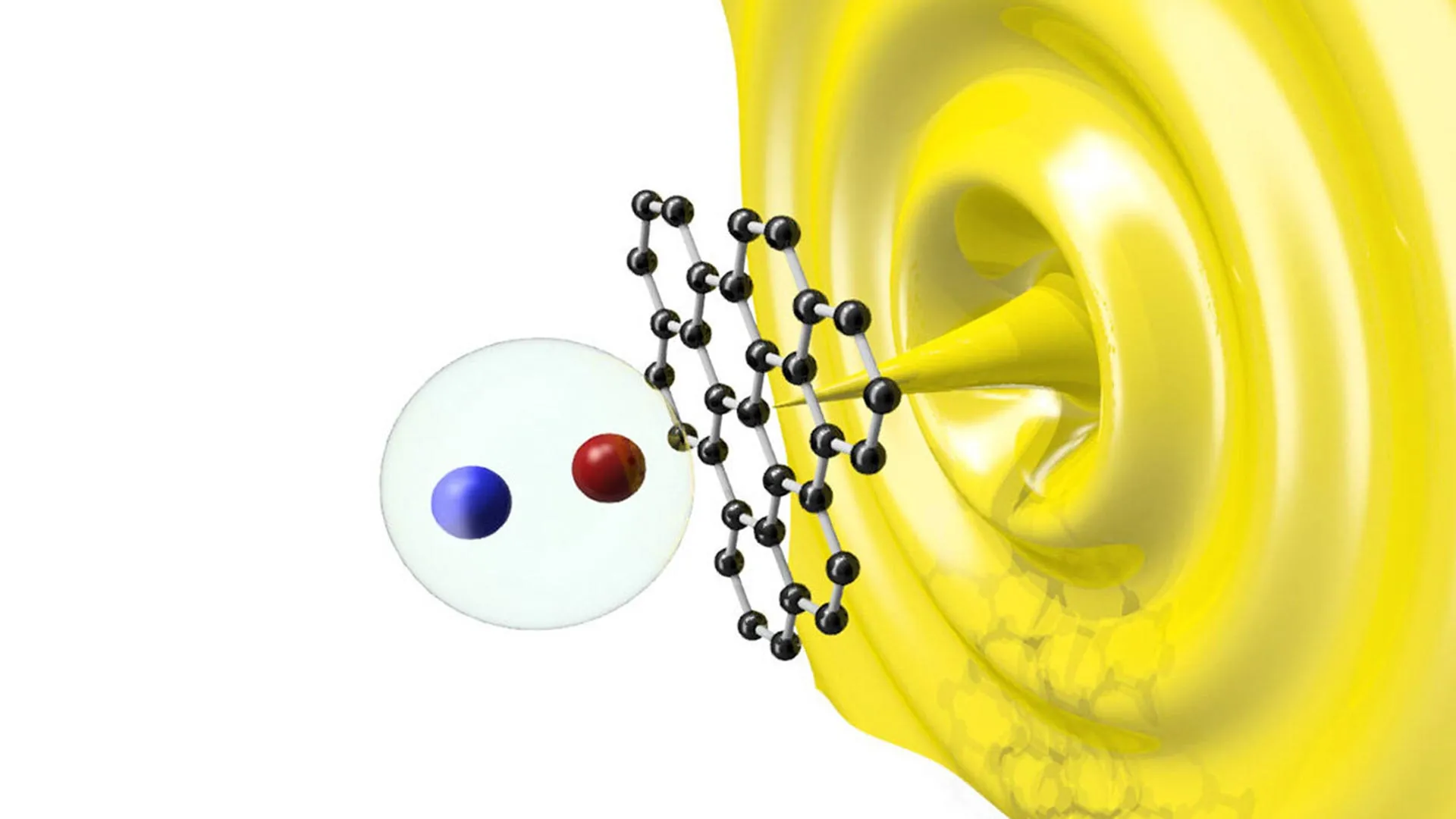
- The Graphene Grating: This refined beam was directed toward an ultra-thin sheet of graphene (two to three atomic layers thick). The atomic lattice spacing of graphene was deliberately chosen because it closely matched the de Broglie wavelength of the accelerated positronium.
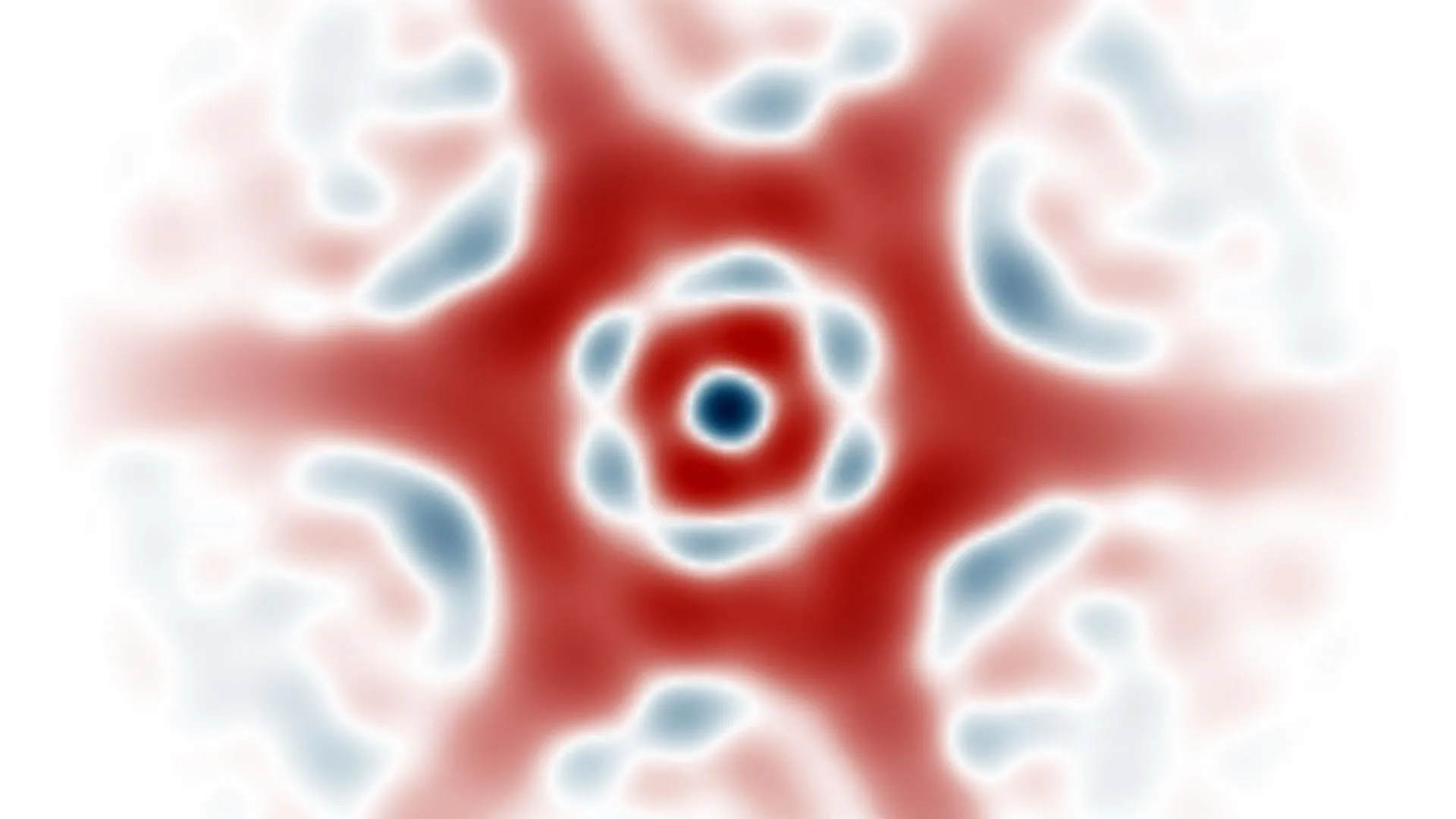
- Detection and Verification: As the neutral positronium atoms traversed the graphene sheet, a fraction of the beam successfully passed through the atomic lattice, creating a distinct, unmistakable diffraction pattern on the downstream detector.
Operating the entire system within an ultra-high vacuum ensured that the graphene surface remained pristine, eliminating scattering artifacts and allowing the quantum interference signatures to emerge with stunning clarity.
Supporting Context & Metrics
To appreciate the scale of the Tokyo University of Science achievement, it is vital to examine the specific physical parameters, comparative metrics, and theoretical implications governing the experiment.
Key Experimental Metrics and Parameters
- Beam Energy: Up to 3.3 keV, providing exceptional penetration and momentum control compared to thermal positronium sources.
- Component Symmetry: Composed of an electron and a positron of equal mass ($me^- = me^+$), representing the simplest possible two-body system bound solely by quantum electrodynamics (QED).
- Target Grating: A 2-to-3-layer graphene sheet featuring atomic lattice spacings precisely matched to the de Broglie wavelength of the incident positronium beam.
- Environmental Control: Conducted under ultra-high vacuum (UHV) conditions to preserve surface cleanliness and prevent unwanted molecular scattering.
- Lifespan Constraints: The entire flight path and interaction window had to be optimized within nanosecond operational parameters to capture interference before self-annihilation occurred.
Comparative Analysis of Matter-Wave Diffraction
| System / Particle | Binding Nature | Mass Ratio ($m_1 / m_2$) | Key Challenge Overcome | First Demonstrated |
|---|---|---|---|---|
| Electron | Elementary particle | N/A | High sensitivity to stray electromagnetic fields | Davisson-Germer / Thomson (1927) |
| Neutron | Composite (Baryonic) | ~1 (Quarks) | Moderating high-speed reactor neutrons | Estermann & Stern (1930) |
| Helium Atom | Complex Baryonic | ~4 (Protons/Neutrons) | Producing cold, velocity-selected atomic beams | Estermann et al. (1931) |
| Buckyball ($C_60$) | Macromolecular | Massive (~720 atomic mass units) | Preventing internal thermal decoherence | Arndt et al. (1999) |
| Positronium ($Ps$) | Lepton-Antilepton | 1.0 (Exact Symmetry) | Extremely short lifespan & beam coherence | Nagashima et al. (TUS, 2025) |
Theoretical Significance: A Unified Quantum Object
A critical finding of the TUS study is that positronium does not behave as two independent particles scattering off a grid separately. Despite its dual-particle structure—comprising matter and antimatter held together by electromagnetic forces—the system acts as a single, unified quantum object.
The electron and the positron do not individually track through the lattice; rather, their collective quantum wave-function passes through the graphene grating simultaneously, interfering with itself. This confirms that bound leptonic systems obey standard quantum mechanical superposition and wave equations on a macroscopic beam scale, validating decades of QED predictions regarding leptonic bound states.
Official Statements and Expert Insights
The implications of this breakthrough have resonated across the global physics community, shedding light on the collaborative effort required to achieve this milestone.
"Positronium is the simplest atom composed of equal-mass constituents, and until it self-annihilates, it behaves as a neutral atom in a vacuum. Now, for the first time, we have observed quantum interference of a positronium beam, which can pave the way for new research in fundamental physics using positronium."
— Professor Yasuyuki Nagashima, Department of Physics, Tokyo University of Science
Professor Nagashima’s career has long been dedicated to unraveling the eccentricities of positron and positronium physics, ranging from negative positronium ions to advanced annihilation-induced ion desorption. His leadership was instrumental in orchestrating the convergence of laser optics, vacuum physics, and material science required for this experiment.
"This groundbreaking experimental milestone marks a major advance in fundamental physics. It not only demonstrates positronium’s wave nature as a bound lepton-antilepton system (a system that behaves like a tiny atom) but also opens pathways for precision measurements involving positronium."
— Associate Professor Yugo Nagata, Department of Physics, Tokyo University of Science
Dr. Nagata, recognized internationally for his contributions to atomic physics and recipient of the Young Scientist Award of the Japanese Positron Science Society, emphasized the transition of positronium from a theoretical curiosity into a precision measurement tool.
The research was made possible through rigorous collaboration and financial backing from key Japanese scientific bodies, most notably supported by JSPS KAKENHI Grants (Nos. JP25H00620, JP21H04457, and JP17H01074), ensuring that the TUS laboratory could maintain the cutting-edge infrastructure required for high-energy antimatter-matter beam manipulation.
Future Outlook: Materials Science, Antimatter, and Beyond
With matter-wave diffraction successfully demonstrated in positronium, the scientific community stands on the precipice of several transformative applications spanning both applied and fundamental disciplines.
1. Non-Destructive Materials Science and Surface Analysis
Traditional surface analysis tools often rely on electron beams, ion beams, or X-rays. While effective, charged particle beams can deposit electrical charges on insulating targets, causing electrostatic charging, radiation damage, or sample degradation.
Because positronium is electrically neutral, it can interact with surfaces without inducing electrostatic charge build-up. Furthermore, its unique sensitivity to open-volume defects, voids, and magnetic domains makes a diffractive positronium probe an ideal candidate for inspecting delicate insulators, advanced semiconductor interfaces, and complex magnetic materials. Researchers can now envision a future where high-coherence positronium beams map atomic-scale surface topologies with unprecedented fidelity and zero structural degradation.
2. Precision Spectroscopy and Testing Quantum Electrodynamics (QED)
Positronium serves as the ultimate laboratory for testing QED because it is free from the complex nuclear structure uncertainties that complicate hydrogen atom spectroscopy. By harnessing interference patterns and precise beam manipulation, physicists can perform ultra-high-precision measurements of positronium energy levels, fine structure, and decay rates. Any minute deviation between experimental observations and theoretical QED predictions could signal the presence of undiscovered subatomic forces or physics beyond the Standard Model.
3. Gravitational Testing of Antimatter
Perhaps the most tantalizing long-term prospect involves testing how antimatter responds to gravity. While experiments like ALPHA at CERN have made strides in measuring the gravitational behavior of antihydrogen, direct gravitational measurements on leptons and leptonic systems remain unachieved.
Because positronium contains an exact 50-50 balance of matter and antimatter, mastering the control of coherent positronium beams brings physicists one step closer to designing interferometric setups sensitive to gravitational acceleration. Determining whether antimatter falls upward or downward with the same acceleration as ordinary matter remains one of the final unverified tenets of general relativity; positronium interferometry may well provide the definitive testing ground.
Conclusion
The successful observation of matter-wave diffraction in positronium by the Tokyo University of Science team marks a definitive triumph over technological adversity. By transforming a fleeting, volatile antimatter-matter pairing into a coherent, diffracted quantum beam, Professor Nagashima and his colleagues have unlocked a new chapter in physics. As this technique evolves from foundational proof-of-concept into refined applied instrumentation, positronium will undoubtedly illuminate the deepest mysteries of quantum mechanics, material science, and the fundamental laws governing our universe.