








Executive Overview
As humanity stands on the precipice of a new era in space exploration—with crewed missions to the Moon and permanent settlements on Mars shifting from science fiction to near-future reality—space agencies face a formidable, non-mechanical hurdle: the human mind. While propulsion systems, radiation shielding, and life-support technology undergo rigorous testing, the psychological resilience of astronauts remains one of the least predictable variables of deep-space flight. Long-duration space missions force small, tightly knit crews to endure profound isolation, claustrophobic living quarters, and relentless psychological pressure for months or even years at a time.
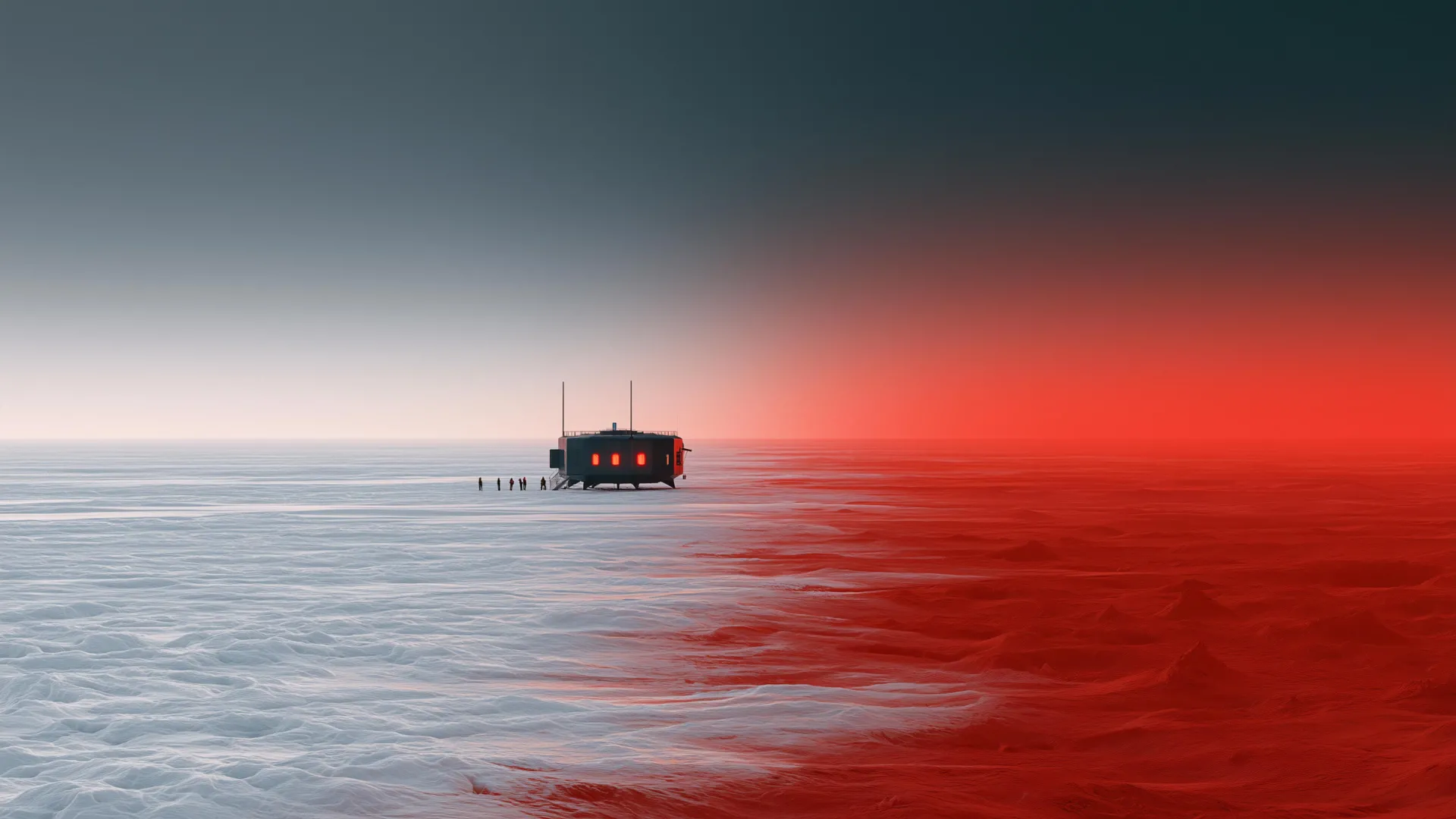
To better understand how these extreme environmental conditions shape team cohesion, communication, and operational performance, an international research collective recently turned their gaze not to the stars, but to the most inhospitable terrestrial landscape on Earth: Antarctica.
Focusing on a grueling ten-month overwintering mission at the Franco-Italian Concordia Station, researchers deployed a novel combination of psychometric surveying and automated proximity-tracking technology. Led by Dr. Jan Schmutz, a professor in the Department of Psychology at the University of Zurich, alongside Dr. Andrea Cantisani, a psychiatrist and research associate at the University of Bern, the study offers unprecedented granular insight into the microscopic social shifts that occur when humans are cut off from the rest of the world.
The findings challenge long-held assumptions about team dynamics in confined spaces. Most notably, the data reveals that in extreme environments, physical proximity and constant contact do not automatically equate to social support. In fact, under certain conditions, being around your peers too much can actively erode trust and stoke interpersonal conflict. Furthermore, the study tracked how diverse crews organically fracture into insular national or linguistic cliques as time wears on—a phenomenon carrying profound implications for the design of future multi-national space crews.
By proving that wearable sensors can reliably track social friction without disrupting operational routines, this study has provided a vital methodological framework. Its conclusions extend far beyond aerospace engineering, offering valuable lessons for terrestrial isolation chambers such as nuclear submarines, offshore drilling platforms, and remote subterranean research outposts.
Detailed Chronology of the Concordia Station Study
To grasp the gravity of the findings, one must first understand the crucible in which the research was conducted. Concordia Station sits atop the Antarctic Plateau at an elevation of 3,233 meters (10,600 feet) above sea level. Known colloquially as "White Mars," it is one of the most remote, hostile, and alien environments on the face of the planet. During the brutal winter months, ambient temperatures plummet to a staggering minus 80 degrees Celsius (-112 degrees Fahrenheit). The station is completely cut off from the outside world for nine months of the year, rendering rescue or supply drops physically impossible. The thin air, combined with the extreme geographic and social isolation, makes Concordia one of the most accurate Earth-bound analogues for a planetary habitat on Mars or a long-duration lunar base.
Phase One: Baseline Establishment and Subject Integration
The study centered on a crew of 12 carefully screened individuals tasked with maintaining the station and conducting scientific experiments through the long Antarctic night. Before deployment, the research team—spearheaded by Schmutz and Cantisani—established a baseline for psychological health, interpersonal compatibility, and baseline social metrics.
Unlike traditional psychological studies that rely solely on retrospective self-reporting—which is notoriously vulnerable to memory bias and under-reporting of interpersonal friction—this project introduced an objective behavioral tracking layer: wearable proximity sensors. These discrete devices were worn by all 12 crew members throughout the duration of the ten-month mission. They automatically and continuously registered when crew members were physically close to one another, logging the exact duration and frequency of these interpersonal encounters without requiring manual input or altering the crew’s daily workflow.
Phase Four: Data Synthesis and Longitudinal Tracking
Throughout the ten-month mission, the crew members completed standardized psychometric questionnaires at four distinct structural intervals. These surveys were designed to quantify shifting perceptions of loneliness, interpersonal trust, local conflict, group cohesion, social support networks, and perceived individual and team performance.
By marrying the subjective questionnaire data with the objective, high-resolution proximity logs generated by the wearable sensors, the research team was able to map a longitudinal trajectory of social health. They could cross-reference moments where reported loneliness spiked against actual physical proximity data, painting a vivid, data-driven picture of how human social architecture degrades, adapts, or fractures under extreme, prolonged confinement.
Supporting Context & Metrics: The Paradox of Proximity
When analyzing the intersection of the sensor data and the survey responses, the research team uncovered several counterintuitive trends that fundamentally challenge traditional team-building philosophies.
The Myth of "More Contact Equals Better Support"
In standard corporate or terrestrial workplace environments, managers frequently attempt to resolve team dysfunction by encouraging increased interaction, team-building exercises, and open communication channels. However, the Concordia Station study revealed that this axiom fails catastrophically in extreme isolation.
One of the most striking findings of the research was that spending more time in close physical proximity to fellow crew members was not consistently correlated with positive social outcomes. On the contrary, participants who engaged in more frequent, prolonged contact with their peers were statistically more likely to report heightened levels of interpersonal conflict, mounting mistrust, and a subsequent decline in perceived personal and operational performance.
This phenomenon highlights the hidden danger of spatial saturation. In environments where physical escape is impossible—where a walk outside means entering a lethal atmospheric zone—privacy becomes a precious, finite psychological resource. When privacy is systematically denied by cramped living quarters and shared workspaces, constant exposure to the same faces turns from a comfort into a stressor. Every minor idiosyncrasy, vocal tic, or habit of a colleague becomes magnified under the microscope of isolation.
"In small teams under extreme conditions, more contact doesn’t automatically equate to social support, but can actually increase tensions," explains lead researcher Dr. Jan Schmutz.
The researchers note an important caveat: while the data demonstrates a clear correlation between constant physical contact and friction, it cannot definitively isolate the causal pathway in every instance. For example, it is possible that individuals who were experiencing acute loneliness actively sought out interactions to alleviate their distress, even when those encounters failed to provide the psychological nourishment they craved, or inadvertently rubbed exhausted peers the wrong way.
The Rise of Fractional Cliques
Beyond raw physical proximity, the wearable sensor data exposed a structural evolution in how the crew organized themselves socially over time. As the months dragged on, the initial broad team cohesion began to fray, and the crew naturally segregated into smaller, highly insular subgroups.
A key driver of this fractionation was linguistic and national identity. Crew members increasingly gravitated toward colleagues who shared their native language or cultural background. While these micro-communities acted as psychological life rafts—providing a vital sense of grounding, validation, and comfort during particularly stressful weeks—they simultaneously introduced structural fault lines within the broader team. Over time, these internal divisions risked calcifying into out-groups and in-groups, subtly eroding the overarching unity required to operate a complex scientific station safely.
Official Statements and Expert Analysis
The implications of the Concordia Station study extend far beyond academic psychology. As space agencies draft roadmaps for multi-year missions to Mars, understanding the social mechanics of isolated crews is a matter of mission success or failure.
In statements accompanying the publication of the findings, the research leads emphasized the urgency of shifting how mission architects approach astronaut selection and psychological support. Dr. Andrea Cantisani highlighted the delicate balance between structural oversight and crew autonomy:
"When individuals are stripped of their usual social buffers—family, friends, open spaces, and the ability to simply walk away from a disagreement—the social ecosystem becomes incredibly fragile. Our data shows that monitoring these invisible social currents is no longer optional; it is a critical component of life-support engineering."
The research team also addressed the methodological breakthrough of utilizing wearable proximity sensors in harsh environments. Historically, psychological studies in Antarctica relied heavily on periodic logs or post-mission interviews, which suffer from severe recall distortion. The successful deployment of automated sensors proves that continuous, non-invasive behavioral tracking is viable even in sub-zero, high-stress conditions.
Moving forward, the research consortium plans to dissect the sensor and survey data even further. Subsequent studies will attempt to isolate specific qualitative types of social interaction—differentiating, for instance, between task-oriented communication, recreational socializing, and emotionally supportive dialogue—to determine precisely which behaviors alleviate operational stress and which ones inadvertently compound it.
Future Outlook: Implications for Deep Space and Earthbound Industries
The lessons harvested from the frozen expanses of Concordia Station arrive at a critical juncture for human spaceflight.
Preparing for Mars and Beyond
NASA, the European Space Agency (ESA), and commercial spaceflight pioneers like SpaceX are designing habitats and spacecraft intended to house crews for three years or longer on round-trip missions to Mars. During these voyages, communication latency with Earth will stretch from seconds to upwards of 20 minutes each way, effectively cutting astronauts off from real-time psychological counseling or intervention from ground control.
If a crew fractures due to unmanaged interpersonal friction or territorial squabbles over cramped quarters, the consequences could be catastrophic. The findings from the University of Zurich and the University of Bern suggest several actionable strategies for mitigating these risks on future deep-space missions:
- Architectural Privacy Design: Habitat modules must be engineered to provide genuine, private sanctuary spaces for every individual crew member, ensuring that astronauts have the physical means to withdraw entirely from social exposure when necessary.
- Dynamic Crew Composition: Space agencies must account for linguistic and cultural subgrouping during the selection and pairing process, training astronauts explicitly to bridge cross-cultural divides before launch.
- Automated Social Health Monitoring: Mission control can utilize passive proximity and interaction-tracking technologies to flag early warning signs of social isolation, clique formation, or interpersonal tension long before they manifest as critical operational failures.
Applications in Terrestrial Extremes
The value of this research is not confined to the vacuum of space. The psychological pressures mapped at Concordia Station mirror those found in a wide array of demanding terrestrial occupations.
Crew members aboard nuclear submarines submerged for months, workers isolated on deep-sea oil and gas drilling platforms, polar research expeditions, and miners trapped or working in remote underground complexes all contend with the exact same triad of isolation, confinement, and high-stress teamwork. By understanding how proximity breeds conflict and how micro-cliques form under pressure, industrial psychologists can design better rotation schedules, improved living modules, and targeted team interventions for terrestrial workforces operating at the edges of human endurance.
Ultimately, the Concordia Station study serves as a stark reminder: as we build the hardware to carry us to new worlds, we must never neglect the fragile, complex architecture of the human mind that inhabits them.