










Executive Overview
For decades, paleoclimatologists have wrestled with one of the most perplexing anomalies in Earth’s history: why Antarctica developed a massive, permanent ice sheet millions of years before the Arctic, during a geological epoch when global temperatures were roughly 5°C warmer than they are today. Traditional climate models, which rely heavily on fluctuations in atmospheric carbon dioxide ($textCO_2$), have struggled to account for this profound asymmetry between the planet’s two poles.
A landmark international study, published in the prestigious journal Science, offers a revolutionary explanation that bridges geology and climatology. Led by researchers at the University of Southampton—in collaboration with institutions spanning the United Kingdom, Germany, the Netherlands, and Italy—the study reveals that the key to Antarctica’s premature freeze lies not just in the skies, but deep beneath its surface.
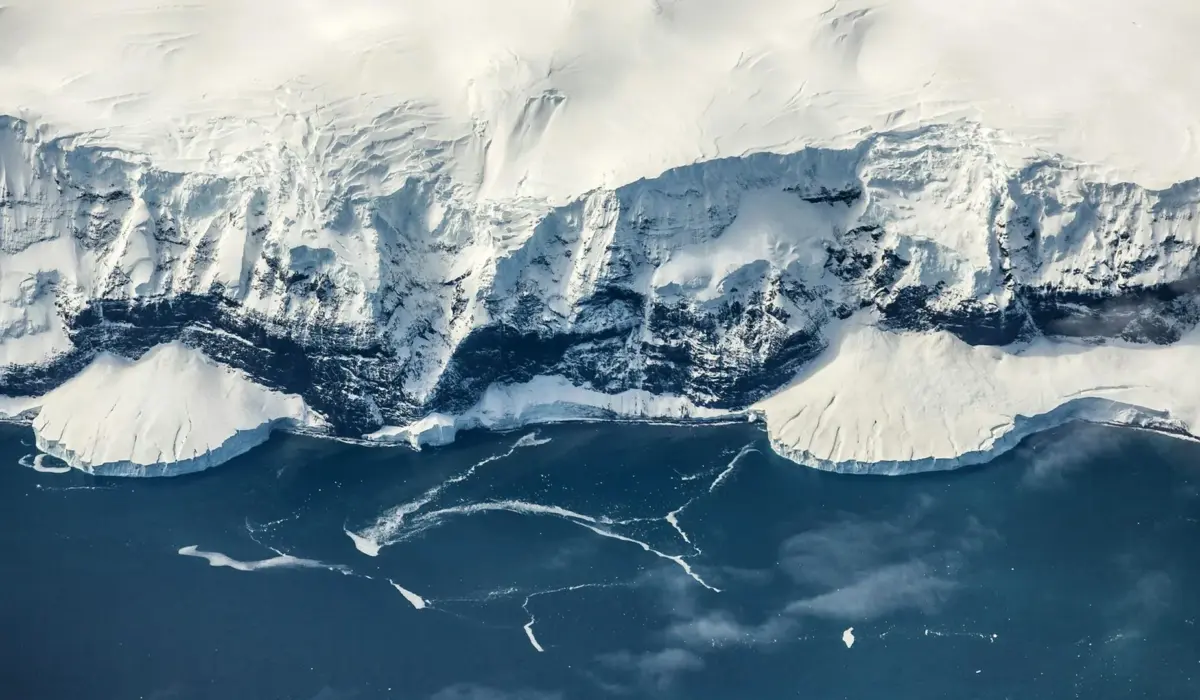
According to the findings, the gradual tectonic uplift of East Antarctica—driven by a newly discovered subterranean phenomenon known as "mantle waves"—created towering plateaus, escarpments, and mountain systems. As these landmasses rose over tens of millions of years, they breached critical elevation thresholds. This topographically induced cooling allowed snow and ice to secure a permanent foothold on the continent long before global atmospheric conditions were cold enough to trigger widespread northern glaciation.
The East Antarctic Ice Sheet, which emerged from this geological priming, is now the single largest mass of ice on Earth, holding enough frozen water to elevate global sea levels by approximately 52 meters should it ever completely melt. By demonstrating how Earth’s subterranean dynamics can precondition landscapes for major climate transitions, this research fundamentally alters our understanding of ancient ice ages and underscores the complex interplay between tectonics and climate systems.
Detailed Chronology: A 100-Million-Year Journey to Deep Freeze
To reconstruct how Antarctica transformed from a temperate, vegetated landmass into a frozen expanse, the research team employed sophisticated computational models capable of simulating 100 million years of surface evolution across East Antarctica. This multi-stage chronological reconstruction maps the deep-seated geological forces that set the stage for one of the most dramatic climatic shifts in Earth’s history.
The Jurassic Divergence and the Birth of Mantle Waves
The foundational chapter of Antarctica’s glaciation began during the Jurassic Period, roughly 201 to 143 million years ago, when the supercontinent of Gondwana began to break apart. As Antarctica and Africa drifted away from one another, profound tectonic stresses tore through the underlying lithosphere.
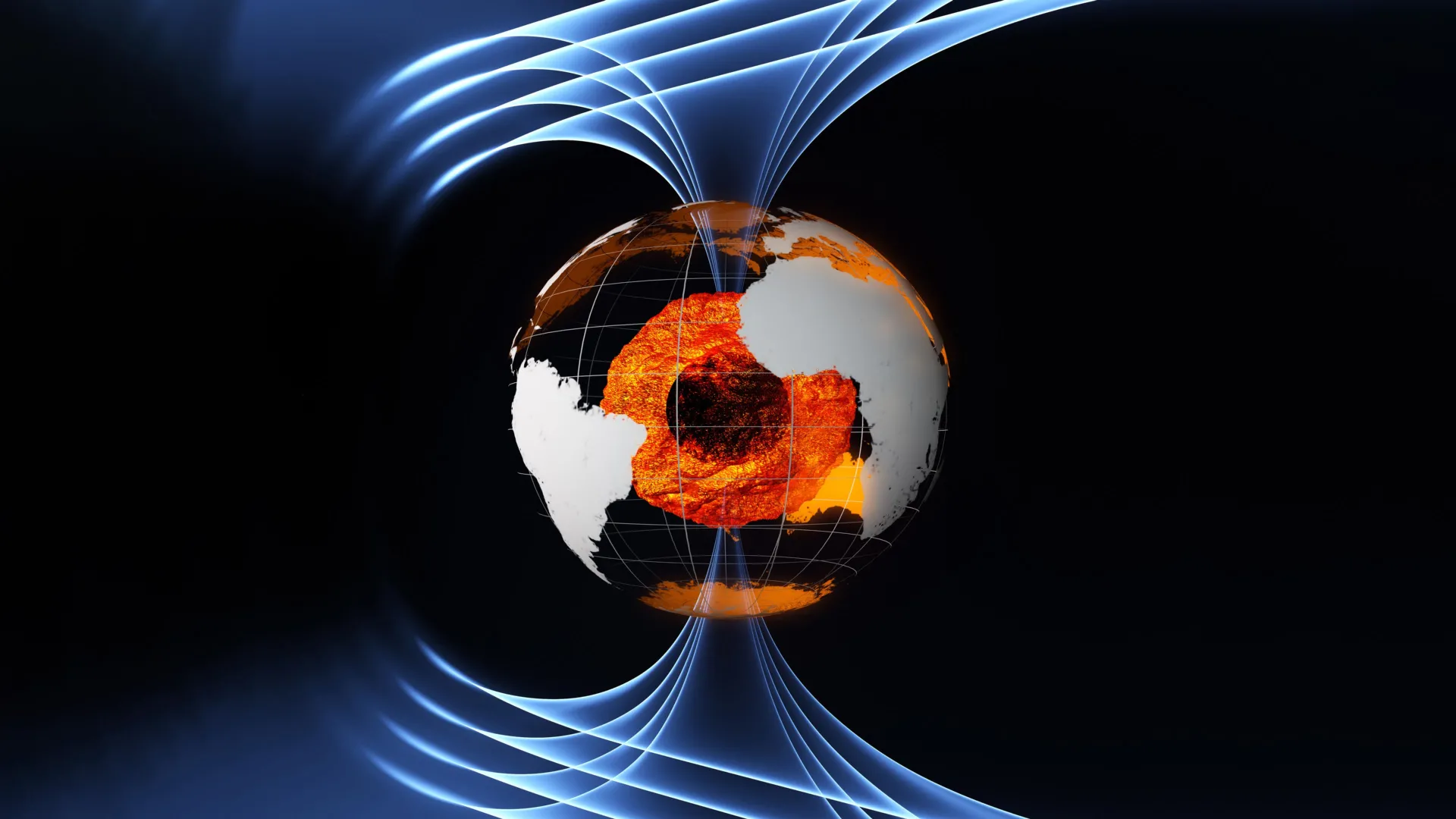
Recent discoveries by the research team led by Professor Thomas Gernon identified a unique geological byproduct of this continental separation: "mantle waves." These slow-moving, thermal-mechanical waves propagate through the upper mantle beneath separating tectonic plates. Historically linked to phenomena such as diamond-bearing volcanic eruptions and localized continental uplift, these subterranean waves played an indispensable role in shaping Antarctica’s topography.
Gradual Uplift and the Rise of the Gamburtsev Mountains
Over a span exceeding 100 million years, these relentless mantle waves passed beneath the East Antarctic landmass, gently but persistently lifting vast sections of the continent. This subterranean forcing drove the formation of a sprawling, elevated plateau flanked by coastal escarpments and interior highlands, most notably the Gamburtsev Mountains—a range buried deep beneath the modern ice sheet.
Before 50 million years ago, the vast majority of the Gamburtsev range sat at modest elevations below 1.5 kilometers. However, as the cumulative effects of mantle-driven uplift compounded, the landscape steadily climbed. By approximately 45 million years ago, expansive regions of East Antarctica had breached the critical two-kilometer elevation threshold.
At these higher altitudes, environmental temperatures dropped precipitously—roughly 1°C for every 100 meters of elevation gained. This chilling effect allowed mountain glaciers to form, expand, and eventually coalesce. By 34 million years ago, nearly half of the Gamburtsev range stood above the two-kilometer mark, providing the stable, high-altitude nurseries necessary for the nascent East Antarctic Ice Sheet to develop and spread outward toward the coast.
Why Antarctica Froze Before the Arctic
The chronological divergence between the polar regions highlights the inadequacy of viewing global climate change purely through the lens of atmospheric chemistry. While declining atmospheric $textCO_2$ levels are widely recognized as a primary driver of global cooling during the Cenozoic Era, they cannot explain why Antarctica iced over roughly 34 million years ago, whereas the Northern Hemisphere remained largely ice-free until approximately the past five million years.
If falling $textCO_2$ levels acted as the sole catalyst, the poles should have responded in a synchronized, symmetrical fashion. Instead, Antarctica enjoyed a massive head start. Geological processes had aggressively elevated its landmass, constructing high-altitude refuges where permanent ice could survive despite the surrounding oceans and global atmosphere remaining remarkably warm. The Arctic landmasses, by contrast, lacked this crucial tectonic preconditioning, lingering at lower elevations where summer warmth reliably melted any accumulating snow.
Supporting Context & Metrics: The Physics of Topographic and Climate Feedbacks
The transition from a temperate continent to a frozen monolith was not driven by geology alone; it was sustained and amplified by a cascade of powerful climate feedbacks. Once tectonic uplift initiated the freezing process, secondary physical mechanisms took over, locking the continent into a permanent glacial state.
The Topographic-Altitude Connection
Topography is a primary determinant of regional climate stability. In the case of Antarctica, the transition of the Gamburtsev Mountains and surrounding plateaus above the critical two-kilometer threshold fundamentally altered local thermodynamic balances. Air temperatures drop predictably with altitude due to the adiabatic lapse rate. By lifting the land surface into the mid-troposphere, tectonic activity bypassed the warming influence of the surrounding seas, ensuring that winter snowpacks survived the summer melt season and accumulated year after year.
The Ice-Albedo Effect and Global Cooling
As the fledgling ice sheet expanded across the elevated East Antarctic plateau, it triggered a classic positive feedback loop known as the ice-albedo effect. Snow and ice possess high albedo, meaning they reflect a substantial proportion of incoming solar radiation back out into space rather than absorbing it as heat.
The researchers estimate that the spread of the Antarctic ice sheet reflected enough sunlight to reduce global average temperatures by approximately 1°C. Despite this planetary cooling pulse, the Northern Hemisphere still failed to glaciate, underscoring how vital Antarctica’s elevated topography was to overcoming the high baseline temperatures of the period.
Water Vapor Feedbacks and Continental Spread
As the region chilled, a secondary atmospheric feedback reinforced the cooling trend: the reduction of atmospheric water vapor. Colder air holds significantly less moisture than warm air. Because water vapor acts as a potent greenhouse gas—acting like an invisible insulating blanket around the planet—its depletion in the cooling polar atmosphere caused local greenhouse trapping to weaken further.
Drier air led to accelerated radiative cooling, enabling the ice sheet to break free from its mountainous origins and spread steadily across the lower-lying coastal plains of the continent.
Key Metrics at a Glance
- Global Temperature Anomaly (34 Million Years Ago): Earth was approximately 5°C warmer than modern pre-industrial levels.
- Critical Elevation Threshold: ~2 kilometers above sea level, required for the sustained survival of mountain glaciers.
- Uplift Duration: Over 100 million years of continuous or episodic geological elevation driven by mantle waves.
- Sea-Level Equivalent: The East Antarctic Ice Sheet contains enough frozen water to raise global sea levels by ~52 meters.
- Global Cooling Impact: The ice-albedo effect triggered by the initial Antarctic glaciation lowered global temperatures by ~1°C.
Official Statements and Academic Insights
The collaborative nature of this international study brought together leading experts in geodynamics, paleoclimatology, and atmospheric physics. Their collective statements illuminate the profound implications of the discovery for Earth science.
Lead author Professor Thomas Gernon, Professor of Earth Science at the University of Southampton, reflected on the core mechanism of the study:
"Antarctica’s land surface was gradually lifted to the point where ice could gain a permanent foothold, even while the surrounding polar oceans as well as global temperatures remained surprisingly warm… If falling levels of $textCO_2$ acted alone, you would expect the poles to respond more symmetrically. Instead, Antarctica gained a major head start because geological processes had raised land to higher elevations, making it colder."
Highlighting the predictive power of their computational models, Dr. Thea Hincks, Senior Research Fellow at the University of Southampton and co-lead of the study, noted:
"We found that our models can realistically capture the evolution of the two-kilometer-high coastal escarpment, elevated plateau and inland mountains, eventually seeding the East Antarctic Ice Sheet."
Emphasizing the irreplaceable role of landscape architecture in climate history, Dr. Guy Paxman, Royal Society University Research Fellow at Durham University and study co-author, explained:
"Topography is fundamentally important for glaciation. Air temperatures can drop by up to 1°C for every 100 meters of altitude gained."
Detailing the interplay between planetary albedo and atmospheric dynamics, Dr. Philip Goodwin, climate physicist at the University of Southampton and co-author, added:
"As the ice sheet expanded, its bright surface reflected more sunlight back into space, cooling the region further… Together, these feedbacks allowed the Antarctic ice sheet to spread from the mountains across the continent, eventually reaching the coast."
Summarizing the overarching paradigm shift presented by the research, Professor Gernon concluded:
"Our findings reveal that the Earth’s interior preconditions landscapes to glaciation, determining when and where major climate transitions like the glaciation of Antarctica become possible. That’s incredibly important for understanding Earth’s ancient ice ages as well as future tipping points in the climate system."
Future Outlook and Implications for Modern Climate Science
The revelation that deep Earth dynamics can "precondition" a planet for major climatic tipping points opens vital new avenues for geoscientists and climatologists alike. Historically, climate models have treated the Earth’s solid crust as a static boundary condition—a fixed stage upon which atmospheric and oceanic dramas play out. This study decisively shatters that assumption, proving that the restless, evolving interior of the planet actively dictates the timing and geography of global climate shifts.
Rethinking Ancient Ice Ages
By demonstrating that tectonic uplift must reach specific thresholds before atmospheric cooling can translate into permanent ice sheets, the research provides a missing link in paleoclimate reconstruction. Future geological and climatological models will need to integrate high-resolution reconstructions of ancient topography to accurately simulate how and when ice masses formed during past greenhouse-to-icehouse transitions.
Lessons for Future Climate Tipping Points
While the geological processes governing mantle waves operate on timescales of millions of years—far too slow to influence anthropogenic climate change occurring over decades and centuries—the concept of non-linear environmental tipping points remains intensely relevant. Understanding how delicate feedbacks (such as the ice-albedo effect and atmospheric moisture reduction) amplify initial environmental changes helps researchers refine projections regarding the stability of modern polar ice sheets.
As the Earth experiences rapid warming today, identifying the precise thresholds and stabilizing mechanisms of ice sheets is more critical than ever. The collaborative work spearheaded by the University of Southampton and its international partners serves as a powerful reminder that to fully comprehend the future of our planet’s climate, we must look not only to the skies, but deep into the geological engine running beneath our feet.
This international research initiative was made possible through the generous support of the WoodNext Foundation, operating as a fund within a donor-advised fund program.