







Human evolution is increasingly understood not as a clean, linear divergence, but as a complex, braided stream of migrations, encounters, and genetic exchanges. For decades, paleoanthropology relied primarily on the physical examination of fossils—skulls, teeth, and fragmented bones—supplemented in recent years by the extraction of ancient DNA from well-preserved remains. This work revealed that Homo sapiens interbred with Neanderthals and Denisovans, leaving millions of people today carrying echoes of those archaic genomes.
However, a groundbreaking study published on July 30 in the journal Science has fundamentally challenged and expanded this model. Researchers at the University of California, Berkeley, alongside colleagues at Johns Hopkins University and other institutions, have discovered that the modern human genome carries the genetic signatures of two previously unknown, or "ghost," human relatives.
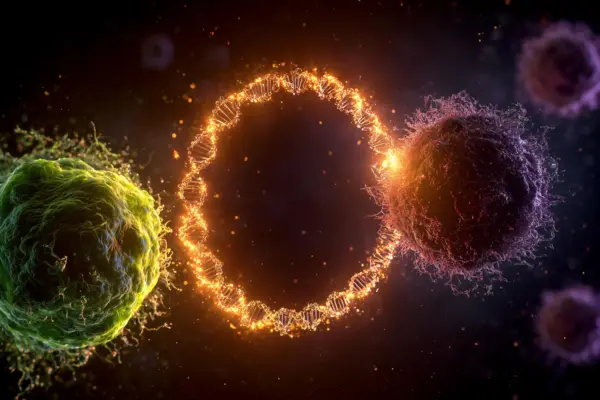
These findings were made possible not by unearthing new fossils, but by pioneering a novel computational technique known as TRACE (TRacking Archaic Contributions via ARG Estimation). By analyzing the complete genomes of hundreds of living individuals from across the globe, the research team successfully reconstructed ancient genealogical connections and mapped genetic regions that stretch back hundreds of thousands—and in some cases, millions—of years.
The implications of this study are profound. First, it identifies a "ghost ancestor" whose DNA is present in every modern human, whether of African, Asian, European, or Indigenous descent, indicating an interbreeding event that occurred in Africa more than 50,000 years ago, prior to the major out-of-Africa migrations. Second, it traces the inheritance of a "super-archaic" lineage dating back roughly 1.8 million years, which passed through Denisovans before entering the Homo sapiens gene pool.
Together, these discoveries portray early human history as an era of pervasive contact among multiple hominin populations. Far from being an isolated lineage destined to conquer the globe in a vacuum, Homo sapiens shared the landscapes of Africa and Eurasia with diverse, closely related human groups, frequently interbreeding and pooling genetic innovations that ultimately helped our ancestors adapt to new environments, diets, and pathogens.
Detailed Chronology
To understand the scope of these discoveries, it is necessary to trace the timeline of human evolutionary history as revealed by genomic data, stretching from the deepest roots of the Pleistocene epoch up to the modern era.
TIMELINE OF HOMININ INTERBREEDING & DIVERGENCE
├─ ~1.8 Million Years Ago: Super-archaic lineage diverges; ancestors of this group eventually interbreed with Denisovans (>200,000 years ago).
├─ ~800,000 Years Ago: "Ghost" ancestral lineage splits from the line leading to modern humans, Neanderthals, and Denisovans.
├─ >50,000 Years Ago (Africa): Ghost population interbreeds with early Homo sapiens; this genetic material is now found in all modern humans.
├─ ~50,000 Years Ago (Eurasia): Modern humans migrate out of Africa and repeatedly interbreed with Neanderthals and Denisovans.
└─ Present Day: Modern human genomes preserve a complex mosaic of these ancient encounters (approx. 2% total archaic DNA).
1.8 Million Years Ago: The Super-Archaic Split
The deepest genetic signal uncovered by the Berkeley team originates from a population separated from other human lineages roughly 1.8 million years ago. This timeline overlaps with the era of Homo erectus populations expanding through Eurasia. While no intact DNA has ever been recovered from fossils of this extreme age, the computational signatures left behind in downstream genomes tell a remarkable story.
According to the study, this super-archaic group interbred with Denisovans in Eurasia more than 200,000 years ago. When Denisovans later encountered Homo sapiens, a small fraction of that ancient million-year-old DNA was carried across the species barrier into the modern human genome, particularly within populations in Oceania and parts of Asia.
800,000 Years Ago: The Emergence of the Ghost Lineage
Around 800,000 years ago—near the time when the lineages leading to Neanderthals and Denisovans split from one another—another distinct hominin population diverged. Described by researchers as a "ghost ancestor," this group lived in Africa and developed separately for hundreds of millennia.
Unlike Neanderthals and Denisovans, whose fossils have been painstakingly excavated from caves in Europe and Siberia, this ghost lineage has left no recognized physical fossil record, or at least none with recoverable DNA. Yet its genetic footprint is indelible.
Greater than 50,000 Years Ago: The African Encounter
Long before Homo sapiens undertook their major expansion out of Africa, early modern human populations in Africa crossed paths with the ghost lineage. The genomic analysis indicates that interbreeding occurred during this epoch, more than 50,000 years ago.
Because this event predated the massive migrations that populated Europe, Asia, and the Americas, the resulting genetic material was carried out of Africa by our migrating ancestors. Consequently, this ghost ancestry is universal, present in approximately equal proportions (roughly 0.5% to 1%) in every human alive today, regardless of geographic origin.
~50,000 Years Ago and Beyond: The Eurasian Mosaics
As Homo sapiens expanded out of Africa roughly 50,000 years ago, they repeatedly encountered other archaic hominins inhabiting Eurasia. Chief among these were the Neanderthals and Denisovans.
These encounters resulted in episodes of interbreeding that contributed roughly 1% to 2% Neanderthal DNA to non-African genomes, alongside varying levels of Denisovan ancestry in Asian and Oceanian populations. These interactions created a biological mosaic, cementing a history of frequent contact rather than strict reproductive isolation.
Supporting Context & Metrics
The investigation of archaic DNA has traditionally faced a formidable bottleneck: the fragility of genetic material over time. DNA degrades rapidly, leaving researchers heavily dependent on rare, exceptionally preserved fossils found in cool climates. In tropical regions, such as sub-Saharan Africa, DNA preservation is notoriously poor, making the direct sequencing of ancient African hominins virtually impossible with current technology.
To bypass this physical limitation, the UC Berkeley research team developed TRACE (TRacking Archaic Contributions via ARG Estimation).
How TRACE Works
Instead of extracting DNA from ancient bones, TRACE examines the complete genomes of hundreds of present-day humans. It uses these modern sequences to reconstruct Ancestral Recombination Graphs (ARGs).
An ARG maps the genealogical connections among DNA segments over dozens of generations. By looking backward in time, the algorithm identifies genomic regions whose lineage extends unusually far back—farther than standard coalescence models would predict for standard Homo sapiens ancestry.
[Modern Genomes] ---> [TRACE Algorithm / ARG Estimation] ---> [Identification of Deeply Divergent Genomic Regions] ---> [Detection of Unknown Archaic Lineages]By isolating these deep-branching segments, the researchers can spot genetic contributions from extinct human populations without ever holding their bones.
Quantitative Breakdown of Ancestry
- Total Archaic Contribution: Roughly 2% of the average modern human genome is composed of archaic hominin DNA.
- Neanderthal Contribution: Accounts for approximately 1% of modern human genomes outside of Africa (and trace amounts within Africa due to later back-migration).
- Ghost Ancestry Contribution: Makes up roughly 0.5% to 1% of the modern human genome and is globally ubiquitous, found in both African and non-African populations.
- Super-Archaic Contribution in Denisovans: Denisovan genomes contain an estimated 3% to 5% super-archaic ancestry derived from the 1.8-million-year-old lineage. A small fraction of this ancient material was subsequently passed to modern humans in Oceania.
Functional Significance: Immunity and Metabolism
The survival of these archaic segments in modern human genomes was not random. Statistical analysis of the genomic distribution revealed that many of the retained archaic segments are clustered around genes associated with immune system defenses and metabolism.
When early Homo sapiens ventured into unfamiliar ecological zones, they encountered new pathogens, climates, and food sources. The genetic variants acquired through interbreeding with locally adapted archaic hominins acted as evolutionary shortcuts. Rather than waiting thousands of years for beneficial mutations to arise spontaneously through random drift, modern humans co-opted genes that had already been fine-tuned by natural selection over hundreds of thousands of years in Eurasian and African environments.
Official Statements
The study’s authors emphasized that these findings fundamentally alter our understanding of human origins, shifting the paradigm from a rigid arboreal model to a deeply interconnected network.
"Previous publications suggested that there might be ghost ancestry—ancestry from unknown archaic lineages in modern humans—but they hadn’t concluded whether this unknown ancestry is present only in Africans or not, and when this introgression event happened,"
— Yulin Zhang, UC Berkeley graduate student and co-first author of the study."We were actually able to find and map genomic locations in modern humans that are from this ghost lineage and show that this ghost ancestry is in all modern humans, not only in Africans."
Commenting on the identification of the million-year-old lineage, co-first author Arjun Biddanda, a postdoctoral researcher at Johns Hopkins University, noted:
"The super-archaic finding is particularly exciting because it reveals genetic contributions from a human lineage that lived over a million years ago, despite the absence of any sequenced DNA from that population."
Senior author Priya Moorjani, associate professor of molecular and cell biology at UC Berkeley, highlighted the conceptual shift required by the new data:
"With ancient DNA from Neanderthals and Denisovans and with these new genealogical methods, we are learning that mixture among human populations has been very pervasive across time, and that this is also likely to be true at ancient time scales."
"We often think of human evolution as a branching tree, but new genomic data and analytical methods reveal a much more interconnected history—more like a complex web of populations connected by repeated episodes of migration and mixing."
Addressing the technical power of the new computational pipeline, Moorjani added:
"Genealogies preserve a record of our evolutionary past. TRACE reconstructs those histories across the genome. By identifying regions whose ancestry extends unusually far back in time, we can uncover genetic contributions from extinct human populations, even in the absence of ancient DNA."
Future Outlook
The publication of this research in Science marks the beginning of a new chapter in paleogenomics rather than the final word. The success of TRACE demonstrates that computational genealogy can extract historical signals from living DNA that were previously thought lost to time.
Expanding Genomic Databases
As global genetic sequencing initiatives expand to include a broader, more representative sample of human populations—particularly underrepresented groups in Africa, Asia, and the Americas—the resolution of these genealogical maps will sharpen. Increased sample diversity will allow researchers to detect weaker signals from even more elusive archaic populations.
The Quest for Physical Counterparts
While TRACE allows scientists to study ghost lineages without fossils, matching these genetic profiles to the physical fossil record remains a vital goal. Researchers are examining protein sequences recovered from ancient fossils, such as those associated with Homo erectus, to see if biochemical markers can be linked to the super-archaic signals identified in modern genomes. Similarly, recovering additional Denisovan genomes will help clarify how deeply that group intermixed with older human branches.
Broader Biological Applications
The implications of this methodological breakthrough extend far beyond human anthropology. Professor Moorjani and her colleagues note that the principles behind TRACE can be applied across the tree of life. Any species with complex migration histories and historical interbreeding—from canids and bears to agricultural crops—could potentially be analyzed using similar genealogical tracking methods to uncover hidden episodes of hybridization.
Ultimately, the study serves as a humbling reminder of our species’ deep history. Inside every human cell lies a molecular archive written by multiple ancient lineages, bearing witness to a past defined not by isolation, but by connection.