




Executive Overview
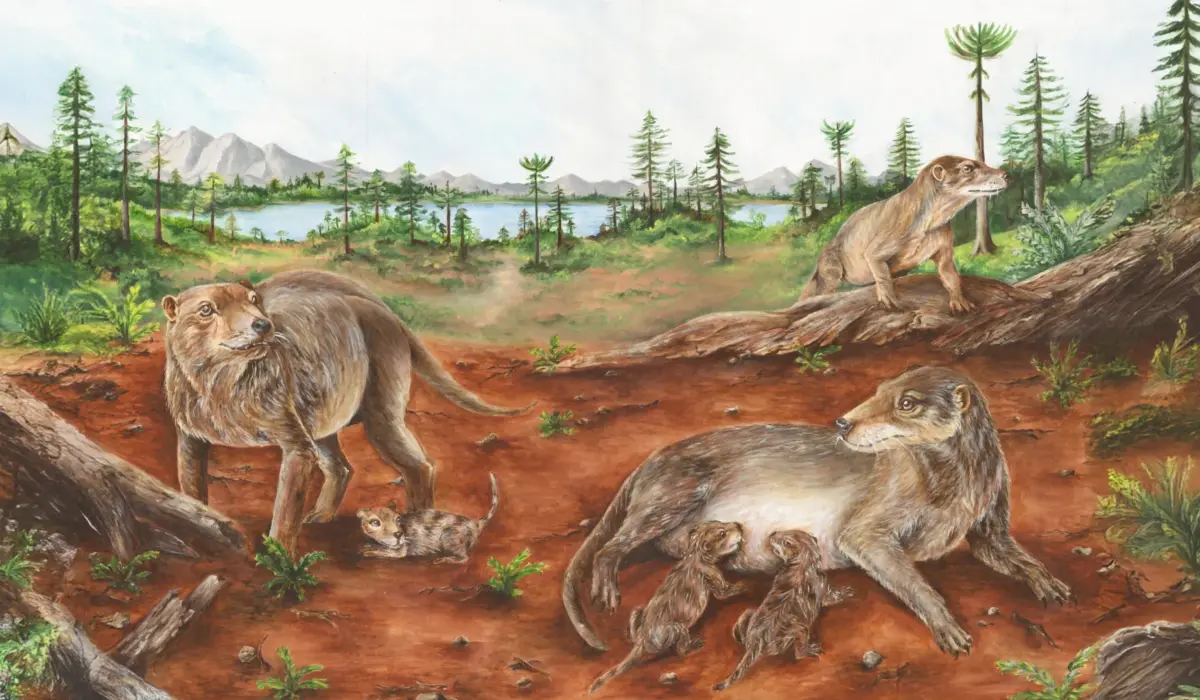
In a discovery that promises to rewrite the evolutionary history of mammals, a team of international paleontologists has uncovered compelling evidence that live birth—or viviparity—emerged tens of millions of years earlier than previously believed. Published in the journal Frontiers in Mammal Science, the new research focuses on Chiniquodon theotonicus, a specialized cynodont that roamed the Earth approximately 236 million years ago during the Triassic period.
For decades, the transition from egg-laying amniotes to viviparous mammals has remained one of paleontology’s most stubborn and inscrutable mysteries. Because soft tissues and embryonic remains rarely survive the fossilization process, determining the reproductive strategies of long-extinct animal lineages has relied almost entirely on indirect evidence, comparative anatomy, and educated speculation. However, by combining microscopic bone analysis with a massive comparative dataset of living animals, researchers from the National Scientific and Technical Research Council (CONICET) in Argentina have shattered previous timelines.
Their findings indicate that Chiniquodon theotonicus gave birth to live young rather than laying eggs. More remarkably, this physiological milestone implies that viviparity originated within the mammalian lineage at least 95 to 90 million years earlier than mainstream evolutionary models had previously projected. This paradigm-shifting revelation not only bridges a massive gap in our understanding of mammalian origins, but it also suggests that the evolutionary success of early mammals was deeply rooted in reproductive strategies that predated true mammals altogether.
Detailed Chronology: Unlocking the Microscopic Secrets of Chiniquodon theotonicus
The journey toward this groundbreaking discovery began not in the sun-baked badlands of Argentina, but under the lens of a microscope during an advanced postgraduate training course. Paleontologists examining the internal bone structure of a fully grown Chiniquodon theotonicus fossil—unearthed in the fossil-rich sedimentary layers of northwestern Argentina—noticed an unusual, highly distinct growth mark embedded deep within the bone matrix.
To trained osteologists, microscopic rings and growth marks are akin to tree rings, recording the chronological life events of an animal. However, this particular feature stood out from standard seasonal or annual growth rings. Upon deeper comparative analysis with living tetrapods, the researchers identified the anomaly as a definitive "neonatal line."
Neonatal lines are microscopic growth rings that form in the bones and teeth of vertebrates in direct response to the physiological trauma and dramatic metabolic shift of birth. When an animal transitions abruptly from the stable, buffered environment of the womb or egg to the harsh external world, its growth accelerates or alters sharply, leaving a permanent chemical and structural signature in the skeletal tissue.
Faced with this unprecedented find, lead author Dr. Leandro Gaetano and his colleagues devised an innovative methodological framework to test whether their neonatal line interpretation held up to rigorous scientific scrutiny. Because they could not observe the soft tissue directly, they turned to biometric scaling.
The research team set out to estimate the body mass of the specific C. theotonicus specimen at two critical life stages: birth and death. The internal neonatal line provided the proxy for its size as a neonate, while the outer circumference and geometry of the mature bone provided the metric for its final adult body mass.
Through meticulous mathematical modeling, the researchers calculated that the individual weighed approximately 1.7 kilograms at birth and grew to a respectable 12 kilograms by the time it reached full maturity. This established a neonate-to-adult body mass ratio of roughly 14 percent—a staggering proportion that sparked an extensive comparative investigation across modern animal kingdoms.
Supporting Context & Metrics: How Chiniquodon Defies Ancient Reptilian Norms
To understand why a 14 percent neonate-to-adult mass ratio is so extraordinary, one must examine the reproductive metrics of contemporary amniotes. The research team cross-referenced their calculated ratios for Chiniquodon theotonicus against a vast dataset comprising thousands of living mammals, non-avian reptiles, and birds.
In the realm of modern reptiles—such as snakes, turtles, and crocodilians—reproductive strategies are overwhelmingly oviparous (egg-laying), with a heavy emphasis on producing numerous, relatively tiny offspring to offset high rates of predation. For instance, modern reptiles that reach an adult weight between 8 kilograms and 14.5 kilograms typically produce hatchlings that weigh a meager 9 to 53 grams. This yields an exceptionally low neonate-to-adult body mass ratio ranging from a mere 0.1 percent to 0.6 percent.
Avian species demonstrate a similarly modest relative offspring size. Birds falling into the 8-kilogram to 21.5-kilogram adult weight class—including large species like cranes, pelicans, and vultures—produce hatchlings weighing between 110 grams and 357 grams. This translates to neonate-to-adult mass ratios of approximately 1.3 percent to 4.5 percent.
When the researchers turned their attention to modern mammals, however, the statistical landscape shifted dramatically. Mammals of comparable adult mass (weighing between 8 kilograms and 15 kilograms) exhibit a radically different reproductive investment. These modern species routinely give birth to significantly heavier single or small-litter offspring, with newborn weights ranging from 35.5 grams to an impressive 1.87 kilograms. Consequently, their neonate-to-adult mass ratios can soar as high as 18.77 percent.
As a prime biological parallel, the researchers pointed to the bay duiker, a small African forest antelope. The bay duiker routinely gives birth to single offspring whose birth weights mirror the estimated 1.7-kilogram neonatal mass calculated for Chiniquodon theotonicus.
By deliberately excluding egg-laying monotremes and pouch-bearing marsupials—which birth underdeveloped, highly altricial young—from this specific comparative bracket, the researchers confirmed a striking statistical alignment. Chiniquodon theotonicus did not cluster with ancient reptiles or avian lineages; instead, its metric profile plotted squarely alongside extant placental mammals.
Environmental Pressures of the Triassic: Why Live Birth Evolved Early
The revelation that viviparity existed 236 million years ago forces a reevaluation of the selective pressures that shaped early mammalian evolution. Cynodonts—the broader group of therapsids that includes ancestors of modern mammals—did not evolve in a vacuum. They lived, diversified, and thrived during the Triassic period, a critical geological epoch defined by massive global restructuring.
The Triassic immediately followed the Permian-Triassic extinction event, the most devastating mass extinction in Earth’s history, which wiped out over 90 percent of marine species and 70 percent of terrestrial vertebrate species. The ecosystems that slowly rebuilt during the Triassic were fiercely competitive, marked by intense ecological restructuring and heavy predatory pressures from emerging archosaurs and early dinosaurs.
Compounding these biological pressures were severe climatic shifts. The Triassic was characterized by a distinct trend toward global aridity, intense seasonal fluctuations, and erratic weather patterns. In such hostile and unpredictable environments, traditional egg-laying strategies presented severe vulnerabilities. Eggs left in nests were highly susceptible to dehydration, extreme temperature swings, and opportunistic predators.
According to senior author Adriana Mancuso, these harsh environmental parameters acted as powerful evolutionary accelerators for viviparity. "This meant high competition for resources and strong predatory pressures," Mancuso noted. "Combined with a trend toward aridity and strong seasonality, embryos of viviparous species would be better protected than those of egg-laying species."
By retaining the developing embryo inside the maternal body, viviparous cynodonts could effectively buffer their offspring against the punishing extremes of Triassic weather. The mother served as a mobile, thermoregulated incubator, shielding the vulnerable fetus from desiccation and predators until it was sufficiently developed to navigate the hostile landscape.
Official Statements: Perspectives from the Research Team
The publication of this study has sent ripples through the global paleontological community, challenging long-held dogmas regarding the tempo and mode of mammalian evolution. The researchers behind the discovery emphasize both the methodological ingenuity required to unlock these secrets and the profound implications for evolutionary biology.
"We show for the first time that live birth was present in at least one mammalian ancestor, Chiniquodon theotonicus, which lived approximately 236 million years ago," stated lead author Dr. Leandro Gaetano. "This implies that viviparity among early cynodonts originated in the mammalian lineage at least 95 to 90 million years earlier than previously thought."
Gaetano acknowledged the immense historical difficulty of studying reproductive modes in deep time, noting that paleontologists have long lamented the scarcity of direct fossil evidence. "If mammalian ancestors were egg-laying or viviparous has been considered an inscrutable mystery," Gaetano said. "We came up with a somewhat ingenious set of methods to get at something very difficult to analyze in the fossil record."
The surprise of the discovery was echoed by co-author María Miceli Baro, a graduate student at the University of Buenos Aires whose analytical work contributed heavily to the study. "In cynodonts, embryonic tissues were never observed before, let alone a neonatal line," Baro remarked. "Through its analysis, we found that a trait that is generally linked to evolutionary success was present in animals long before true mammals originated."
Future Outlook: Reimagining the Mammalian Family Tree
As the academic community digests the findings published in Frontiers in Mammal Science, the ripple effects are already prompting new avenues of inquiry. For generations, textbook orthodoxy has taught that the major physiological hallmarks of mammals—such as lactation, specialized diphyodont dentition, fur, and live birth—emerged in a relatively compressed window alongside the appearance of true crown-group mammals in the Jurassic or Cretaceous periods.
This study turns that timeline on its head. By demonstrating that complex, energetically expensive reproductive traits like viviparity were fully functional in Triassic cynodonts like Chiniquodon theotonicus, the research suggests that the ancestral lineage of mammals was experimenting with advanced physiological strategies much earlier than previously suspected.
However, the authors remain scientifically rigorous, noting that while C. theotonicus provides a concrete anchor point, further data is required to determine whether it represents an isolated evolutionary experiment or a widespread biological shift across multiple cynodont clades.
"It is very well possible that C. theotonicus does not represent an isolated case of viviparity among cynodonts," Dr. Gaetano concluded. "It could be evidence of the general switch from laying eggs to giving birth to live young early on in the mammalian lineage. But we need more evidence to test this hypothesis. Still, it looks like some cynodonts were in fact very similar to present-day mammals."
Moving forward, paleontologists are expected to re-examine existing cynodont fossil collections worldwide, applying advanced histological and microscopic scanning techniques to bone sections that were previously ignored or assumed to lack biological preservation. If other neonatal lines are discovered in different cynodont taxa, science may soon confirm that the transition from egg to womb was one of the foundational keys to surviving the ancient crises that shaped our modern world.