










Executive Overview
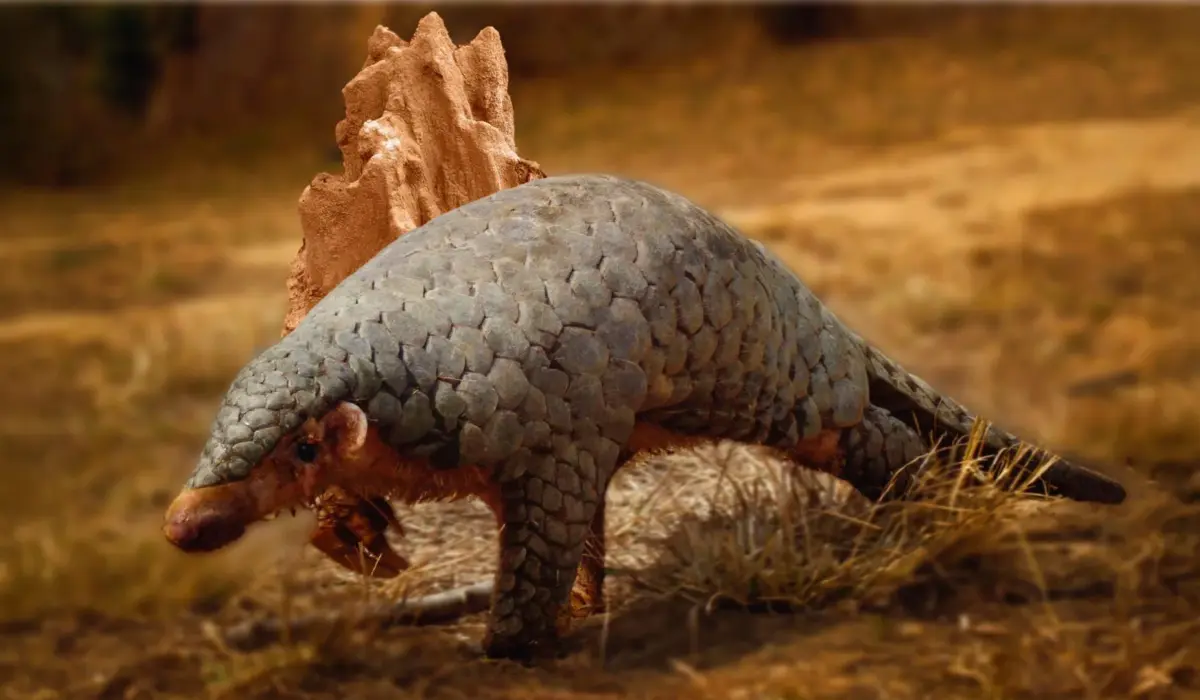
Pangolins, often described as walking pinecones due to their overlapping keratin scales and prehistoric appearance, occupy a precarious position in the modern world. Found exclusively across the tropical and subtropical regions of Africa and Asia, these solitary, insectivorous mammals possess long, powerful tails and large, curved claws engineered for tearing into termite mounds. Yet, these very adaptations have failed to shield them from the most devastating threat they face: human exploitation. Widely considered the most heavily trafficked mammals on Earth, pangolins are hunted relentlessly, pushed to the absolute precipice of extinction to supply illicit global markets.
Amid this conservation crisis, a team of international researchers has confirmed a major breakthrough that reshapes our understanding of these elusive creatures. A previously unrecognized Asian pangolin species—Manis aurita—has been officially verified as inhabiting the Himalayan foothills of Nepal and Northern India. Published in the prestigious journal Communications Biology, the findings bring much-needed clarity to the murky taxonomy of the pangolin family tree. By rigorously mapping evolutionary relationships, geographic boundaries, and distinct physical markers, this landmark study provides conservationists and law enforcement agencies with critical new tools to trace illegal wildlife trafficking, pinpoint poaching hotspots, and refine species-specific protection strategies.
The discovery underscores a profound reality in modern wildlife conservation: taxonomy is not merely an academic exercise. Knowing precisely which species exist, where they live, and how to distinguish them is foundational to saving them. By bridging advanced genomics with historical museum archives, scientists have opened a new frontier in the global battle to pull the world’s most trafficked mammal back from the brink.
Detailed Chronology: Unraveling the Himalayan Pangolin Mystery
The journey to officially recognizing Manis aurita as a distinct and valid species spans nearly two centuries, punctuated by a rapid sequence of taxonomic breakthroughs, historical detective work, and cutting-edge genetic sequencing.
The 2025 Reclassification and the Rule of Priority
The modern chapter of this discovery began unfolding in 2025. Prior to that year, the pangolins inhabiting the mountains of southern and eastern Asia were broadly grouped together under a single umbrella as Chinese pangolins (Manis pentadactyla). However, a separate research team analyzing genetic and morphological data determined that these animals actually comprised two distinct lineages. One group primarily inhabited China proper, while the other was isolated within the rugged Himalayan foothills, spanning regions of Nepal, India, Bhutan, and Myanmar.
To account for this division, the researchers formally named the mountain-dwelling form Manis indoburmanica, or the Indo-Burmese pangolin.
However, in the formal world of biological nomenclature, the naming of species is governed by strict historical regulations—chiefly, the Principle of Priority. This rule dictates that if the same biological entity has been given multiple scientific names over the history of taxonomy, the earliest validly published name takes absolute precedence.
A Decadelong Investigation and a Historical Riddle
While the 2025 classification of M. indoburmanica made waves, a separate, decade-long investigation was already underway. An international consortium of scientists—including researchers from the Field Museum, Guangzhou University, the Guangdong Academy of Forestry, and Nepal Engineering College—had been independently probing pangolin evolution. Their objective was comprehensive: combine DNA evidence with physical, morphological data to resolve the exact number of extant pangolin species and map their evolutionary lineages.
During their deep dive into historical literature and global archives, the team encountered records of Manis aurita, a pangolin species originally described and named in 1836. Over the decades, as taxonomy evolved and specimen data grew scarce, M. aurita had been shunted aside, eventually being reclassified merely as a subspecies of the Chinese pangolin.
This presented the research team with a complex taxonomic riddle. What was the exact relationship between the newly proposed indoburmanica and the long-forgotten aurita? Were they genetically identical, making them the same species, or did they represent separate evolutionary branches?
Ancient DNA from the Natural History Museum
Resolving the puzzle required DNA from the original historical type specimen associated with the 1836 description—a sample preserved thousands of miles away in the archives of the Natural History Museum in London.
Through meticulous collaboration, curators and geneticists at the London museum successfully extracted and sequenced genetic material directly from the historical type specimen of the Nepalese subspecies (aurita). Because this specimen dates back to 1836, the DNA was nearly 190 years old—degraded, fragile, and exceptionally difficult to work with.
Despite these challenges, the results were definitive. When the genetic sequences extracted from the 190-year-old museum specimen were compared with modern samples of Himalayan pangolins, the match was absolute. The animals that had been provisionally named M. indoburmanica in 2025 were, in fact, the exact same species that had been formally recognized and named M. aurita nearly two centuries prior.
Because of the Principle of Priority, Manis aurita reclaimed its status as the correct, valid scientific name for the Himalayan pangolin.
Supporting Context & Metrics: Morphology, Geography, and the Illicit Trade
The confirmation of Manis aurita as a distinct species is not just a win for nomenclature; it carries profound implications for conservation biology, wildlife forensics, and the economics of the illegal wildlife trade.
Morphological and Geographical Distinctions
Distinguishing between closely related pangolin species in the wild or in forensic settings is notoriously difficult, as many share the characteristic scaling and general body plan. However, a closer comparative examination reveals subtle yet distinct differences between the Himalayan pangolin (M. aurita) and its relative, the Chinese pangolin (M. pentadactyla).
According to researchers, M. aurita features a noticeably larger overall body, a longer tail, and smaller external ears. In fact, the species epithet aurita is a direct nod to these distinctive anatomical ear characteristics. Furthermore, the two species are geographically partitioned. Their known native ranges do not overlap, creating distinct ecological boundaries along the Asian sub-continent. For critically endangered animals under immense anthropogenic pressure, understanding these precise geographic limits is paramount.
The Crisis of the Illegal Wildlife Trade
Pangolins are trapped, killed, and smuggled on an industrial scale. Driven primarily by demand in traditional medicine practices—most notably in parts of East Asia where their keratin scales are erroneously believed to possess medicinal properties or act as aphrodisiacs—hundreds of thousands of pangolins have been poached over the past few decades.
Law enforcement agencies and conservationists face a massive logistical hurdle when attempting to intercept this trade. Poachers rarely transport live, intact animals across international borders. Instead, pangolins are slaughtered, their scales stripped from their bodies, dried, and packed into dense, anonymous cargo shipments.
When authorities intercept a container filled with thousands of pounds of loose scales, visual identification becomes nearly impossible. Without knowing the exact species or geographic origin of the confiscated material, tracing the illicit supply chains to specific poaching rings remains an uphill battle.
Revolutionizing Wildlife Forensics and Reintroductions
The genetic methodologies validated in this new study offer a powerful countermeasure against traffickers. Conservation scientists can now extract DNA directly from confiscated scales, run genetic profiles, and accurately match them against the genetic markers of M. aurita, M. pentadactyla, and other Asian and African species.
This capability transforms seized contraband into actionable intelligence. By identifying the specific species present in a shipment, authorities can determine the precise geographic regions where poaching pressure is most acute, allowing law enforcement to deploy resources where they are needed most.
Furthermore, these taxonomic boundaries are vital for captive breeding and reintroduction programs. Historically, well-meaning conservationists risked releasing mismatched species into unfamiliar habitats—such as introducing Chinese pangolins into historical Himalayan ranges—due to a lack of taxonomic clarity. With M. aurita properly defined, reintroduction initiatives can ensure that only native species are returned to their historic ecosystems, maximizing their chances of survival.
The Indispensable Value of Natural History Collections
This scientific leap forward highlights the irreplaceable value of natural history museums. Modern ecological fieldwork often struggles to document animals that are critically endangered, secretive, and heavily hunted, as wild populations are sparse and elusive.
Museum collections act as biological time capsules. They preserve individuals collected centuries ago across vast, undisturbed geographic ranges. By tapping into these historic archives, modern researchers can perform genomic analyses that would be impossible using contemporary wild populations alone, proving that historical infrastructure is just as critical to the future of conservation as modern laboratory technology.
Official Statements from the Research Consortium
The collaborative nature of the study brought together leading experts across multiple continents and disciplines. Key authors shared their perspectives on the significance of the findings:
Anderson Feijó (Negaunee Assistant Curator of Mammals at the Field Museum and Co-Corresponding Author):
"We can’t protect what we do not know, and now that we have confirmed that this other species of pangolin exists, we can use that information to help protect these endangered animals. Compared to the Chinese pangolin, the Himalayan pangolin has a bigger body, a longer tail, and smaller ears. By defining the differences between the species and the limits of where each species is found, we can make better conservation decisions."Narayan Koju (Researcher at Nepal Engineering College, Pokhara University, and First Author):
"This finding marks the culmination of more than five years of research that began in Nepal, where we first documented evidence suggesting that Himalayan pangolins represented a distinct evolutionary lineage. The confirmation of Manis aurita as a valid species demonstrates the importance of long-term research, international collaboration, and museum collections. Most importantly, it provides a strong scientific basis for conservation planning, wildlife forensics, and efforts to protect one of the world’s most trafficked mammals from extinction."Kai He (Researcher at the South China Biodiversity Research Center, Guangzhou University, and Co-Corresponding Author):
"This left us with a core taxonomic riddle: what is the relationship between indoburmanica and aurita? Are they the same species or different species? The ultimate, most thrilling piece of the puzzle came from the Natural History Museum in London. Thanks to their incredible expertise and assistance, the NHM team successfully sequenced the DNA directly from the historical type specimen of the Nepalese subspecies (aurita). This specimen dates back to 1836, making it nearly 190 years old."Yan Hua (Researcher at the Guangdong Academy of Forestry and Co-Corresponding Author):
"This taxonomic clarification provides a crucial scientific basis for combating illegal poaching and lays the groundwork for protecting this cryptic endangered species."
Future Outlook: A New Baseline for Pangolin Preservation
The official validation of Manis aurita marks a turning point in how science approaches the conservation of marginalized, highly persecuted megafauna and medium-sized mammals. As illegal wildlife trade networks grow increasingly sophisticated, conservation strategies must evolve in lockstep.
Moving forward, the genomic frameworks established in this study are expected to be integrated into wildlife forensic laboratories across Asia. By standardizing the DNA barcoding of pangolin scales, enforcement agencies can systematically dismantle trafficking networks by following the genetic trail back to its source. Simultaneously, conservation groups working on the ground in Nepal, India, and surrounding Himalayan nations can tailor their habitat protection policies specifically to the ecological needs of M. aurita, safe in the knowledge that they are managing a distinct, irreplaceable evolutionary lineage.
Ultimately, the revival of Manis aurita serves as a powerful reminder of both the resilience of nature and the ingenuity of science. By peering backward into the archives of the nineteenth century, researchers have forged a sharper, more illuminated path forward—ensuring that the prehistoric pangolin does not become a creature of history, but a survivor of the modern age.