







Executive Overview
The intersection of clinical pathology, patient autonomy, and artificial intelligence is emerging as one of the most highly contested frontiers in modern healthcare. As health systems grapple with systemic staff shortages, rising patient volumes, and an increasingly complex diagnostic landscape, the integration of generative AI and automated decision-support tools is shifting from a theoretical future to an immediate operational reality.
In a landmark roundtable discussion hosted by CAP TODAY publisher Bob McGonnagle, leading laboratory executives and pathologists from the nation’s premier non-profit Integrated Delivery Networks (IDNs)—collectively represented by the Compass Group—gathered to dissect the operational, legal, and clinical ramifications of AI implementation.
The discussion exposed a profound tension at the heart of digital health transformation: while clinical decision-support algorithms promise to optimize laboratory utilization and translate complex diagnostic jargon for anxious patients, they also introduce significant liability risks, threaten to worsen clinician burnout, and risk eroding the essential human touch of medical practice.
As EHR giants like Epic pilot integrated AI systems, pathology leaders are urging the industry to proceed with extreme caution. The core debate is no longer about whether AI will enter the clinical laboratory, but how it will be governed, who will bear the liability for its errors, and how healthcare systems can balance algorithmic efficiency with patient safety and clinical integrity.
The Upstream vs. Downstream AI Paradigm
To understand the integration of artificial intelligence in the laboratory, pathology leaders divide the technology’s application into two distinct clinical phases: upstream decision support (pre-analytical) and downstream patient translation (post-analytical).
                      THE DUAL-PHASE LABORATORY AI PARADIGM

      [ UPSTREAM (Pre-Analytical) ]          [ DOWNSTREAM (Post-Analytical) ]
     ┌─────────────────────────────┐        ┌──────────────────────────────┐
     │  • Clinical Decision Support│        │  • Patient-Friendly Reports  │
     │  • Pattern Recognition      │  ───>  │  • Natural Language Summaries│
     │  • Identifying Underuse     │        │  • Automated Portal Insights │
     │  • Optimizing Test Orders   │        │  • Passive Background Chat   │
     └─────────────────────────────┘        └──────────────────────────────┘
                    │                                      │
                    ▼                                      ▼
        Goal: Prevent missed diagnoses          Goal: Demystify complex data
Upstream: Solving the Epidemic of Diagnostic Underuse
Historically, efforts around laboratory utilization have focused almost exclusively on reducing "overuse"—the unnecessary ordering of redundant or obsolete tests. However, Dr. Gaurav Sharma, System Vice Chair of Clinical Pathology at Henry Ford Health in Detroit, argues that "underuse" may represent an even greater threat to patient outcomes.
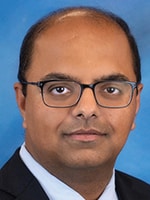
"Order sets do not always capture the full complexity of a patient," Dr. Sharma observed. "Sometimes one or two additional tests can help solve the medical mystery."
Dr. Sharma, who serves on Henry Ford Health’s medical group AI committee, highlighted an ongoing Epic pilot designed to run silently in the background of the Electronic Health Record (EHR). When a clinician opens a patient’s chart, the AI scans historical laboratory results, imaging findings, and prior diagnoses, searching for subtle, multi-system patterns that a human provider might overlook.
By acting as an upstream navigator, the AI can nudge clinicians toward ordering highly specific diagnostic workups that are standard of care but frequently omitted. For example, if a surgical pathology report indicates a specific malignancy, the AI could alert both the oncologist and pathologist 30 days post-operation if the corresponding molecular or genetic testing has not yet been ordered. This proactive approach closes critical gaps in care, ensuring patients receive targeted therapies sooner.
Downstream: Demystifying the Laboratory Report
The downstream application of AI focuses on the patient experience. Historically, patients have accessed their laboratory and pathology results via patient portals like MyChart, only to be confronted with a wall of dense medical terminology, reference ranges, and unexplained numerical values.
The promise of downstream AI lies in its ability to synthesize these complex diagnostic data points into clear, empathetic, and plain-language summaries. Rather than merely displaying an elevated creatinine or a highly technical biopsy description, an integrated AI chatbot could explain what the values mean in layperson’s terms.
However, translating clinical raw data into patient-facing narratives introduces a host of operational and ethical challenges, leading many pathology leaders to question whether current AI models are mature enough to handle such sensitive communications.
Detailed Chronology: The Roundtable Debate
The CAP TODAY roundtable brought together diverse viewpoints, mapping out a spectrum of institutional strategies and skepticism regarding AI’s current capabilities.
                             THE SPECTRUM OF AI ADOPTION

     CONSERVATIVE                                                PROGRESSIVE
     [ Cleveland Clinic ]  ───>  [ Geisinger ]  ───>  [ Northwell Health ]
     • Curated Reference         • "Proceed with      • In-House Deterioration Models
     • Out-of-Portal Links         Caution"           • Radiology AI Translation Pilots
     • Clinician-Centric         • Focus on Liability • Direct Patient-Engagement Focus
Cleveland Clinic’s Conservative, Portal-Centric Strategy
At the Cleveland Clinic, the approach to patient-facing laboratory results remains deeply rooted in human-curated educational materials rather than generative AI summaries. Dr. Walter Henricks, Vice Chair of the Department of Pathology and Laboratory Medicine, detailed the system’s deliberate separation between raw diagnostic data and patient interpretation.
"Our medical writers have been active in building up reference material on the Clinic’s website, where you can find material on almost any medical condition geared to patient understanding," Dr. Henricks explained. Within the MyChart portal, patients are provided with external links to these verified, static reference materials, making it clear that they are leaving the secure portal to review general educational information.
This strategy protects the patient-physician relationship. When dealing with primary surgical pathology reports, Cleveland Clinic deliberately avoids automated, non-physician explanations. The reports are written strictly for the ordering provider.
"We don’t want to get in the way of what their treating physician… is telling them directly," Dr. Henricks noted. "Those relationships are important, especially with regard to interpreting it in the context of what it means to the patient."
Geisinger’s Warning on Liability and the "Pennsylvania Precedent"
Diana Kremitske, Vice President of Laboratory Operations at Geisinger’s Diagnostic Medicine Institute, urged the panel to "proceed with caution," raising critical questions about legal liability and clinical context.

Kremitske highlighted a landmark legal case in Pennsylvania involving an AI chatbot tool that generated automated clinical advice. Because the output appeared to be authored by a licensed medical professional, it sparked litigation over unauthorized medical practice and clinical negligence.
"We have to be careful about clinical interpretation by a tool," Kremitske warned. "There could be liability ramifications if it’s clinical interpretation by a tool without a physician overseeing or doing the interpretation… Interpreting lab results is to be based on the context of the patient."
For Geisinger, the primary role of AI must remain focused on operational efficiency and error reduction, guided strictly by pathologists who understand the nuances and limitations of the algorithms.
Northwell Health’s Shift to Custom, In-House Models
Representing Northwell Health, Dr. Nkem Okoye and Dr. Dwayne Breining shared their organization’s pivot away from commercial, out-of-the-box AI solutions in favor of proprietary, in-house development.
The decision was driven in part by the industry-wide failure of commercial algorithms, such as Epic’s early sepsis detection model, which suffered from high false-alarm rates and contributed significantly to clinical alarm fatigue.
"Northwell is investing in its in-house models," Dr. Okoye reported. Northwell investigators are currently piloting a proprietary "clinical deterioration model" across several hospital sites. This model integrates real-time laboratory data with vital signs and clinical chart notes to predict patient decline. By leveraging internal clinical expertise to train and refine the model, Northwell hopes to achieve superior sensitivity and specificity compared to commercial EHR add-ons.
Supporting Context & Metrics: The Reality of Burnout and Labor Shortages
To evaluate the potential of AI in clinical laboratories, it must be viewed against the backdrop of severe labor shortages and systemic clinician burnout.
The Oncologist and Pathologist Deficit
The clinical demand for pathology and oncology services is vastly outstripping human capacity. At recent major medical conferences, such as the American Society of Clinical Oncology (ASCO) annual meeting, health systems have set up dozens of recruitment booths in desperate bids to attract scarce oncological talent.
- Oncology Burnout: Oncologists are increasingly overwhelmed, managing not only highly complex therapeutic regimens but also around-the-clock patient and family inquiries via online portals.
- Pathology Shortage: The pathology workforce is facing a demographic cliff, with a high percentage of practitioners approaching retirement age and fewer medical graduates entering the field.
The Hidden Cost of "Uncompensated Activity"
While patient-friendly pathology reports are highly desirable, creating and validating them requires substantial clinical effort. Dr. Guillermo Martinez-Torres, President and Chief Physician Executive at NorDx, noted that the College of American Pathologists (CAP) has tasked working groups, led by Dr. Diana Cardona, with designing standardized, patient-friendly pathology templates.
However, Dr. Henricks pointed out a harsh economic reality: "Every activity comes with effort and a cost. There’s no reimbursement for that, so a pathologist’s time and effort there is uncompensated activity."
In an era of declining clinical reimbursements and rising operational costs, asking depleted pathology departments to manually translate or verify AI-generated patient reports is economically unsustainable.
The Cognitive Pitfalls of Eliminating Mundane Tasks
One of the most striking counter-narratives during the roundtable came from Dr. Jeremy Hart, Assistant Vice President of Laboratory Services at St. Elizabeth Healthcare. Dr. Hart challenged the prevailing industry assumption that automating "mundane" tasks is always beneficial for clinical well-being.

"AI tends to remove many of the mundane tasks, but as humans, we need mundane tasks," Dr. Hart observed. "If you remove those, then all you have is complex work, and your brain doesn’t have a chance to recover from that complex work."
This perspective highlights a major design flaw in current clinical AI strategies: by optimizing for maximum intellectual throughput, systems risk accelerating cognitive exhaustion, leaving pathologists with a continuous stream of high-stakes, highly complex diagnostic decisions without any cognitive "breather" periods.
Official Statements & Institutional Perspectives
The Case for Empathetic Automation
Despite the risks, some leaders believe AI can actually improve patient-hospital relationships. Dr. Dwayne Breining of Northwell Health pointed to peer-reviewed studies showing that AI-enabled chatbot interfaces often score higher on patient engagement and empathy metrics than rushed human clinicians.
"The AI chatbot-enabled models are outscoring traditional human practice models on things like engagement and empathy. They’re programmed to be engaging and friendly. Maybe we can use this in creating a friendlier patient-to-hospital and patient-to-laboratory interface than we have."
— Dr. Dwayne Breining, Executive Director, Northwell Health Laboratories
Northwell is currently exploring partnerships with third-party vendors—modeled after successful implementations in radiology—to passively translate complex synoptic pathology reports into accessible, layperson-level summaries in the background, without adding to the clinical workload.
The Pathologist-Centric Efficiency Mandate
For other leaders, any AI implementation must focus squarely on relieving the administrative burden on physicians before attempting to address direct patient communication.

"I’m not sure I have pathologists who are ready to devote time to building and checking these tools to make sure the AI makes sense for patients. Pathologists want a tool that turns what they say into a synoptic template so they don’t have to go through the clicks… I need these AI tasks to give my pathologists well-being and help them control their work-life balance."
— Dr. Moira Larsen, Physician Executive Director, MedStar Medical Group Pathology
Comparative Analysis of Institutional AI Strategies
| Institution | Core AI Strategy | Target Audience | Primary Software Engine | Key Concerns / Limitations |
|---|---|---|---|---|
| Henry Ford Health | Upstream Decision Support & Pattern Recognition | Clinicians & Ordering Providers | Epic-Integrated Pilots | Avoidance of auto-ordering; clinical validation |
| Cleveland Clinic | Curated Reference Portals & Out-of-Portal Links | Patients & General Public | Human Medical Writers (Static Content) | Physician-patient relationship protection; uncompensated clinical labor |
| Northwell Health | Custom In-House Deterioration Models & Passive Radiology Translation | Clinicians & Patients | Proprietary In-House Algorithms & Third-Party Translation Vendors | High false-alarm rates in standard commercial vendor models |
| Geisinger | Strict Pathologist-Guided Operational Automation | Laboratory Staff & Technicians | Vendor-Assisted Diagnostics | Legal liability; lack of clinical context in automated chatbots |
| MedStar Health | Administrative and Diagnostic Workflow Reduction | Pathologists (Internal) | Synoptic Templating & Quantitative IHC Tools | Pathologist burnout; lack of physician bandwidth for tool validation |
Future Outlook
The consensus among Compass Group laboratory leaders is clear: the integration of artificial intelligence into pathology and laboratory medicine is inevitable, but its trajectory must be carefully managed.
Over the next three to five years, the industry is likely to see a phased rollout of these technologies:
- Phase 1: Silent Upstream Optimization (Immediate-Term): AI will operate primarily in the background of EHR systems, serving as an administrative safety net to identify missed diagnostic opportunities, recommend standard-of-care molecular testing, and flags clinical deterioration.
- Phase 2: Pathologist Workflow Support (Short-Term): AI tools will focus on reducing administrative tasks, such as automating quantitative immunohistochemistry (IHC) analysis, pre-populating synoptic templates, and eliminating unnecessary EHR clicks.
- Phase 3: Governed Patient-Facing Translation (Medium-Term): Once legal liability frameworks are established and natural language processing models achieve higher clinical accuracy, health systems will gradually introduce validated, passive translation tools to help patients understand their diagnostic reports.
Ultimately, the successful deployment of AI in laboratory medicine will depend on collaboration. Pathologists must remain actively involved in designing, training, and governing these algorithmic tools. By combining AI’s analytical power with the clinical judgment of experienced pathologists, healthcare systems can build a safer, more efficient, and more compassionate diagnostic environment for patients and providers alike.