








Executive Overview
In a milestone achievement for modern astrophysics, an international research team has definitively identified a natural particle accelerator within our Milky Way galaxy capable of propelling protons to mind-boggling, ultra-high energy levels. Published in The Astrophysical Journal on July 16, 2026, the breakthrough resolves a decades-long cosmic mystery regarding the origin of galactic cosmic rays—extremely fast-moving subatomic particles that constantly traverse interstellar space and profoundly influence the chemical and energetic dynamics of our galaxy.
The newly confirmed cosmic engine, cataloged as LHAASO J1912+1014u, is a rare proton PeVatron. Located roughly in the constellation Aquila near the brilliant star Altair (a prominent vertex of the famous Summer Triangle), this object accelerates protons to energies exceeding one quadrillion electron volts ($10^15$ eV, or one peta-electron-volt [PeV]). To put this into perspective, these natural cosmic structures easily dwarf the capabilities of humanity’s most powerful scientific apparatus—the Large Hadron Collider (LHC) on the Franco-Swiss border. While the LHC can accelerate protons to near-light speeds, LHAASO J1912+1014u and its elusive kin operate on an entirely different scale, harnessing colossal astrophysical forces to produce particles carrying energies that physicists have struggled to replicate or fully account for on Earth.
Achieving this breakthrough required an unprecedented multi-instrument campaign. By synthesizing data from three major ground- and space-based observatories—spanning radio waves, X-rays, and multi-band gamma rays—the researchers successfully distinguished proton-induced signals from confusing electron-driven emissions. Led by Associate Professor Tsunefumi Mizuno of Hiroshima University’s Hiroshima Astrophysical Science Center, alongside a multidisciplinary cohort of Japanese, European, and American institutions, the team’s findings not only validate LHAASO J1912+1014u as a true PeVatron but also establish a robust observational template for tracking down dozens of similar extreme accelerators hidden across the Milky Way.
Detailed Chronology of the Discovery
The journey toward confirming LHAASO J1912+1014u as a genuine proton PeVatron is a testament to the evolution of high-energy astrophysics over the past several decades. It represents a meticulous process of elimination, technological advancement, and international collaboration.
1. The Genesis of High-Altitude Gamma-Ray Astronomy
For generations, astronomers understood that cosmic rays—consisting predominantly of protons (roughly 90%), alongside a smaller fraction of electrons and heavier atomic nuclei—bombard Earth constantly. However, pinpointing the specific celestial "nurseries" or engines generating these ultra-fast particles proved extraordinarily difficult. Because cosmic rays are electrically charged, their trajectories are deflected by interstellar magnetic fields as they travel through the Milky Way, effectively erasing the map of where they originated.
To trace them, astrophysicists look for secondary emissions: gamma rays. When extremely energetic protons smash into ambient interstellar gas clouds near their source, they decay into neutral pions, which in turn instantly decay into gamma rays. These high-energy photons travel in straight lines unaffected by magnetic fields, pointing directly back to the cosmic accelerators.
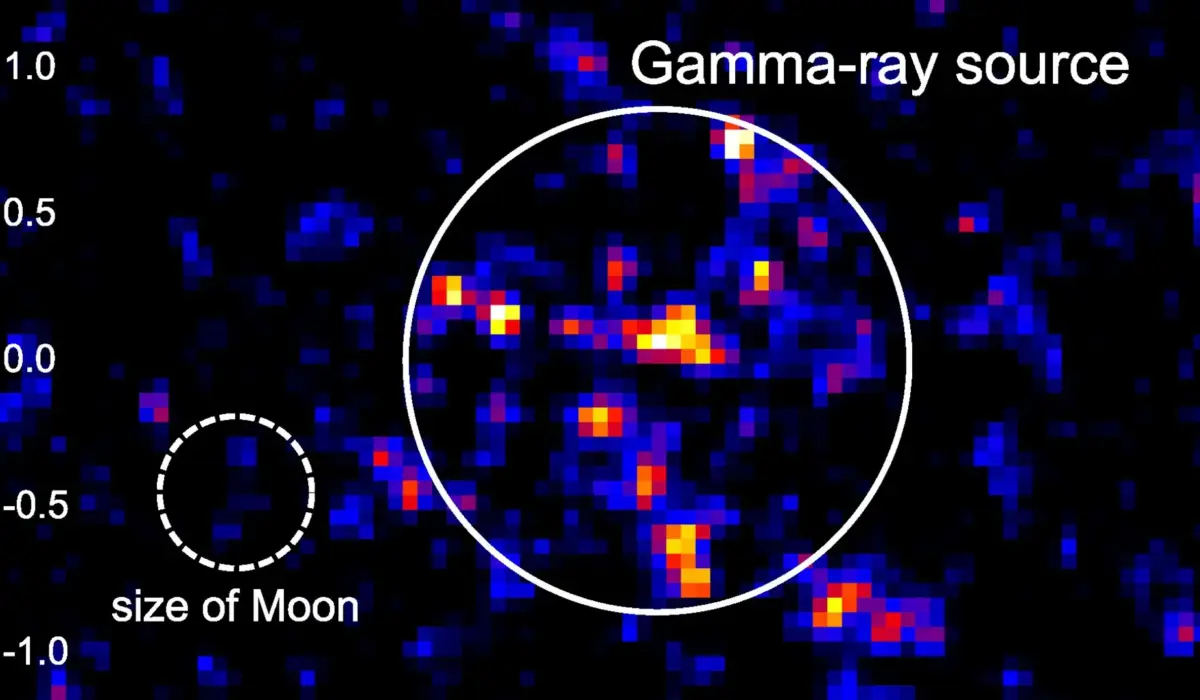
Beginning in 1990, the Tibet AS gamma experiment—a collaborative effort primarily led by Japanese and Chinese institutions—began detecting high-energy gamma rays from the galactic plane. Decades later, it was joined by China’s gargantuan Large High Altitude Air Shower Observatory (LHAASO). Together, these facilities identified dozens of celestial gamma-ray sources exhibiting energies soaring above 0.1 PeV. Among them was LHAASO J1912+1014u, discovered in 2024 and initially categorized as a potential supernova remnant or pulsar wind nebula.
2. The Ambiguity of Ultra-High-Energy Signatures
Despite locating these extraordinary gamma-ray sources, researchers faced a stubborn observational hurdle. Gamma rays with energies below the PeV range can be produced by two entirely different culprits:
- Accelerated Protons: Colliding with surrounding gas to yield gamma rays whose energies are typically about one-tenth of the parent proton’s energy.
- Accelerated Electrons: Scattering off ambient starlight or cosmic microwave background photons via inverse Compton scattering, or producing bremsstrahlung radiation.
Because earlier ground-based arrays like LHAASO and Tibet AS gamma possessed limited spatial resolution at certain wavelengths, they could not definitively rule out whether the detected gamma rays were generated by electrons or protons. Electrons can also be accelerated to extreme energies (often referred to as leptonic scenarios), making it dangerously easy for astrophysicists to misidentify a source.
3. Bundling the "Three Arrows": The Multiwavelength Breakthrough
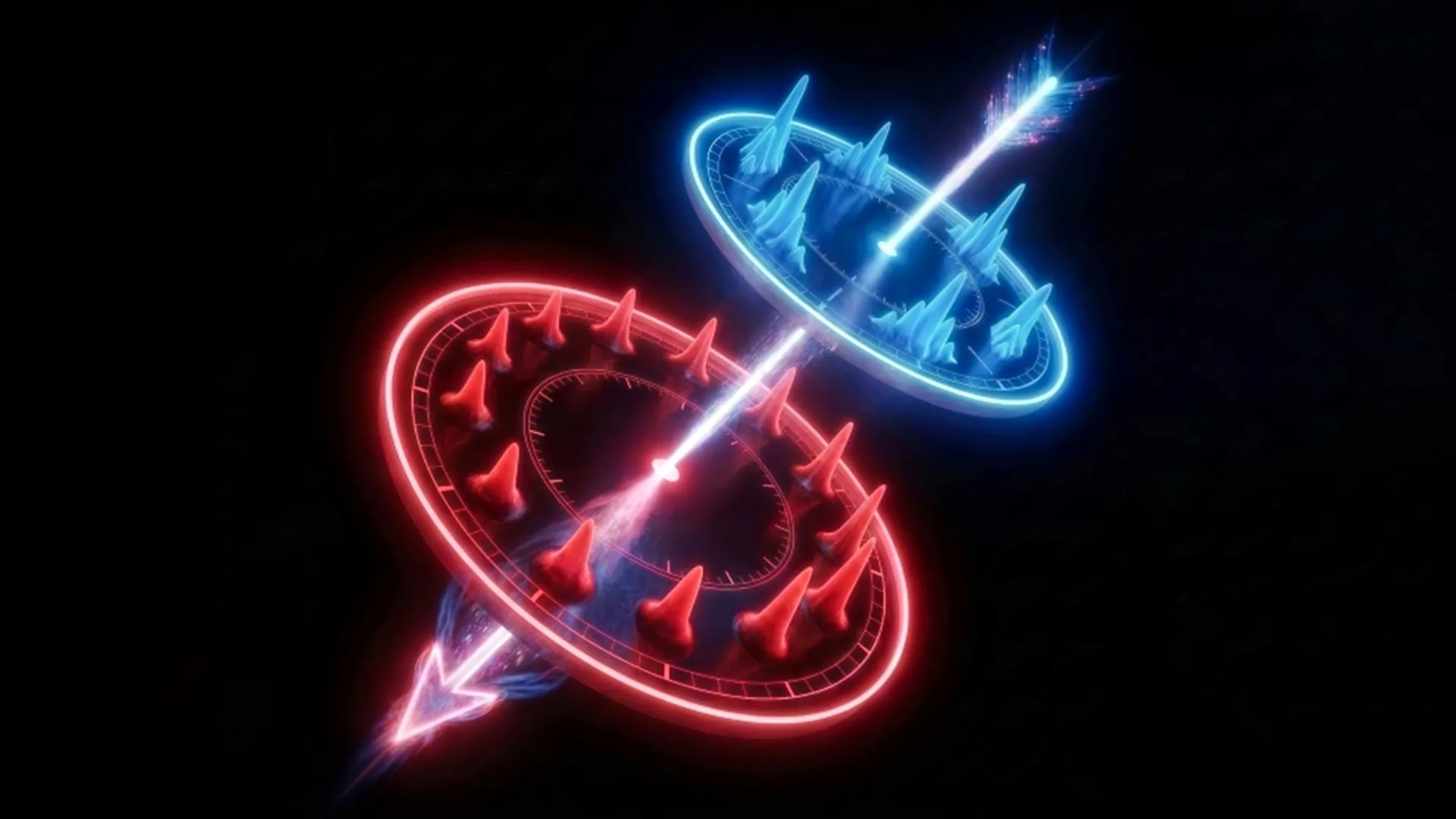
To pierce through this ambiguity, Dr. Tsunefumi Mizuno and his team adopted a comprehensive multiwavelength approach. Drawing on an old Japanese proverb—"One arrow is easy to break, but three arrows bundled together are not"—the researchers united data streams from three distinct, highly complementary observatories:
- Fermi Large Area Telescope (Fermi-LAT): A NASA-led space gamma-ray telescope (co-developed and operated with heavy contributions from Hiroshima University) that captured vital high-energy data down to the giga-electron-volt (GeV) range.
- FUGIN (FOREST Unbiased Galactic plane Imaging survey): A Japanese-led radio survey utilizing the Nobeyama 45-meter telescope, which mapped the distribution and density of cold interstellar gas in the region.
- NASA’s Chandra X-ray Observatory: Provided ultra-sharp X-ray imaging to check for diffuse leptonic emissions at lower energies.
By combining these instruments with the tera-electron-volt (TeV) data captured by LHAASO and other ground arrays, the research team constructed a seamless, continuous spectrum running across the entire electromagnetic landscape. This multi-instrument synergy exposed three decisive signatures that utterly dismantled any competing electron-based hypotheses, cementing LHAASO J1912+1014u’s status as a bona fide proton PeVatron.
Supporting Context & Metrics
Understanding the sheer scale of a proton PeVatron requires looking closely at the physical metrics, energy units, and environmental interactions that govern these stellar powerhouses.
Decoding the Scale of Cosmic Energy
In astrophysics, particle energies are universally measured in electron volts (eV)—the kinetic energy gained by a single unbound electron when it accelerates through an electrostatic potential difference of one volt.
- Standard Particles: Normal thermal particles in space possess fractions of an eV.
- Man-Made Accelerators: The Large Hadron Collider achieves proton beam energies in the range of tera-electron-volts ($textTeV = 10^12$ eV).
- PeVaters: A peta-electron-volt ($textPeV = 10^15$ eV) represents one quadrillion electron volts. A single proton carrying 1 PeV of energy possesses macroscopic kinetic energy equivalent to a professional tennis ball served at high speed, packed entirely into a subatomic particle roughly $10^-15$ meters across.
The Three Pillars of Proof for LHAASO J1912+1014u
The paper published in The Astrophysical Journal on July 16, 2026, outlined three airtight lines of evidence derived from their multi-observatory data modeling:
- A Smooth, Unbroken Gamma-Ray Spectrum: The observed gamma-ray emissions extended seamlessly across a massive dynamic range—from over 100 trillion electron volts down to 400 million electron volts. According to Mizuno, if electrons were primarily driving the emission, the spectral energy distribution would display physical cutoffs or inflection points inconsistent with this smooth continuum, heavily pointing instead toward the decay products of accelerated protons.
- Spatial Correlation with Interstellar Gas: Utilizing radio data from the FUGIN survey, the researchers mapped the local clouds of atomic and molecular gas in the direction of the constellation Aquila. The spatial distribution of the low-energy (GeV) gamma rays measured by Fermi-LAT matched the contours of this interstellar gas with remarkable precision. This morphological alignment is the classic "smoking gun" for hadronic cosmic rays crashing into ambient matter.
- Faint Diffuse X-Ray Emission: If LHAASO J1912+1014u were powered predominantly by ultra-relativistic electrons, those electrons would inevitably produce intense synchrotron radiation and X-ray signatures as they interacted with local magnetic fields. However, observations from NASA’s Chandra X-ray Observatory revealed only very weak, faint diffuse X-ray emissions, effectively ruling out a dominant leptonic accelerator and reinforcing the protonic interpretation.
Official Statements & International Collaboration
The confirmation of LHAASO J1912+1014u represents a high-water mark for international scientific cooperation. The endeavor brought together institutions spanning Asia, North America, and Europe, reflecting the global nature of modern big science.
"This immense energy makes cosmic rays important in astronomy and astrophysics," stated Dr. Tsunefumi Mizuno, associate professor at Hiroshima University’s Hiroshima Astrophysical Science Center and lead corresponding author of the study.
Elaborating on the significance of the find, Mizuno noted: "The highest energy of galactic cosmic rays can reach and exceed one quadrillion electron volts, or a peta-electron-volt (PeV). Finding a cosmic-ray proton accelerator above that PeV level, called a proton PeVatron, is one of the most exciting topics in modern astrophysics, and we identified one such object previously known as LHAASO J1912+1014u."
Reflecting on the collaborative nature of the discovery via the traditional Japanese proverb regarding the strength of bundled arrows, Mizuno emphasized that no single telescope or national program could have unlocked this secret alone. The convergence of space-based gamma-ray detection (Fermi-LAT), ground-based air shower arrays (LHAASO and Tibet AS gamma), radio astronomy (FUGIN/Nobeyama), and X-ray astronomy (Chandra) was mandatory to build the complete multiwavelength framework.
Co-Author and Institutional Contributions
The landmark study was co-authored by an elite group of researchers from across Japan, including:
- Naoto Nakahara (Hiroshima University)
- Hidetoshi Sano & Takeru Murase (Gifu University)
- Tomohiko Oka (Julius-Maximilians-Universität Würzburg)
- Hiromasa Suzuki (Miyazaki University)
Furthermore, the broader Fermi LAT Collaboration acknowledged vital, ongoing financial and logistical support from a coalition of global space agencies and funding bodies. These include the National Aeronautics and Space Administration (NASA) and the Department of Energy (DOE) in the United States; the Commissariat à l’Energie Atomique (CEA) and the Centre National de la Recherche Scientifique (CNRS) in France; the Agenzia Spaziale Italiana (ASI) and the Istituto Nazionale di Fisica Nucleare (INFN) in Italy; Japan’s Ministry of Education, Culture, Sports, Science and Technology (MEXT), High Energy Accelerator Research Organization (KEK), and Japan Aerospace Exploration Agency (JAXA); as well as the K. A. Wallenberg Foundation, the Swedish Research Council, and the Swedish National Space Board. Additional analytical backing was provided by the Istituto Nazionale di Astrofisica (INAF) in Italy and the Centre National d’Études Spatiales (CNES) in France.
Future Outlook: The Hunt for More PeVatrons
With LHAASO J1912+1014u firmly secured in the catalog of confirmed proton PeVatrons, the landscape of galactic cosmic-ray research stands transformed. For decades, theorists debated whether our galaxy possessed enough active engines capable of pushing particles up to the PeV threshold. This discovery proves unequivocally that the Milky Way is actively manufacturing these extreme energies today.
However, LHAASO J1912+1014u is almost certainly not a solitary anomaly. Current surveys by LHAASO and other next-generation facilities have flagged dozens of additional candidate sources scattered across the galactic plane that exhibit high-energy gamma-ray signatures hinting at PeV capabilities.
Next Steps for the Research Community
- Comprehensive Candidate Audits: Mizuno and his international colleagues are already laying the groundwork to apply their multiwavelength "three-arrow" modeling strategy to the remaining dozens of candidate PeVatrons in the Milky Way. By systematically combining Fermi-LAT, FUGIN, Chandra, and ground-based TeV data for each candidate, the team aims to determine how many of these objects are genuine proton PeVatrons.
- Pinpointing the Astrophysical Engines: While confirming that LHAASO J1912+1014u accelerates protons to PeV energies is a massive triumph, researchers are now diving deeper into the specific characteristics of the accelerated particles to reverse-engineer the exact nature of the engine powering them. Whether driven by ancient supernova remnants colliding with dense molecular clouds, powerful stellar winds, or exotic magnetic structures, understanding the exact mechanism will shed light on the violent history and life cycle of our galaxy.
- Implications for Extragalactic Physics: What is learned about local PeVatrons in the Milky Way directly informs our understanding of cosmic accelerators across the broader universe, including active galactic nuclei (AGN) and gamma-ray bursts (GRBs) that produce particles reaching even more astronomical ultra-high energies.
As multi-messenger and multiwavelength astronomy continue to mature, humanity is steadily lifting the veil on the most energetic phenomena in the cosmos. The confirmation of LHAASO J1912+1014u marks not the end of a quest, but the thrilling opening chapter of a new era in high-energy astrophysics—one where the hidden particle accelerators of our galactic backyard are finally brought to light.