







Executive Overview
The landscape of modern dentistry is on the precipice of a profound paradigm shift. For decades, dental patients requiring permanent restorations—such as crowns, bridges, and veneers—have faced a recurring logistical friction point: the dreaded multi-visit procedure or the reliance on less durable materials to achieve same-day results. While zirconia has long reigned as the undisputed gold standard for permanent dental work due to its unmatched biocompatibility, strength, and durability, its application has historically been bound to subtractive manufacturing techniques like milling.
Attempts to harness the efficiency and precision of 3D printing for zirconia have repeatedly collided with a stubborn bottleneck: post-processing physics. Specifically, the removal of binding polymers—a stage known as debinding—traditionally demands anywhere from 20 to 100 hours of painstaking thermal management to prevent structural catastrophic failure. For a clinical environment, a four-day turnaround effectively kills the viability of chair-side, same-day delivery.
Now, a team of pioneering researchers at the University of Texas at Dallas (UT Dallas), supported by critical backing from the National Science Foundation (NSF) and the U.S. Air Force Office of Scientific Research, has shattered this technological barrier. Published in the journal Ceramics International, a breakthrough methodology developed by the UT Dallas team slashes the debilitating debinding process from days down to under 30 minutes. By integrating hyper-efficient heat transfer systems, specialized porous graphite felt, and advanced vacuum extraction, the researchers have compressed the entire 3D-printed zirconia manufacturing timeline into a matter of hours.
This innovation promises to usher in a new era of chair-side dentistry, combining the superior mechanical integrity of zirconia with the rapid, highly personalized, and waste-reducing attributes of additive manufacturing. As the project transitions toward commercialization through a strategic partnership with Pan-AM Dental Laboratory, 3DCeram Sinto Inc., and clinical experts, the dental industry stands on the threshold of a comprehensive operational evolution.
Detailed Chronology
To fully understand the gravity of the UT Dallas breakthrough, one must examine the historical trajectory of dental restoration manufacturing and the sequential hurdles the research team had to systematically dismantle.
The Evolution of Dental Restorations
For generations, dental restorations were crafted almost entirely through manual labor, casting metals and ceramics by hand. The late 20th and early 21st centuries saw the introduction of Computer-Aided Design and Computer-Aided Manufacturing (CAD/CAM) systems. This digital revolution introduced milling machines to dental practices and laboratories.
Milling allowed practitioners to carve restorations from pre-condensed, solid blocks of ceramic or zirconia. While milling represented a massive leap forward in precision, it retained inherent systemic flaws. Subtractive manufacturing inevitably generates substantial material waste as blocks are ground down to dust. Furthermore, the mechanical stress of high-speed milling frequently induces micro-cracking within the crystalline structure of the restoration. These microscopic fissures can propagate over time under the immense compressive forces of human mastication, leading to premature clinical failure. Additionally, milling imposes geometric restrictions; complex undercuts and highly customized internal contours are nearly impossible to carve out of a solid block.
The Promise and Pitfalls of Additive Manufacturing
In response to the limitations of milling, researchers and engineers turned their attention toward 3D printing, or additive manufacturing. 3D printing builds restorations layer by layer, matching the patient’s exact anatomical geometry with microscopic precision, dramatically reducing material waste, and allowing for optimized internal fluid dynamics and customized color gradients.
However, a severe materials science compromise emerged. To achieve same-day service using existing 3D printing technology, dental practices had to rely on ceramic-infused resins. While these printed resin crowns could be produced quickly, they lacked the robust mechanical properties, wear resistance, and longevity of true, all-ceramic zirconia. True zirconia required a completely different processing pipeline—one that could not be executed within the span of a single patient appointment.
Unlocking the Bottleneck: The UT Dallas Breakthrough
Recognizing that the core limitations of 3D-printed zirconia were entirely logistical and thermal rather than chemical, the UT Dallas team—led by Dr. Majid Minary, professor of mechanical engineering in the Erik Jonsson School of Engineering and Computer Science—embarked on a focused mission to redesign the post-printing environment.
The research team focused their efforts on the two mandatory post-processing steps that occur after a zirconia object emerges from a 3D printer: debinding and sintering.
- The Binding Problem: During the 3D printing process, microscopic zirconia particles are held together in the desired shape by a polymer resin matrix. Before the object can become a hard, functional crown, this resin must be completely eliminated.
- The Thermal Dilemma: Traditionally, debinding required a slow, agonizingly cautious thermal ramp-up lasting between 20 and 100 hours. If the heat was applied too rapidly, the polymer resin would instantly flash into gas. Trapped inside the dense, forming ceramic structure, this expanding gas would generate localized pressure pockets, resulting in catastrophic cracking and fracturing of the crown.
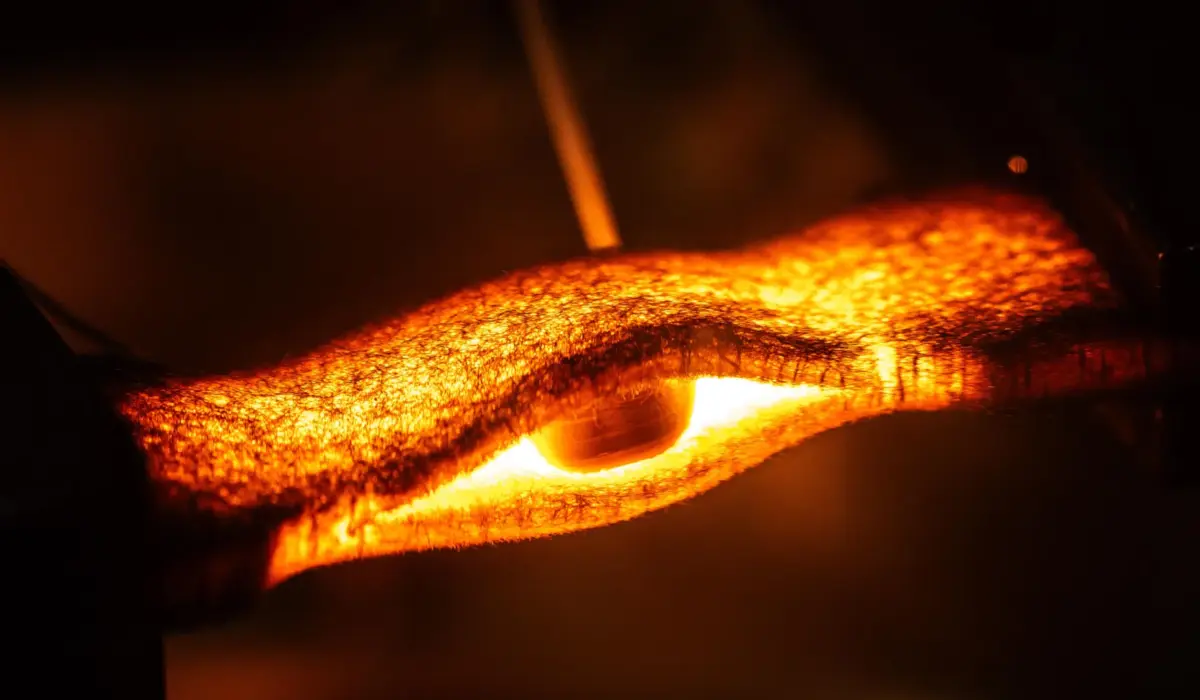
The UT Dallas innovation, detailed in Ceramics International, solved this thermodynamic dilemma. By engineering a system that combines enhanced heat transfer mechanics with porous graphite felt—capable of withstanding and operating at temperatures exceeding 2,550 degrees Fahrenheit—the researchers created a controlled environment where expanding gases can safely and rapidly escape. Simultaneously, an integrated vacuum system actively evacuates these released gases from the immediate micro-environment, preventing pressure buildup.
This elegant synthesis of materials science, thermal engineering, and vacuum dynamics reduces the traditional 100-hour debinding process to a mere 30 minutes, collapsing the timeline of permanent zirconia production into a single clinical visit.
Supporting Context & Metrics
The quantitative metrics driving this technological transition underscore why the UT Dallas breakthrough represents a watershed moment for clinical dentistry and materials engineering.
Comparative Metrics: Manufacturing Methodologies
| Performance Metric | Traditional Milling (Zirconia) | Standard Ceramic Resin 3D Printing | UT Dallas Rapid 3D-Printed Zirconia |
|---|---|---|---|
| Material Composition | Solid Zirconia Block | Polymer-Ceramic Composite | 100% High-Density Zirconia |
| Time to Completion | Hours (plus lab shipping) | Same-Day (Minutes to Hours) | Same-Day (Under a few hours total) |
| Durability & Strength | High (Gold Standard) | Moderate (Prone to wear) | High (Equivalent to Gold Standard) |
| Material Waste | High (Subtractive grinding) | Low (Additive deposition) | Low (Additive deposition) |
| Design Complexity | Restricted by milling burs | High (Layer-by-layer freedom) | High (Intricate anatomical contours) |
| Post-Processing Bottleneck | Sintering risks micro-cracks | Light-curing required | Sub-30-Minute Rapid Debinding |
The Clinical Anatomy of a Dental Restoration
To appreciate the impact of this speed increase, one must understand the clinical context of the devices being produced. Dental crowns serve as structural protective casings, entirely encasing a compromised tooth that has suffered extensive structural degradation, fractures, or severe decay following a root canal. Beyond single-tooth protection, crowns serve as foundational abutments for dental bridges—prosthetic apparatuses anchored to adjacent teeth to span an edentulous space where a tooth has been lost.
When a patient sits in a dental chair requiring a crown, every additional day waiting for the permanent restoration exposes the vulnerable, prepared tooth structure to bacterial infiltration, sensitivity, and potential movement of neighboring teeth. Temporary crowns are routinely used as a stopgap, but they frequently dislodge, crack, or leak, leading to emergency return visits.
By compressing the fabrication timeline of the ultimate restorative material—zirconia—into a single chair-side session, clinicians eliminate the need for temporary restorations, remove third-party dental laboratory lag times, cut shipping costs, and dramatically elevate the overall standard of patient care.
Official Statements & Industry Perspectives
The collaborative nature of this breakthrough highlights a concerted push from academia, industry titans, and clinical practitioners to modernize dental manufacturing.
Dr. Majid Minary, the corresponding author of the study and professor of mechanical engineering at UT Dallas, emphasized the transformative patient-centric benefits of the technology:
"We are excited to be advancing the commercialization of chair-side 3D-printed, all-ceramic zirconia permanent dental restorations," said Dr. Minary. "Because the crowns can be custom-printed for each patient on the same day, this approach offers greater personalization, faster treatment and the convenience of receiving a permanent restoration in a single visit."
Elaborating on the mechanical obstacles that previously sidelined 3D-printed zirconia, Dr. Minary pointed directly to the thermodynamics of polymer removal:
"Debinding has been the bottleneck in the process. It must be done very slowly. If you speed it up, the polymer being burned off turns into gas, and if that gas cannot escape, the crown may crack or fracture. A debinding time of 20 to 100 hours is not practical for same-day dental service. As a result, 3D-printed permanent zirconia restorations are not yet commercially available."
Regarding the mechanics of the newly engineered thermal apparatus, Dr. Minary explained the synergy of the system:
"The combination of all of these features is what makes it work. With our technology, if a practitioner wants to offer a 3D-printed zirconia crown chair-side, they could provide it to a patient within just a few hours."
Collaborative Leadership and Academic Contributors
The journey from benchtop research to commercial viability requires a multidisciplinary ecosystem. The UT Dallas team has deliberately forged partnerships across the manufacturing and clinical sectors:
- Pan-AM Dental Laboratory: Partnering to test, scale, and validate the industrial application of the technology.
- 3DCeram Sinto Inc. (Grand Ledge, Michigan): Bringing high-level additive manufacturing expertise to the commercialization pipeline.
- Dr. Amirali Zandinejad: An Arlington, Texas-based prosthodontist and former associate professor at the Texas A&M University College of Dentistry, providing direct clinical insight and translational oversight.
The academic engine driving the research at UT Dallas encompasses a dedicated roster of graduate and doctoral researchers:
- Mahdi Mosadegh: First author and mechanical engineering doctoral student.
- Moein Khakzad PhD ’25: Contributor in advanced structural engineering.
- Zahra Sepasi: Chemistry doctoral student specializing in polymer behavior.
- Kalyan Nandigama: Mechanical engineering graduate student.
- Dr. Golden Kumar: Associate professor of mechanical engineering, providing material science mentorship and oversight.
Funding for this landmark research was anchored by a substantial $550,000 award (Grant 2431684) administered through the National Science Foundation’s prestigious Partnerships for Innovation — Technology Translation project, alongside foundational support from the U.S. Air Force Office of Scientific Research.
Future Outlook and Commercialization Roadmap
While the technical hurdles of rapid debinding have been systematically cleared in a laboratory setting, the path to widespread adoption in global dental clinics requires navigating a rigorous regulatory and validation landscape.
The Regulatory and Clinical Validation Phase
Before a dentist can purchase a compact, rapid-debinding sintering unit to place alongside their intraoral scanners and 3D printers, the technology must undergo comprehensive clinical trials and secure formal regulatory clearances, such as FDA approval for medical and dental devices.
Dr. Zandinejad and the clinical collaborators will play a pivotal role in this phase, conducting controlled trials to monitor the long-term marginal fit, wear resistance, biocompatibility, and structural resilience of rapid-deprinted zirconia crowns under real-world masticatory loads. Given that zirconia must withstand millions of chewing cycles in a harsh biochemical oral environment, long-term clinical data remains the ultimate benchmark for success.
Transforming the Dental Practice Blueprint
The long-term commercialization of this technology promises to fundamentally restructure the economic and spatial realities of dental clinics:
- Reduced Capital and Operational Overhead: Clinics will no longer need expensive, space-consuming, and messy milling units that require constant replacement of diamond cutting burs and generate hazardous ceramic slurry waste.
- Enhanced Patient Retention: Offering true single-visit permanent restorations transforms patient satisfaction metrics, reducing chair time and eliminating repeat appointments.
- Decentralized Manufacturing: Small-to-medium dental practices will gain the autonomous capability to manufacture gold-standard restorations on-demand, shifting the supply chain entirely into the clinical workspace.
As Pan-AM Dental Laboratory and 3DCeram Sinto Inc. work alongside the UT Dallas innovators to scale the prototype hardware into a commercially viable, compact chair-side appliance, the dental industry moves closer to realizing the ultimate holy grail of restorative care: absolute material strength paired with instantaneous, flawless digital execution.