










Executive Overview
In a milestone achievement that challenges our foundational understanding of subatomic mechanics, researchers at the University of Oxford have successfully engineered an entirely new class of quantum superpositions. Moving far beyond the conventional binaries that have dominated computing architectures for decades, this breakthrough leverages highly nonclassical components—fundamentally reshaping how physicists generate, control, and interpret multi-state quantum systems.
The breakthrough, led by physicists at Oxford’s Department of Physics, recalls the famous paradox posed by Erwin Schrödinger in 1935, wherein a hypothetical cat exists in a simultaneous state of life and death until observed. However, while historical laboratory efforts have largely replicated "cat states" using relatively classical-adjacent wave packets, the Oxford team has shattered these boundaries. By utilizing the intricate motional states of a single trapped ion, they have forged a programmable technique capable of sculpting quantum superpositions into exotic shapes characterized by extreme nonclassical behavior.
This pioneering development carries profound implications for the global technological landscape. By demonstrating that quantum information processing can transcend traditional, error-prone binary qubits, the research opens viable pathways toward fault-tolerant quantum computing architectures, ultra-sensitive sensing devices, and a deeper empirical probe into the blurry boundary where classical reality gives way to quantum rules. As academic and commercial entities race to scale quantum capabilities, Oxford’s novel approach offers a foundational shift—proving that the quantum realm is far more flexible, programmable, and expansive than previously realized.
Detailed Chronology: The Evolution of Quantum States
To understand the magnitude of the Oxford team’s achievement, it is necessary to trace the historical progression of quantum manipulation—a journey marked by incremental steps toward absolute control over the fundamental building blocks of nature.
From Thought Experiments to Laboratory Realities
For nearly a century, the counterintuitive nature of quantum mechanics has captivated both theorists and the public. At the heart of this fascination is the principle of superposition: the capacity of an isolated physical system to occupy multiple states simultaneously. Erwin Schrödinger introduced his feline thought experiment not to celebrate this bizarre property, but to expose what he viewed as the absurdities inherent in applying Copenhagen-scale quantum mechanics to macroscopic reality.
Yet, decades of technological progress transformed Schrödinger’s theoretical beast from a philosophical critique into an experimental workhorse. Throughout the late 20th and early 21st centuries, atomic physicists mastered the art of isolating fundamental particles, cooling them to temperatures approaching absolute zero, and coercing atoms, light beams, and mechanical oscillators into simultaneous multiple states.
The Limitations of Traditional Qubits and Cat States
In the modern era of computing, the most familiar manifestation of superposition is the quantum bit, or qubit. Analogous to a classical computer’s binary bit—which must be strictly a 0 or a 1—a qubit can exist in a linear combination of both states concurrently. While this foundation enabled the birth of quantum computing, two-state systems represent only the baseline of quantum capabilities.
To expand computational bandwidth and physical nuance, researchers turned toward quantum harmonic oscillators. These mathematical and physical constructs describe systems that can occupy a vast ladder of discrete energy levels. Examples span electromagnetic radiation, acoustic vibrations, and the physical oscillation of trapped particles.
Historically, physicists mapped harmonic oscillators by generating traditional "cat states." In these setups, an oscillator exists as a superposition of two coherent wave packets moving in opposing directions. While undeniably quantum, these coherent states are deeply conservative; they represent the quantum mechanical equivalent closest to classical motion, behaving smoothly and predictably under standard environmental pressures.
The Oxford Breakthrough: Sculpting Nonclassical Components
The Oxford experiment breaks entirely with this conservative tradition. Instead of fashioning superposition states out of polite, highly classical coherent wave packets, the research team developed an advanced experimental protocol designed to fuse a diverse array of intrinsically nonclassical quantum components.
The core of the experiment relies on a single trapped ion suspended within a specialized electromagnetic vacuum chamber. Trapped ions are celebrated in atomic physics because they seamlessly integrate two distinct quantum infrastructures into a single physical platform:
- The Internal State: Acting as a traditional qubit, this property manages the electronic transitions of the ion.
- The Motional State: Acting as a quantum harmonic oscillator, this property dictates the physical oscillation of the ion within its trapping potential, capable of occupying numerous distinct motional energy levels.
By engineering precise laser interactions, the researchers entangled the ion’s internal electronic state with various potential motional trajectories. Following this entanglement, they performed a targeted mid-circuit quantum measurement on the internal state. This critical operational step forced the ion’s physical motion to collapse instantly into a bespoke, highly sophisticated superposition composed of nonclassical components.
Rather than settling for standard dual-wavepacket cat states, the Oxford apparatus allowed physicists to systematically construct, manipulate, and observe complex quantum configurations characterized by squeezed states, where quantum uncertainty is aggressively redistributed across distinct geometric vectors of the system.
Supporting Context & Metrics: Decoding the Quantum Architecture
The experimental architecture designed by the Oxford physics team required meticulous calibration, extreme environmental isolation, and advanced post-measurement verification techniques to confirm the validity of their newly created states.
Mechanics of Squeezed-State Superpositions
In standard quantum harmonic oscillators, Heisenberg’s uncertainty principle dictates that the product of uncertainties in position and momentum cannot fall below a strict fundamental threshold. In standard coherent states, this uncertainty is distributed equally in a circular profile.
However, by utilizing squeezed-state superpositions, the Oxford team altered this distribution. "Squeezing" a quantum state reduces the uncertainty in one variable (e.g., position) at the direct expense of amplifying uncertainty in the conjugate variable (e.g., momentum). By combining multiple squeezed components with disparate uncertainty distributions into a single, cohesive superposition, the researchers constructed states possessing extreme topological and mathematical complexity.
Verification Through Wigner Negativity
Proving that an engineered state is genuinely nonclassical—and not merely a statistical mixture of ordinary classical states—requires sophisticated mathematical tomography. To confirm their success, the Oxford team reconstructed the quantum states directly from experimental data, looking for two definitive signatures:
- Interference Patterns: Distinct ripples and nodal lines appearing in phase space, indicating wave-like constructive and destructive interference unique to quantum mechanics.
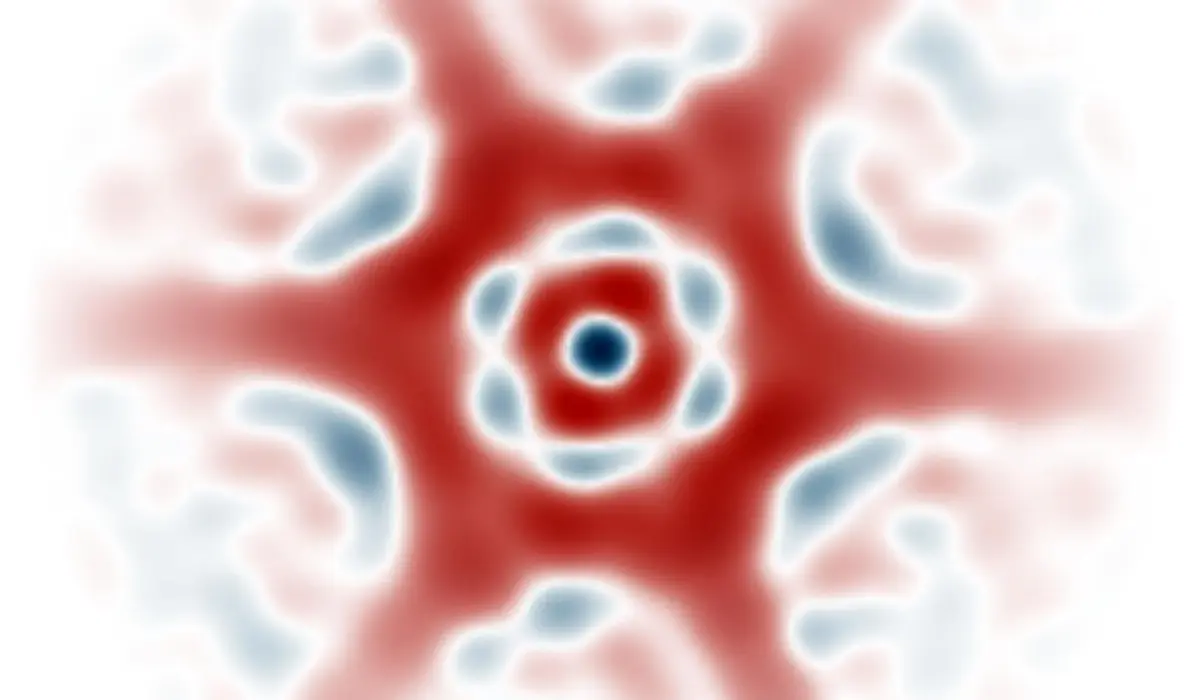
- Regions of Wigner Negativity: The Wigner function is a quasiprobability distribution used in quantum mechanics to represent quantum states in phase space. While classical probability distributions are strictly positive everywhere ($ge 0$), genuinely quantum states often feature regions where the Wigner function dips below zero.
The empirical detection of pronounced Wigner negativity across the team’s reconstructed states served as the definitive empirical seal of success, confirming that the trapped ion was indeed occupying an exotic, highly nonclassical superposition never before captured in a laboratory setting.
Official Statements: Insights from the Laboratory Floor
The breakthrough has generated substantial excitement within the international physics community, validating years of theoretical modeling and painstaking experimental design.
Dr. Sebastian Saner, lead author of the study from the Department of Physics at the University of Oxford, emphasized the unprecedented level of operational freedom the new methodology affords researchers.
"This approach gave us a tool to sculpt the quantum superposition into almost any shape," explains Dr. Saner. "By moving away from standard coherent states and embracing components that are fundamentally nonclassical from the ground up, we are no longer passive observers of quantum phenomena. We are actively designing new phases of quantum reality in real time."
The research was conducted under the supervision of Dr. Raghavendra Srinivas, also of Oxford’s Department of Physics, who highlighted the collaborative momentum between experimentalists and theorists as they attempt to map the outer limits of the newly discovered states.
"We were really encouraged by our colleagues’ reaction when we showed them what we had made," notes Dr. Srinivas. "When top theorists look at these states and acknowledge their novelty, you know you have struck ground. We believe we’re still scratching the surface of what’s possible, both for practical applications and for understanding these states at a more fundamental level."
Following the publication of their initial results, the Oxford laboratory has intensified its collaboration with theoretical physicists worldwide. The immediate objective is to quantify the exact degree of "quantumness" inherent in these tailored states, establishing a rigorous metric to classify how far removed these engineered configurations are from classical physics.
Future Outlook: Transforming Quantum Computing and Fundamental Physics
The successful realization of nonclassical squeezed-state superpositions opens a multi-lane highway toward next-generation quantum technologies, promising breakthroughs that stretch far beyond the limitations of academic curiosity.
Revolutionizing Quantum Computing and Error Correction
Current quantum processors rely heavily on fleets of individual qubits, which are notoriously fragile. Environmental noise, electromagnetic fluctuations, and cosmic rays can easily disrupt qubit states, inducing calculation errors that demand massive, resource-intensive quantum error-correction codes.
Quantum harmonic oscillators, by contrast, offer a vastly richer phase space for information encoding. Because information can be distributed across an infinite ladder of continuous variable energy levels rather than a simple 0-1 binary split, oscillator-based quantum architectures can pack more data into fewer physical components. Furthermore, the exotic nonclassical states developed by the Oxford team are hypothesized to possess inherent resilience against specific types of environmental decoherence. This resilience could pave the way for simplified, highly efficient hardware-level error correction, accelerating the commercial viability of fault-tolerant quantum computers.
Precision Metrology and Fundamental Physics
Beyond computing, these programmable states will serve as elite tools for precision sensing. Ultra-precise atomic clocks, gravitational wave detectors, and magnetometers rely on squeezing techniques to bypass standard quantum limits in measurement sensitivity. By unlocking arbitrary shapes and configurations of squeezed superpositions, scientists can tailor sensors to detect minuscule physical forces with unprecedented clarity.
Most importantly, the research provides an invaluable experimental playground for investigating the profound foundational questions of modern physics. For decades, scientists have debated the transition mechanism between the fuzzy, probabilistic quantum underworld and the sharp, deterministic classical world we experience daily. By engineering macroscopic-like superpositions composed of highly nonclassical ingredients, researchers can systematically dial up the complexity of quantum systems—effectively stress-testing the limits of quantum mechanics and searching for the elusive threshold where quantum reality collapses into classical certainty.
As the University of Oxford team continues to refine their trapped-ion platform, the boundary of what is experimentally possible in quantum physics has decisively shifted. Schrödinger’s cat may have begun as a warning against absurdities, but under the guidance of modern Oxford physicists, it has evolved into a versatile canvas—one where the very fabric of reality can be shaped, measured, and mastered.