







Executive Overview
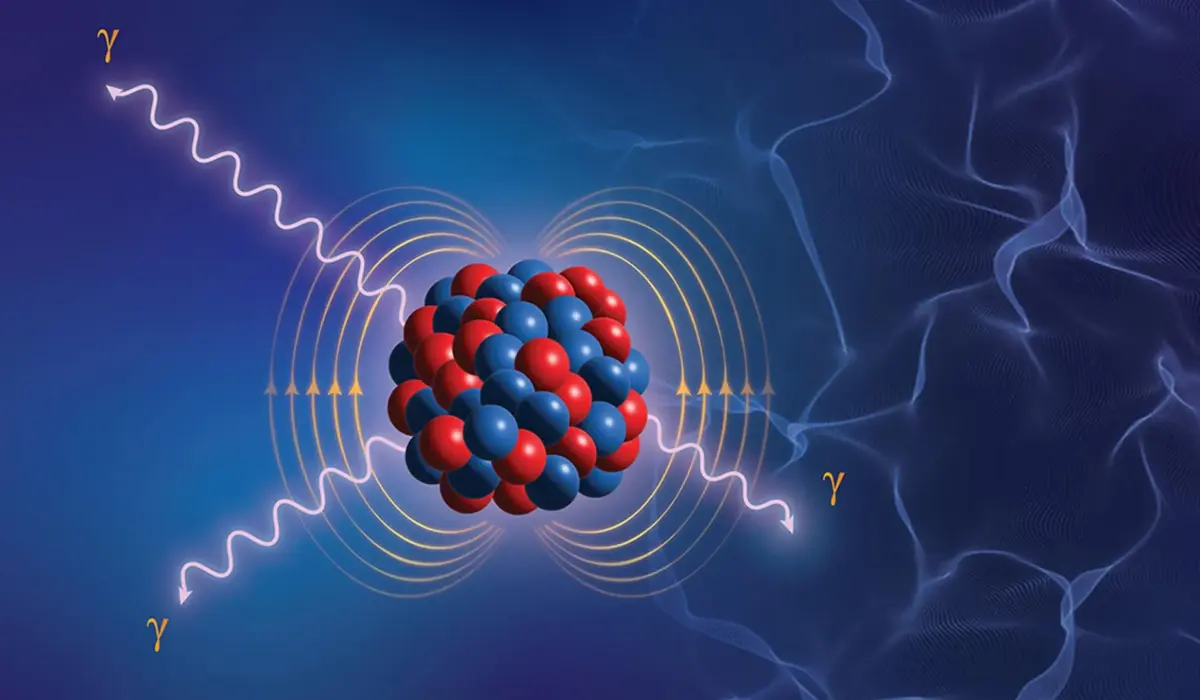
For over thirty years, a perplexing anomaly has quietly gnawed at the foundations of experimental and theoretical nuclear physics. When unstable atomic nuclei undergo radioactive decay, they shed excess energy by releasing gamma rays—high-frequency electromagnetic radiation akin to X-rays, visible light, and radio waves. However, a persistent subset of these nuclei has consistently produced far more low-energy gamma rays than contemporary theoretical models could possibly justify.
This baffling phenomenon, officially dubbed "low-energy enhancement" or the "gamma-ray strength function anomaly," defied easy categorization. It appeared selectively, confounding researchers who found themselves entirely unable to predict which atomic isotopes would exhibit the behavior and which would remain stubbornly compliant with standard physical models.
Now, a groundbreaking study led by the Facility for Rare Isotope Beams (FRIB) in collaboration with researchers from the Lawrence Livermore National Laboratory (LLNL) has cracked the case. Published in the prestigious journal Nature, the new research provides definitive experimental evidence that magnetic transitions within the atomic nucleus are the direct drivers of this mysterious low-energy gamma-ray excess. By successfully isolating electric decay pathways from magnetic ones using cutting-edge accelerator technology, the research team has bridged a decades-long chasm between empirical observation and nuclear theory.
The implications of this breakthrough stretch far beyond the confines of academic physics laboratories. By refining our understanding of how atomic nuclei shed energy, this discovery delivers critical upgrades to nuclear reaction models. These enhanced models hold transformative potential across multiple high-stakes disciplines, including astrophysics—specifically regarding the synthesis of heavy elements in stellar cataclysms—the optimization of next-generation nuclear energy systems, national security stockpile stewardship, and advanced nuclear forensics.
Detailed Chronology: Unraveling the Subatomic Enigma
To appreciate the gravity of the recent Nature publication, one must trace the timeline of a mystery that began taking shape in the late 20th century, culminating in an intensive, round-the-clock experimental campaign at the vanguard of nuclear science.
The Genesis of an Anomaly
When physicists first began mapping the spectrum of gamma rays emitted during the de-excitation of atomic nuclei, they relied on statistical models of nuclear reactions. These models assumed a smooth, predictable decline in gamma-ray emission probabilities as the energy levels decreased.
However, as experimental techniques grew more sensitive toward the turn of the century, anomalies began to surface. Researchers observing neutron capture and radioactive decay in various isotopes noticed an unexpected upswing—an enhancement—in the production of low-energy gamma rays.
"This low-energy enhancement wasn’t predicted by theory, so it was kind of a shock to the community when it was first observed," recalls Eleanor Ronning, lead author of the new study and former FRIB graduate student. "It is difficult to predict where it occurs—we don’t know which nuclei will exhibit it."
For decades, the anomaly remained a theoretical thorn in the side of nuclear physicists. Various hypotheses were floated, ranging from collective surface vibrations of the nucleus to exotic changes in nuclear shape. Yet, none of these ideas could be systematically validated because experimental setups lacked the precision required to isolate the specific mechanisms driving the emissions.
The FRIB Campaign: A 24/7 Experimental Sprint
The turning point arrived with the mobilization of advanced rare isotope facilities, most notably the Facility for Rare Isotope Beams, backed by the specialized detection capabilities and personnel of Lawrence Livermore National Laboratory.
Ronning, alongside co-lead researcher Andrea Richard (then a postdoctoral researcher at LLNL and now an assistant professor at Ohio University), proposed an ambitious experiment designed to finally unmask the culprit. The strategy centered on a precise isotope system: studying the gamma rays produced as a radioactive copper isotope underwent radioactive decay into zinc.
What followed was a grueling, highly coordinated experimental campaign. Operating around the clock, LLNL scientists and FRIB researchers worked in continuous shifts during a relentless weeklong, 24/7 run. Monitoring the intricate web of detectors, electronics, and beamlines required absolute vigilance, as the subtle signals of nuclear decay left zero room for error.
Separating Electric and Magnetic Pathways
The core genius of the experiment lay in FRIB’s capacity to isolate two distinct types of nuclear decay states and examine them independently.
When an atomic nucleus transitions from a high-energy excited state to a lower, more stable configuration, the energy can be carried away via two primary electromagnetic multipole modes:
- Electric Transitions: In this pathway, protons inside the nucleus physically shift their spatial positions relative to one another as the nuclear structure reorganizes.
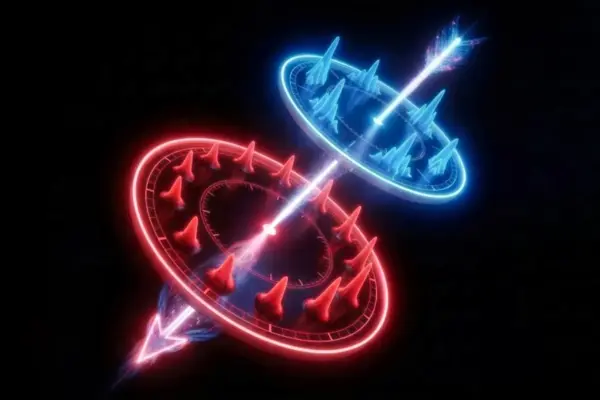
- Magnetic Transitions: In this pathway, the internal spin vectors—essentially the microscopic magnets—of the neutrons and protons flip or realign, without requiring a large-scale spatial relocation of the nucleons.
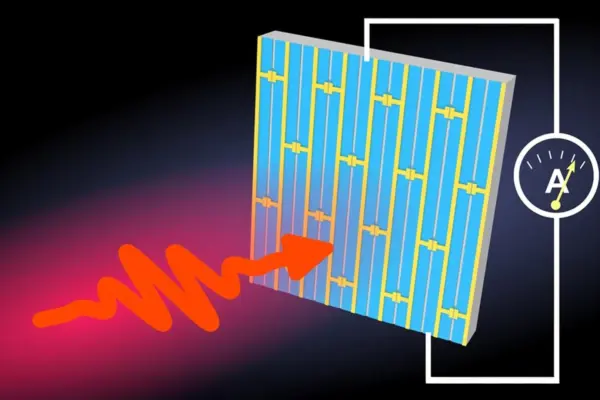
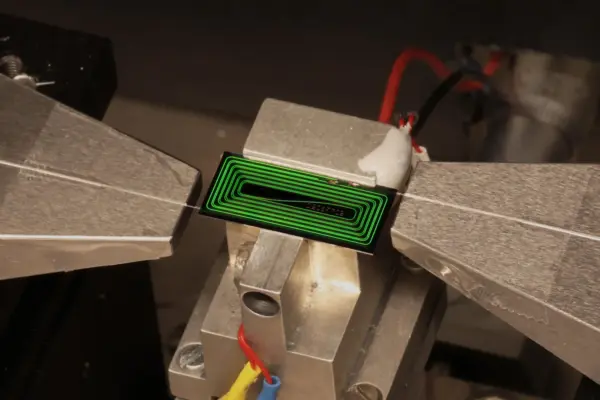
By deploying specialized detector arrays, the research team was able to cleanly separate the electric transition data from the magnetic transition data during the copper-to-zinc decay process.
The results were unequivocal. The low-energy enhancement of gamma rays appeared exclusively during the magnetic transitions. The electric transitions behaved entirely in accordance with standard, predictable theoretical models. By proving that the anomaly was fundamentally magnetic in origin, the team had finally pinned down the microscopic mechanism governing the decades-old mystery.
Supporting Context & Metrics: The Science of Nuclear Decay
To fully contextualize the breakthrough, it is helpful to examine the underlying physics of gamma-ray emission and the scale of the environments where these principles dictate reality.
Understanding Nuclear Excitation and Gamma Rays
An atomic nucleus is a tightly bound quantum many-body system composed of protons and neutrons (collectively known as nucleons), held together by the strong nuclear force. Like electrons orbiting an atom, nucleons occupy discrete energy shells. When a nucleus absorbs energy—whether through a collision, a neutron capture, or radioactive beta decay—it enters an excited state.
To return to a stable ground state, the nucleus must shed this excess energy. It frequently does so by ejecting a high-energy photon, known as a gamma ray. The energy of the emitted gamma ray corresponds precisely to the difference between the initial excited state and the final lower energy state.
[Excited Nucleus] ---> (Emission of Gamma Ray: hν = Ei - Ef) ---> [Stable/Lower State]In standard statistical models, the density of nuclear energy levels and the probability of transitions (the gamma-ray strength function) were thought to follow a smooth exponential curve. The "low-energy enhancement" shatters this assumption by introducing a sharp, localized spike in emission probability at low photon energies (typically below 2 to 3 mega-electronvolts, or MeV).
Key Metrics and Facility Capabilities
- Duration of the Run: 7 continuous days of 24/7 data acquisition.
- Isotopic Systems: Radioactive copper isotopes decaying into zinc.
- Energy Regimes: Low-energy gamma-ray spectrum analysis spanning the sub-MeV to low-MeV range.
- Collaborative Scope: Joint leadership between FRIB and Lawrence Livermore National Laboratory (LLNL), with academic integration from Ohio University.
Official Statements & Expert Analysis
The resolution of the low-energy enhancement mystery has drawn enthusiastic praise from across the nuclear physics community, highlighting the collaborative effort required to achieve the breakthrough.
Andrea Richard, co-lead of the study, former LLNL postdoctoral researcher, and current assistant professor at Ohio University, emphasized the theoretical closure provided by the work:
"This is a key step forward. We now have a consistent explanation that connects experimental observations with theory."
The collaborative nature of the project was heavily underscored by the integration of national laboratory resources with university research. Darren Bleuel, an author and nuclear scientist at LLNL who participated in the gruelling round-the-clock monitoring of the experiment, pointed out the immediate practical dividends the research yields for applied physics:
"We can improve the knowledge of our stockpile performance and interpretation of past test program results using the improved theory based on these discoveries. In addition, we can improve nuclear forensics—our ability to determine if a nuclear event has occurred and identify the most likely source."
Eleanor Ronning reflected on the initial resistance and ultimate vindication of confronting a phenomenon that theoretical frameworks had completely overlooked:
"This low-energy enhancement wasn’t predicted by theory, so it was kind of a shock to the community when it was first observed. It is difficult to predict where [low-energy enhancement] occurs—we don’t know which nuclei will exhibit it. Being able to isolate the magnetic contribution gives us the exact tool we’ve been missing."
Future Outlook: Implications Across Science and Security
While the Nature study focused primarily on a specific copper-to-zinc decay chain, the implications of identifying magnetic transitions as the source of low-energy enhancement reverberate across multiple scientific domains.
1. Astrophysics and Stellar Nucleosynthesis
Heavy elements in the universe—such as gold, platinum, and uranium—are largely forged in extreme cosmic environments, including supernova explosions and the violent mergers of binary neutron stars via the rapid neutron-capture process (the r-process).
Modeling these stellar environments requires precise calculations of neutron capture rates, which in turn depend heavily on accurate gamma-ray strength functions. By accounting for the magnetic low-energy enhancement revealed in this study, astrophysicists can construct far more accurate simulations of how heavy elements are synthesized and distributed throughout the cosmos.
2. National Security and Nuclear Forensics
As noted by LLNL scientist Darren Bleuel, the refinement of nuclear decay models directly impacts national security frameworks. Nuclear forensics—the technical analysis of nuclear materials intercepted from illicit trafficking or recovered following a nuclear detonation—relies entirely on precise isotopic signatures and decay-chain accounting.
If theoretical models miscalculate gamma-ray emissions during radioactive decay, investigators face higher margins of uncertainty when attempting to attribute the origin, age, and processing history of nuclear material. Integrating the new magnetic transition parameters sharpens these analytical tools, enhancing global security and attribution capabilities.
3. Nuclear Energy and Stockpile Stewardship
Modern nuclear reactors and advanced fuel cycles depend on sophisticated computer simulations to predict core behavior, fission product accumulation, and decay heat. Furthermore, maintaining the safety and reliability of the nation’s nuclear deterrent under the Stockpile Stewardship Program requires unparalleled accuracy in understanding aging materials and nuclear reactions without underground testing.
The updated nuclear models derived from the FRIB and LLNL findings provide engineers and physicists with a sharper lens through which to evaluate stockpile performance and interpret historical test data.
4. The Path Ahead for Experimental Nuclear Physics
With the magnetic transition mechanism now identified in one isotopic system, the broader nuclear physics community faces an exciting new mandate: mapping the prevalence of this magnetic enhancement across the entire chart of nuclides.
Researchers plan to leverage the unprecedented beam intensities of FRIB and other rare isotope facilities worldwide to test whether this magnetic enhancement is a universal feature of certain nuclear configurations or whether it varies predictably with neutron-to-proton ratios.
As theory and experiment finally march in lockstep, the decades-old gamma-ray mystery is transforming from an irritating anomaly into a powerful new diagnostic tool, illuminating the intricate, magnetic inner workings of the atomic nucleus.