










Executive Overview
In a breakthrough that bridges the gap between subatomic mechanics and the violent birth of heavy elements across the cosmos, an international collaboration of physicists has solved a decades-old mystery in nuclear physics. Published in the prestigious journal Nature under the title "Magnetic Character of the Low-Energy Enhancement in 70Zn," the study identifies the precise physical mechanism behind a puzzling, unexpected surge of low-energy gamma rays emitted by atomic nuclei.
For decades, nuclear physicists have been baffled by an unexplained phenomenon known as the "low-energy enhancement" (LEE)—an anomalous rise in the frequency of low-energy gamma-ray emissions observed in various atomic nuclei. Unpredicted by prevailing theoretical frameworks, the LEE has remained an elusive enigma, complicating models of stellar nucleosynthesis, nuclear reactors, and national security applications.
Now, researchers operating at the cutting-edge Facility for Rare Isotope Beams (FRIB) alongside a global coalition spanning 25 institutions across the United States, Canada, Italy, Germany, Norway, and South Korea have provided definitive answers. By focusing on the zinc-70 nucleus and leveraging a novel experimental technique involving pure beams of copper-70 isomers, the team has proven that magnetic transitions occurring deep within the nuclear interior are solely responsible for generating the unexpected signal.
This discovery provides nuclear theorists with an invaluable empirical benchmark. More broadly, it refines our understanding of neutron-capture reactions—the critical cosmic processes driving the formation of heavy elements in supernovae and neutron star mergers—while promising to sharpen predictive models used in astrophysics, clean energy development, and national defense.
Detailed Chronology: Unraveling the Zinc-70 Puzzle
To understand the magnitude of this breakthrough, one must trace the timeline of a mystery that has quietly vexed nuclear laboratories for generations.
The Birth of an Anomaly
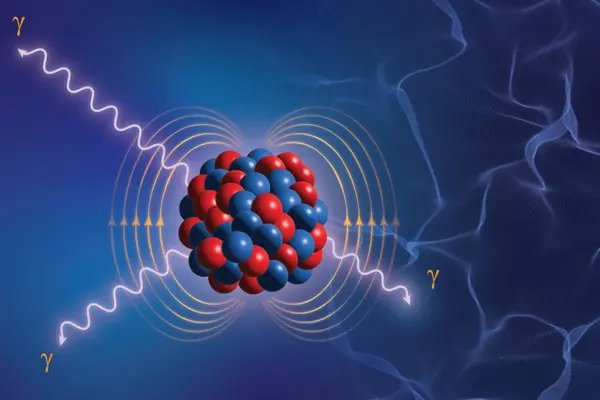
When an excited atomic nucleus transitions to a lower, more stable energy state, it sheds excess energy by releasing gamma rays—high-frequency electromagnetic radiation. To quantify this behavior, scientists map the gamma-ray strength function, a metric tracking how frequently nuclei emit gamma rays across a spectrum of energies.
Decades ago, experimentalists observing specific heavy and medium-mass nuclei began noticing an unexpected anomaly: as the energy of the emitted gamma rays dropped very low, the frequency of their emission spiked dramatically. This sudden, unpredicted upward trend in the strength function was dubbed the low-energy enhancement (LEE).
Because classical and quantum theoretical models of the atomic nucleus failed to predict this behavior, the physics community was left in the dark. Theorists could not reliably forecast which nuclei would exhibit the enhancement, nor could they pinpoint the exact internal restructuring of protons and neutrons causing it. The signal was notoriously faint, easily swallowed by ambient background radiation, and shrouded by experimental limitations.
A Decade-Long Pursuit
Recognizing the implications of the LEE for both pure science and applied nuclear physics, a dedicated coalition of researchers initiated a multi-year campaign to crack the case.
"Our collaboration has been searching for ways to identify the nature of this low-energy enhancement in gamma-ray emission for over a decade," noted Artemis Spyrou, professor of physics at FRIB and in Michigan State University’s Department of Physics and Astronomy. "This result only became possible thanks to the development of new experimental capabilities and new analysis techniques that did not exist when we began."
The turning point arrived when the research team set their sights on zinc-70 ($^70textZn$), a nucleus suspected of exhibiting the LEE and possessing a well-mapped structure of energy levels. Rather than attempting to probe zinc-70 directly, the team devised an ingenious indirect approach: they examined the radioactive beta decay of two distinct states of its parent nucleus, copper-70 ($^70textCu$).
Isolating the Pathways: The LEBIT Innovation
To execute this strategy, the researchers needed exceptionally pure, isolated beams of copper-70 in two distinct configurations: its stable ground state and an excited isomeric state.
Achieving this level of isotopic purity required the deployment of FRIB’s Low Energy Beam and Ion Trap (LEBIT), a high-precision mass spectrometer. By manipulating LEBIT in a novel configuration never attempted before, the team successfully separated the two copper isomers.
"We used LEBIT in this way for the first time," explained Ryan Ringle, associate professor of physics at FRIB and LEBIT group leader. "It was an interesting challenge to work on, which provided additional training opportunities for our group’s graduate students. This new technique for isomer separation opens the door to study many more nuclei and motivates technical developments to expand our capabilities in this area."
These two pure beams provided separate, complementary pathways into the zinc-70 nucleus. Each pathway populated a distinct combination of energy levels within zinc-70, allowing the scientists to observe the nucleus’s internal dynamics from two distinct vantage points.
Capturing and Analyzing the Signal
As the copper-70 nuclei underwent beta decay into zinc-70, the resulting gamma rays were meticulously captured using the Summing NaI (SuN) detector. With the empirical data secured, the researchers deployed two advanced analytical frameworks: the beta-Oslo method and the Shape method.
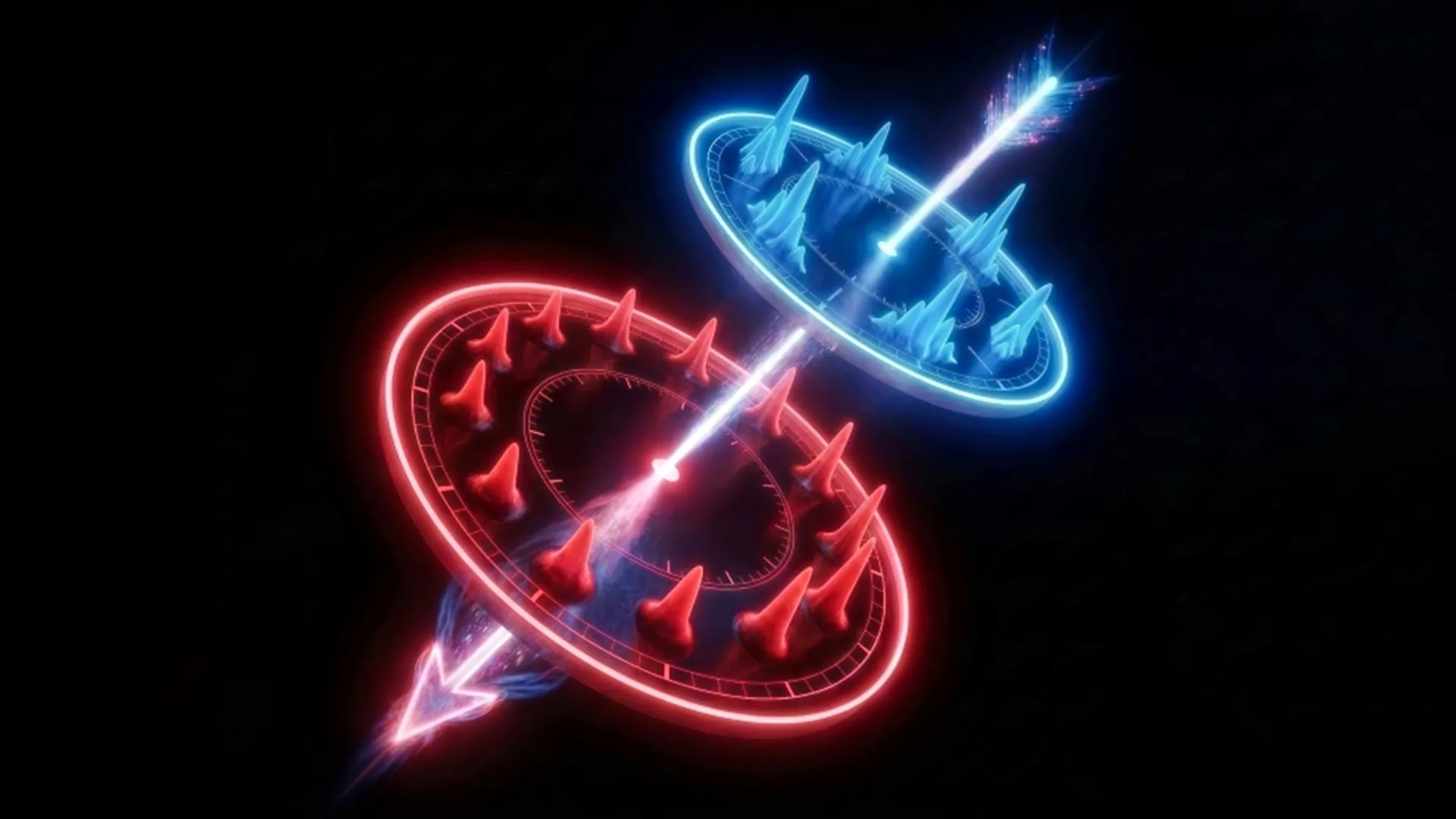
These powerful analytical tools allowed the team to construct the gamma-ray strength functions associated with each initial state. By comparing the two resulting strength functions, the team was able to isolate the electromagnetic character of the transitions. The evidence converged on an inescapable conclusion: the low-energy enhancement is driven entirely by magnetic transitions—specific shifts in the internal alignment and spin of protons and neutrons—rather than electric transitions.
Supporting Context & Metrics
The resolution of the LEE mystery is not merely an academic exercise in subatomic accounting; it carries profound implications for nuclear astrophysics and computational modeling across multiple scientific disciplines.
Astrophysical Implications: Forging Heavy Elements
In the extreme theater of the cosmos—such as core-collapse supernovae and the cataclysmic merging of neutron stars—astrophysicists model the rapid neutron-capture process (the r-process). This process is responsible for forging roughly half of all elements heavier than iron, including gold, platinum, and uranium.
The rate at which atomic nuclei capture free neutrons dictates how efficiently these heavy elements are synthesized. The presence of the low-energy enhancement alters the density and accessibility of nuclear energy levels, effectively accelerating neutron-capture reaction rates beyond standard theoretical projections.
By confirming that magnetic transitions dictate the LEE, scientists now possess a rigorous, empirically validated mechanism to plug into astrophysical network codes. This will allow researchers to refine computer simulations of stellar nucleosynthesis, resolving longstanding discrepancies between predicted elemental abundances and observational data gathered from deep space.
Inter-Institutional Collaboration and Infrastructure
The success of the zinc-70 experiment underscores the critical role played by major national research user facilities. The project relied heavily on experimental resources exclusive to FRIB, a premier scientific user facility for the U.S. Department of Energy Office of Science (DOE-SC), supported by the MSU Office of the Vice President for Research and Graduate Studies.
Furthermore, the work highlights the deep synergy between fundamental academic research and applied national security missions. The research team included staff scientists from several key Department of Energy National Nuclear Security Administration (NNSA) laboratories, including:
- Lawrence Livermore National Laboratory (LLNL)
- Los Alamos National Laboratory (LANL)
- Lawrence Berkeley National Laboratory (LBNL)
- Pacific Northwest National Laboratory (PNNL)
This partnership structure facilitates a vital cross-pollination of talent and expertise, applying fundamental nuclear insights to national security applications while cultivating the next generation of nuclear scientists, engineers, and technicians.
Official Statements
The collaborative nature of the breakthrough was echoed by key figures who guided the research from its inception to its publication in Nature.
"This low-energy enhancement wasn’t predicted by theory, so it was kind of a shock to the community when it was first observed. It is difficult to predict where LEE occurs—we don’t know which nuclei will exhibit it."
— Eleanor Ronning, Lead Author, former FRIB graduate student, and postdoctoral research fellow at the National Institute for Nuclear Physics in Padova, Italy."This is a key step forward. We now have a consistent explanation that connects experimental observations with theory."
— Andrea Richard, Co-lead of the study, assistant professor, and interim director of the Edwards Accelerator Laboratory at Ohio University."We used a novel experimental technique that combines specialized instruments in a way that effectively used the entire facility. It is exciting to see that effort lead to such a clear result."
— Sean Liddick, Professor of chemistry at FRIB, interim chairperson of MSU’s Department of Chemistry, and Ronning’s graduate advisor.
Reflecting on the human element of the project, Richard emphasized how the inter-institutional framework served as a vital incubator for early-career researchers:
"The combined expertise of our research teams is what really made it all possible. It was a privilege to work with the various teams across institutions over the years. It was a formative experience as an early-career researcher."
Ronning, who helped draft the original experimental proposal as a graduate student and carried the project through to its publication, noted:
"Working on the entire process—from writing the proposal and running the experiment to publishing the paper in Nature—has been a rewarding experience."
Future Outlook
With the magnetic nature of the low-energy enhancement firmly established in zinc-70, the global nuclear physics community stands at the threshold of a new investigative era.
The successful implementation of the isomer-separation technique using FRIB’s LEBIT spectrometer has provided researchers with a powerful new playbook. Rather than shooting in the dark, scientists can now apply this separated-isomers methodology to a broader array of medium-mass and heavy nuclei.
"We look forward to applying this separated-isomers technique to more nuclei," Liddick emphasized. "Knowing which nuclei should exhibit this low-energy enhancement is key to designing experiments to investigate them at facilities like FRIB and to improve models of how elements are created in astrophysical environments."
As future experiments roll out across FRIB and partner institutions, theorists and experimentalists will work hand-in-hand to map the prevalence of magnetic LEE across the nuclear chart. These efforts will ultimately yield a more complete, unified theory of the atomic nucleus—one capable of accurately predicting how matter behaves both in terrestrial laboratories and within the heart of collapsing stars.
Funding and support for this research were provided by the U.S. Department of Energy Office of Science, the U.S. National Science Foundation, the National Nuclear Security Administration, the U.S. Nuclear Data Program, the Research Council of Norway, the Norwegian Nuclear Research Center, the Natural Sciences and Engineering Research Council of Canada, and the Canada Foundation for Innovation.