










Executive Overview
In a significant strategic expansion of its oncology clinical development pipeline, Summit Therapeutics has announced the initiation of the global, multi-regional Phase II/III HARMONi-GU1 clinical trial. This landmark study is designed to evaluate the clinical efficacy, safety, and optimal dosing of ivonescimab—an investigational, intentionally engineered tetravalent PD-1/VEGF bispecific antibody—when administered in combination with enfortumab vedotin (EV). The trial targets patients suffering from previously untreated locally advanced or metastatic urothelial carcinoma, the most prevalent and aggressive form of bladder cancer.
The HARMONi-GU1 trial represents a bold challenge to the existing oncology paradigm. Investigators will directly pit the ivonescimab-plus-EV combination against the current standard of care (SoC), which pairs the established immunotherapy agent pembrolizumab with enfortumab vedotin. Encompassing an estimated 800 participants as it transitions smoothly from its dose-optimization Phase II segment into the definitive Phase III efficacy evaluation, the trial underscores Summit’s aggressive commitment to transforming outcomes in difficult-to-treat malignancies.
With site activations slated to commence later this year, the trial builds upon a growing mountain of clinical data supporting ivonescimab (also known as SMT112 within Summit’s licensed territories). Originally engineered by Akeso, ivonescimab simultaneously targets programmed cell death protein 1 (PD-1) and vascular endothelial growth factor (VEGF). By combining immune checkpoint inhibition with anti-angiogenic properties in a single molecular architecture, the drug aims to tackle the dual biological hurdles of tumor immune evasion and abnormal blood vessel growth—hallmarks of advanced urothelial carcinoma. As Summit Therapeutics awaits critical regulatory decisions in other indications, such as non-small cell lung cancer (NSCLC), the HARMONi-GU1 study reinforces the company’s broader ambition to position ivonescimab as a foundational cornerstone across multiple solid tumors.
Detailed Chronology and Trial Design of HARMONi-GU1
The genesis and structural framework of the HARMONi-GU1 trial reflect a meticulously planned global strategy aimed at maximizing regulatory compliance, patient safety, and statistical robustness.
Phase II Dose-Finding Stage
The trial will initiate with an adaptive Phase II optimization stage. Because combining novel bispecific antibodies with antibody-drug conjugates (ADCs) like enfortumab vedotin requires precise calibration to balance therapeutic efficacy with manageable toxicity profiles, this initial segment is critical. Its primary objective is to determine the recommended Phase III dose of ivonescimab when administered concurrently with a fixed or titrated regimen of enfortumab vedotin.
During this phase, investigators will closely monitor pharmacokinetic parameters, adverse events, early tumor response rates, and biological markers of target inhibition. Establishing the correct therapeutic window early ensures that the subsequent, larger Phase III cohort operates under optimized conditions, minimizing dropouts and protocol deviations while maximizing the potential for clear, interpretable clinical benefit.
Transition to Phase III and Global Scope
Upon successful completion and data review of the Phase II dose-selection cohort, the trial will seamlessly expand into its pivotal Phase III stage. Designed as a multi-regional, randomized, controlled global study, the Phase III portion will accrue approximately 800 participants across a diverse network of international clinical trial sites.
The primary efficacy endpoints for this definitive stage are robust and clinically meaningful:
- Progression-Free Survival (PFS): Measured from randomization until objective tumor progression or death from any cause, providing insight into how effectively the therapy halts disease advancement.
- Overall Survival (OS): Tracking the length of time from randomization to death, serving as the ultimate gold standard for clinical benefit in oncology trials.
Secondary endpoints will encompass overall response rate (ORR), duration of response (DOR), disease control rate (DCR), and a comprehensive evaluation of safety and health-related quality of life metrics. Site activations for this massive global undertaking are scheduled to begin later this year, drawing on an established network of oncology centers specialized in genitourinary cancers.
Supporting Context, Scientific Rationale, and Clinical Metrics
To fully appreciate the significance of the HARMONi-GU1 trial, one must examine the underlying biology of urothelial carcinoma and the unique pharmacological properties of ivonescimab.
The Biological Rationale in Urothelial Carcinoma
Urothelial carcinoma accounts for the vast majority of bladder cancers. When diagnosed at a locally advanced or metastatic stage, the prognosis historically has been poor, marked by rapid disease progression and limited durable responses to traditional chemotherapy. Over recent years, treatment paradigms have evolved with the advent of immune checkpoint inhibitors and targeted ADCs. However, resistance mechanisms frequently emerge, driven by two key pathological features:
- Immune Evasion: Tumors frequently hijack pathways like PD-1/PD-L1 to suppress the host’s anti-tumor T-cell response.
- Angiogenesis: Aggressive tumors stimulate abnormal blood vessel formation (mediated heavily by VEGF) to secure a constant supply of oxygen and nutrients while simultaneously creating a physical and chemical barrier that impedes immune cell infiltration.
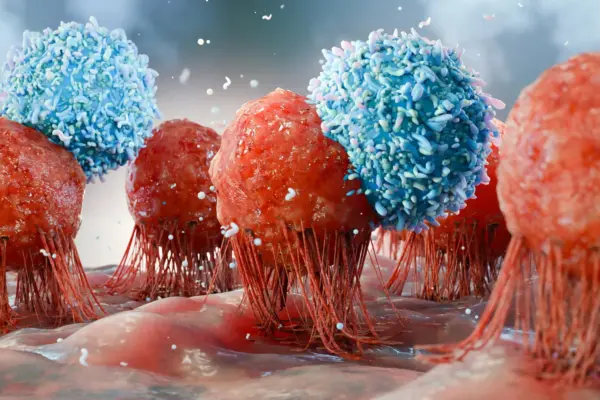
Ivonescimab was intentionally engineered to address both pathways simultaneously. As a tetravalent bispecific antibody, it binds with high affinity to both PD-1 and VEGF. By neutralizing VEGF, the drug normalizes tumor vasculature, which not only starves the tumor of its blood supply but also improves the penetration and activation of immune effector cells within the tumor microenvironment. Concurrently, the blockade of PD-1 reactivates exhausted T cells, unleashing a coordinated, dual-pronged attack against the cancer cells. Researchers hypothesize that this synergistic mechanism will translate into superior disease control when compared to standard pembrolizumab-plus-EV regimens, which rely on a traditional monoclonal antibody rather than a dual-targeting bispecific framework.

Global Clinical Pipeline and Development Scale
Ivonescimab’s clinical footprint extends far beyond bladder cancer. The molecule is currently undergoing rigorous evaluation across a staggering 16 Phase III clinical studies worldwide, reflecting a massive global development program spearheaded by Summit Therapeutics and its licensor, Akeso.
- Non-Small Cell Lung Cancer (NSCLC): Akeso has already reported positive data from four Phase III trials conducted in China, primarily focused on NSCLC. Simultaneously, Summit Therapeutics has been releasing longer-term trial data as it navigates regulatory pathways with health authorities like the US Food and Drug Administration (FDA).
- Diverse Tumor Types: Beyond lung and bladder cancers, Summit’s collaborative and independent development activities cover a broad spectrum of hard-to-treat solid tumors, including colorectal cancer, renal cell carcinoma, and pancreatic cancer.
Safety, Administration, and Real-World Experience
Safety remains a paramount consideration in oncology drug development, particularly when pairing novel immunotherapies with potent ADCs like enfortumab vedotin, which carries known toxicities such as peripheral neuropathy and skin reactions.
To date, ivonescimab has been administered to more than 4,000 patients across global clinical trial programs. Furthermore, its extensive real-world utilization in China—where it has been administered to over 70,000 individuals in commercial settings—provides a massive repository of post-marketing surveillance and safety data. This extensive real-world experience offers clinicians and regulatory bodies a high degree of confidence regarding the drug’s safety profile, manufacturing consistency, and manageability in diverse patient populations.
Official Statements and Leadership Insights
Industry leaders have been vocal about the strategic and scientific importance of initiating the HARMONi-GU1 trial.
Dr. Maky Zanganeh, President and Co-CEO of Summit Therapeutics, emphasized the transformative potential of the trial during the announcement:
"The initiation of HARMONi-GU1 marks another important step in the continued expansion of our global ivonescimab development programme into additional tumour types where significant unmet need remains."
Dr. Zanganeh further elaborated on the biological thesis driving the research:
"Because both angiogenesis and immune evasion are important features of urothelial carcinoma biology, we believe ivonescimab’s tetravalent, intentionally-engineered PD-1 / VEGF bispecific mechanism offers a compelling scientific rationale for evaluation in bladder cancer."
Medical oncologists and clinical investigators not directly affiliated with the company have also noted that if HARMONi-GU1 successfully demonstrates superiority over the current pembrolizumab-plus-EV standard of care, it could fundamentally rewrite treatment guidelines for frontline metastatic urothelial carcinoma, establishing bispecific antibodies as the new benchmark in combination therapies.
Future Outlook and Strategic Implications
The launch of the HARMONi-GU1 trial positions Summit Therapeutics at a critical inflection point in its corporate and scientific evolution. As the biopharmaceutical sector increasingly shifts away from monotherapies toward intelligent, mechanism-driven combinations, trials like HARMONi-GU1 serve as bellwethers for the future of precision oncology.
Near-Term Milestones
- Site Activations (Late 2026): The immediate operational focus for Summit will be the rapid activation of global clinical trial sites across North America, Europe, Asia, and other participating regions to ensure timely patient accrual.
- Phase II Dose Optimization Readouts: Following site activation, the medical community will eagerly await preliminary safety and dosing data from the Phase II lead-in stage, which will validate the tolerability of combining ivonescimab with enfortumab vedotin.
- Regulatory Decisions in NSCLC: While HARMONi-GU1 advances, Summit remains laser-focused on pending regulatory outcomes from agencies like the US FDA regarding ivonescimab in non-small cell lung cancer. A favorable regulatory decision in NSCLC would provide vital commercial momentum and validation, bolstering investor confidence as the bladder cancer trial gets underway.
Long-Term Impact on Bladder Cancer Treatment
If the Phase III portion of HARMONi-GU1 achieves its primary endpoints of progression-free survival and overall survival, it could secure regulatory approvals that reshape the frontline treatment landscape for advanced bladder cancer. By improving upon existing immunotherapy-ADC backbones, Summit Therapeutics could offer patients not only prolonged survival but also a higher quality of life by mitigating treatment resistance.
Ultimately, HARMONi-GU1 is more than just another trial in an extensive pipeline; it is a rigorous test of whether dual-targeting bispecific antibodies can eclipse traditional combination therapies. As site activations loom later this year, the global oncology community will be watching closely to see if ivonescimab can deliver a new therapeutic dawn for patients battling urothelial carcinoma.